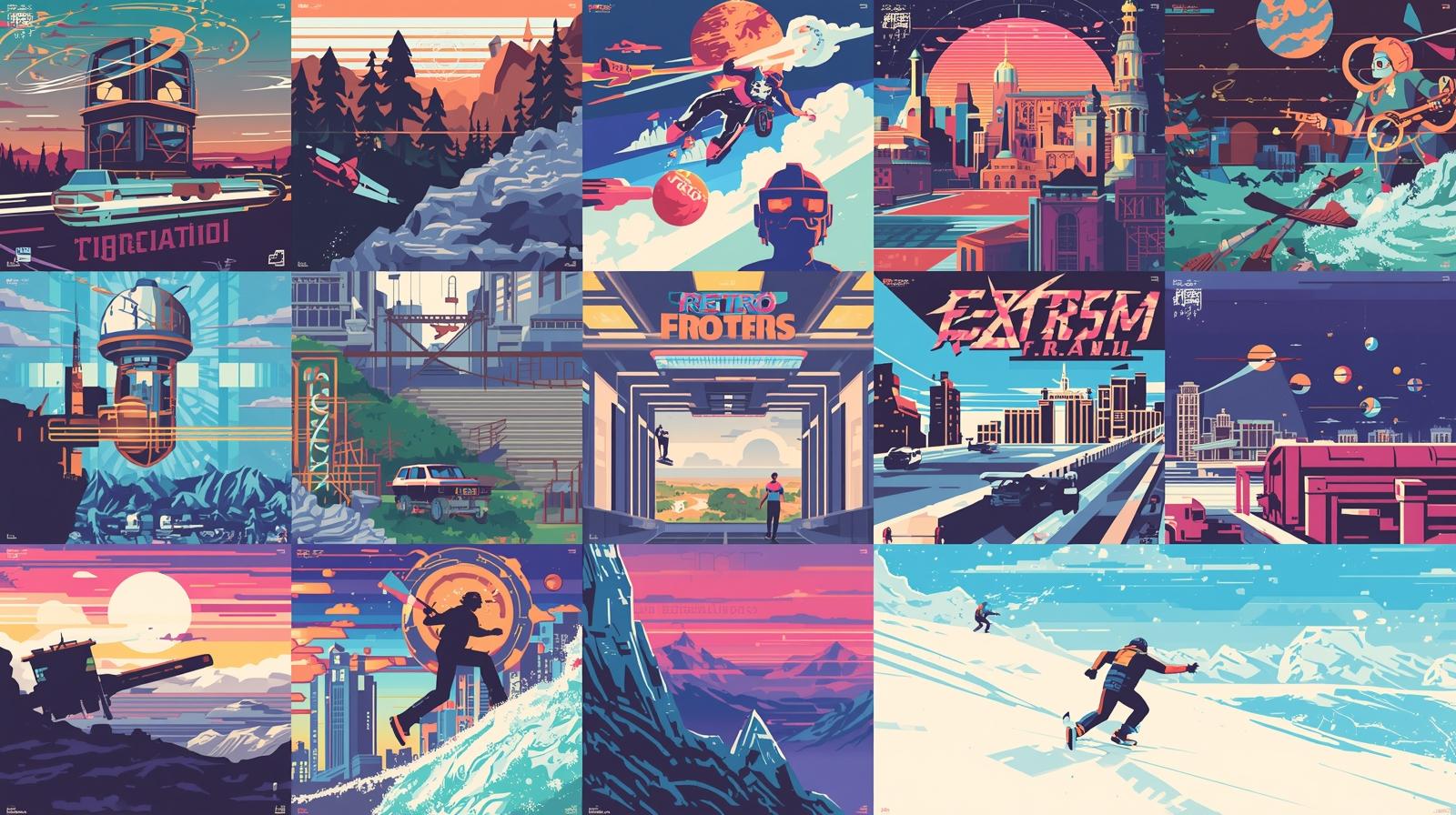
The allure of retro games is undeniable. Their nostalgia-tinted graphics evoke a simpler time in gaming while simultaneously reflecting visionary ideas about the future. These classic titles didn’t just entertain; they forecasted technological advances that would shape our world today. In this blog post, we dive into a handful of retro games that not only entertained but also offered insight into future technologies and lifestyle trends, blending themes of urban culture, extreme sports, and gaming.
The Insightful Predictions of Classic Games
1. 'Pac-Man' and the Concept of AI Interaction
When we think about artificial intelligence (AI) today, we often envision complex algorithms and machine learning systems. However, back in 1980, the simplistic yet genius game Pac-Man laid the groundwork for the kind of interactive experiences we now take for granted.
In Pac-Man, players control a yellow, circular character navigating a maze while avoiding four ghosts—each with unique behaviors and patterns. This not only provided a rich gameplay experience but also introduced the idea of AI-driven characters. The dynamics between Pac-Man and the ghosts inspired future game developers to craft AI that could learn and adapt based on player behavior.
Fast forward to today, and AI interaction can be found in various fields—from sports analytics to smart home devices. The intuition behind creating characters that can "think" and react has permeated far beyond gaming, influencing everything from virtual personal assistants (like Siri and Alexa) to self-driving cars. Pac-Man may look simplistic now, but its predictive vision of AI was monumental in shaping our tech landscape.
2. 'Space Invaders' and the Gaming Industry's Commercialization
Released in 1978, Space Invaders was more than a game; it was a phenomenon that set the stage for the commercialization of the gaming industry. The game's arcade model paved the way for gaming as a viable business. As players lined up to compete for high scores, Space Invaders established a culture of competitive play, contributing to the formation of modern esports.
What many didn’t realize at the time was that Space Invaders also laid the groundwork for the later rise of mobile and online gaming. Its gameplay mechanics inspired not just arcade games but also the design philosophy of many mobile games today. The idea that players could engage deeply with a simple, repeatable gameplay loop became fundamental in app development.
Moreover, this foresight also hinted at an even broader societal trend: the acceptance of gaming as a mainstream cultural pastime. With the rise of online streaming platforms and social media, gaming has transcended mere entertainment, evolving into a sophisticated blend of lifestyle, social engagement, and even career opportunities. The legacy of Space Invaders is apparent, as the world now sees gaming as an integral part of urban youth culture—a catalyst for community and connection.
The Futuristic Themes of Extreme Sports in Retro Gaming
1. 'Tony Hawk's Pro Skater' and the Urban Sports Revolution
Launched in 1999, Tony Hawk's Pro Skater propelled skateboarding into the limelight as a mainstream sport, combining gaming and extreme sports. Players could perform tricks, master skating techniques, and explore the urban landscape virtually. The game's success went beyond just graphics and controls; it captured the ethos of skate culture, encouraging the acceptance of urban sports and pushing the boundaries of how they're perceived.
Interestingly, Tony Hawk's Pro Skater didn't just predict the explosion of skateboarding's popularity—it also hinted at the evolution of augmented reality (AR) technologies that merge real-life sports with gaming. The idea of overlaying gaming mechanics onto physical activities has found a home in modern technologies like Pokémon GO and fitness apps that gamify workouts.
With the current trends in urban lifestyles leaning towards fitness through experiences, the intersection of extreme sports and gaming resources now serves as a rich space for innovation. Just as Tony Hawk's Pro Skater captured the thrill of skateboarding, recent developments in AR and virtual reality (VR) strive to replicate the adrenaline rush of extreme sports through immersive experiences.
2. 'Street Fighter II' and the Rise of Global Connectivity
Street Fighter II revolutionized the fighting game genre when it debuted in 1991, bringing together characters from various countries each with unique fighting styles. This pivotal game hinted at how global connectivity would fundamentally change our lives, laying the groundwork for online multiplayer experiences that are staples of the gaming culture today.
Notably, the game's introduction of characters like Ryu and Chun-Li can be seen as a precursor to the growing interest in multicultural representation in media. As gaming continues to traverse boundaries, themes of inclusivity and diverse realities become integral for creating engaging narratives that resonate with a worldwide audience.
In addition, Street Fighter II emphasized the social nature of gaming—friends gathering to compete, exchanging knowledge, and improving skills. This aspect continues to flourish today, with Twitch and YouTube allowing players to connect globally. Whether through live streams, forums, or global tournaments, a sense of community drives engagement, further emphasizing how retro games foresaw the interconnected, urban lifestyle that defines modern gaming culture.
Conclusion: A Nostalgic Lens on the Future
Exploring the retro games that predicted the future of technology unveils a vast landscape of innovation, foresight, and cultural shifts. Whether it’s the artificial intelligence dynamics of Pac-Man, the commercialization of gaming seen in Space Invaders, the integration of extreme sports embodied by Tony Hawk's Pro Skater, or the global connectivity introduced in Street Fighter II, these games serve as time capsules of a future that we now live.
As urban culture continues to evolve, these retro games remind us that technology doesn't just leap forward—it often draws inspiration from our past. Gaming, in its essence, is a blend of experience, art, and technology that shapes not just individual lives, but the broader cultural narrative. Retro titles like these encourage us to reflect on our roots while navigating the ever-accelerating flow of innovation, providing insight into a future that might be brighter and more connected than ever. As we continue to embrace this fusion of urban lifestyle, extreme sports, and gaming, let’s not forget the visionary retro games that paved the way.
How Does This Hit You?



No comments yet. Be the first to weigh in.