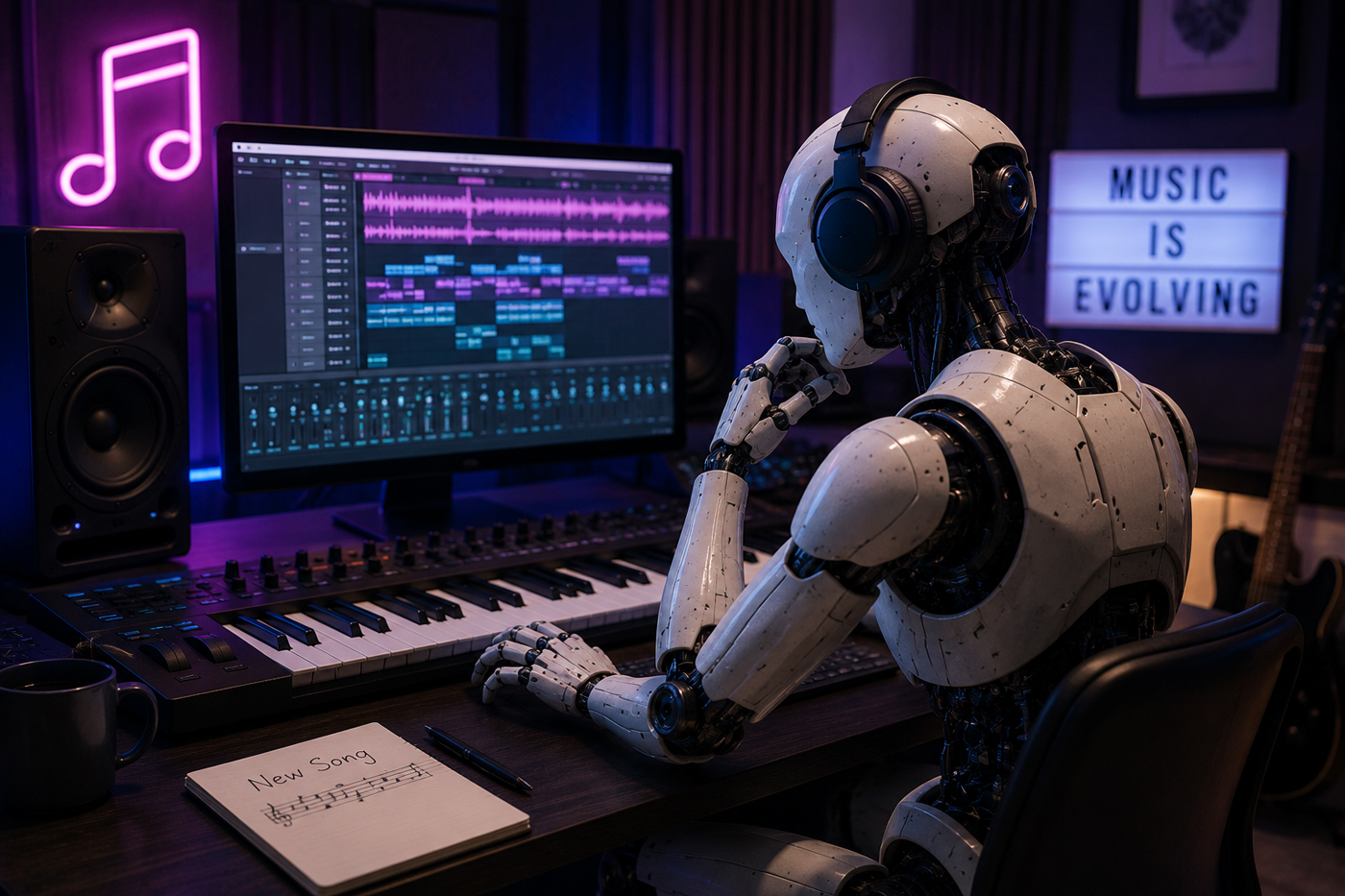
An algorithm wrote the hook. A machine mixed the track. It hit number one. Now nobody can agree on whether that counts.
In recent months, an intriguing phenomenon has emerged within the music industry: AI-generated compositions are hitting the charts and gaining traction among listeners. But this development prompts a controversial question: does the rise of AI in music creation dilute the concept of what constitutes "real music"? As technology and creativity intertwine, experts are divided on the implications, leading to a debate that capitalizes on the tension between innovation and authenticity.
The integration of artificial intelligence in music production is not just a novelty; it reflects broader trends in technology and culture. With emerging algorithms capable of generating complex compositions, musicians, producers, and audiences must grapple with the changing landscape of artistry. Platforms like Spotify have even begun showcasing AI-generated tracks, suggesting a readiness on the part of listeners for this new evolution. This shift demands that we reevaluate our definitions and expectations of music as an art form.
Grimes, musician and producer, advocates for the embracing of AI as a tool for creativity. She argues that AI serves as a collaborative partner rather than a replacement for human musicians. Grimes views music as a language that evolves, suggesting that including AI-generated music in the mix simply adds another dialect to the conversation.
"AI can push boundaries in composition and enable artists to explore new territories of sound that were previously unimaginable. It amplifies creativity rather than hindering it."
David Byrne similarly supports the integration of AI into the music scene, highlighting its potential to democratize access to music creation. He points out that while traditional music has driven the narrative, AI-generated tracks might represent a new frontier that expands artistic expression.
"Thinking about what music can be in an age where machines play a role could lead to exciting developments. It's about experimentation and finding new ways to connect with audiences."
On the other end of the spectrum, Jaron Lanier, computer scientist and musician, adopts a more cautious stance. Lanier expresses concern that AI-generated music might lead to a homogenization of sound, where unique human experiences are diluted in favor of algorithmically created melodies.
"Real music is tied to human emotion and experience. If we rely too heavily on machines, we risk losing the soul and narrative that makes music resonate on a deep level."
Lanier also raises ethical concerns regarding authorship and the commodification of creativity, warning that the reliance on AI could transform musicians into mere curators rather than creators.
All experts acknowledge that AI can enhance or influence the creative process. Recognizing that AI is reshaping how music is created and consumed is a universal understanding. There's also a shared sentiment that the definition of music must evolve with technological advancements — the disagreement is about what gets lost in that evolution.
Grimes and Byrne view AI as a legitimate extension of music, while Lanier insists that it can compromise the authenticity of the art form. There is sharp controversy over whether AI serves as a collaborator or a competitor to human musicians. And while Grimes and Byrne see potential for growth, Lanier raises alarms about potential risks that the others seem willing to accept.
The implications of AI-generated music extend beyond the industry; they touch on the essence of creativity itself. As AI technology continues to advance, the music world must confront critical questions about authorship, creativity, and the human experience. Music has always served as a reflection of our culture, and in an age where machines are becoming creators, society must decide what value it places on human touch in artistic expression.
As charts increasingly reflect the influence of algorithms and machine-generated sounds, the discourse surrounding what constitutes real music will become paramount. Will society embrace a future where AI and human collaboration create new artistic landscapes? Or will it strive to protect the cherished intrinsic elements of creativity that define music's profound impact on humanity?
As we navigate this complex terrain, listeners and creators alike must reevaluate their definitions and affections for music — asking not just what is being created, but what it means to create at all.
Embracing the Symphony of Innovation
The rise of AI-generated music invites us to reevaluate our understanding of authenticity in artistry. As Grimes and David Byrne articulate, AI acts not as a replacement for human creativity but as an innovative collaborator that expands the boundaries of musical expression. This evolution should be celebrated as a new dialect in the ever-changing language of music, creating pathways for diverse voices and ideas. While concerns about the dilution of 'real music' persist, they are overshadowed by the wealth of possibilities AI brings to the table. Moving forward, it's essential for artists and audiences alike to engage thoughtfully with this technology, welcoming its potential while ensuring that human artistry remains at the heart of music creation.
Grimes
Musician and Producer
"Grimes supports the integration of AI in music production, arguing it enhances creativity and accessibility. She believes AI-generated music can be as authentic and emotional as traditional music."
𝕏 Grimes in GrimesDavid Byrne
Musician and Author
"David Byrne expresses a cautious optimism towards AI-generated music, noting its potential to push boundaries while also raising questions about authenticity and human touch in art."
in David Byrne
Jaron Lanier
Computer Scientist and Musician
"Jaron Lanier raises concerns about AI-generated music undermining the value of human artistry. He argues that while AI can generate sounds, it lacks the emotional depth inherent in music created by humans."
in Jaron LanierHow Does This Hit You?


No comments yet. Be the first to weigh in.