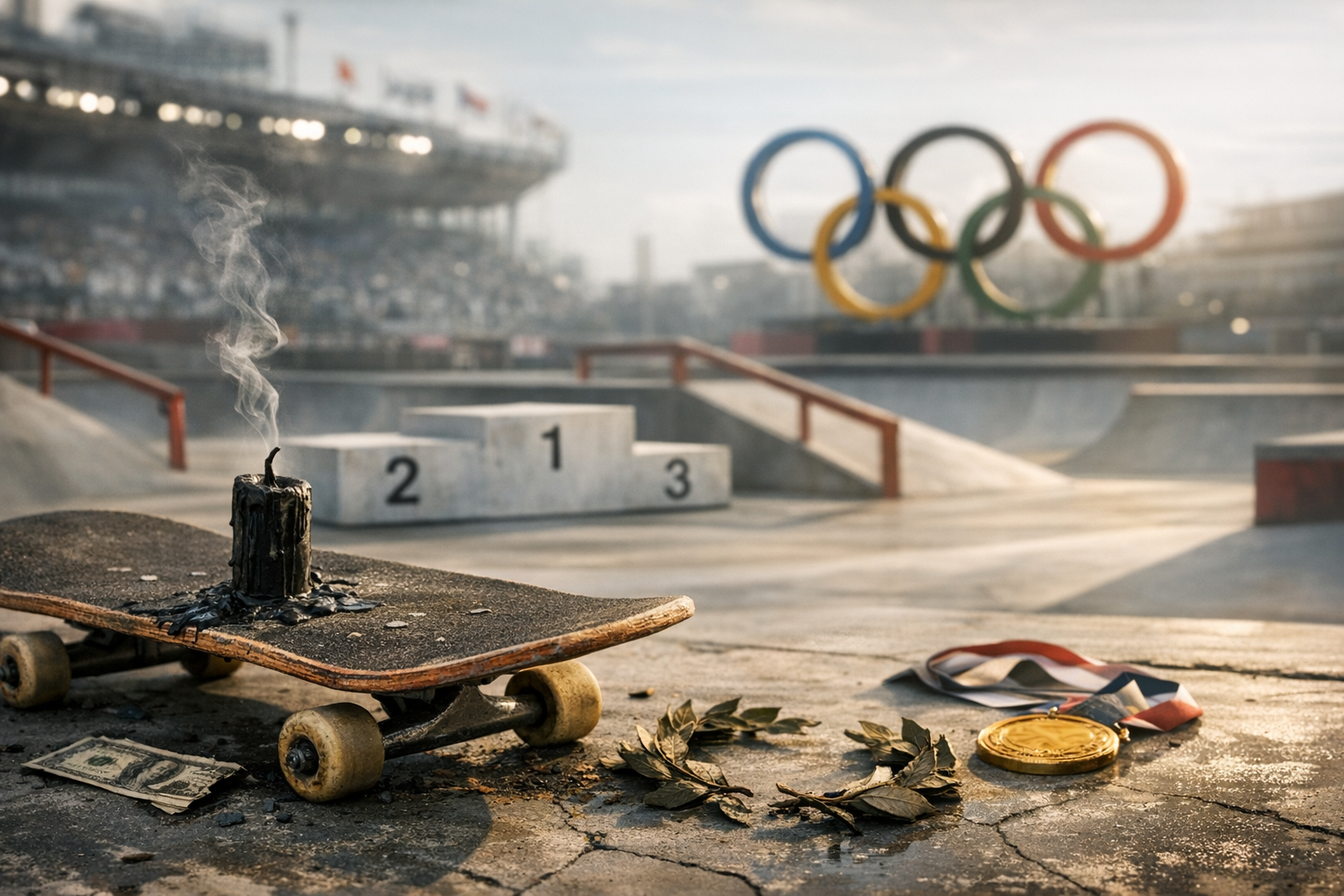
Skateboarding's inclusion in the 2021 Tokyo Olympics sparked a deep divide. We break down the debate through the voices of Tony Hawk, Zach Noyle, and Evan Smith — and ask what Olympic recognition really costs a culture built on rebellion.
The inclusion of skateboarding in the 2021 Tokyo Olympics raised a contentious question: Has skateboarding compromised its core identity to gain global recognition? As both a cultural movement and a sport, skateboarding's participation in the Olympics has sparked divergent views among professionals, fans, and the broader community. In this expert debate, we delve into perspectives from Tony Hawk, Zach Noyle, and Evan Smith to navigate the complexities of this issue.
Context
With skateboarding gaining Olympic status, it has undeniably entered a new phase in its evolution. This shift has prompted discussions about authenticity, commercialization, and the future of the sport. For many in the skateboarding community, the sport is rooted in rebellion, creativity, and self-expression. The potential for mainstream exposure and financial opportunities contrasts starkly with these foundational elements — a tension that echoes similar debates in BMX culture and extreme snowboarding — stirring debate about whether this new trajectory dilutes skateboarding's original essence.
Perspective: Proponents of Olympic Inclusion
Tony Hawk, a legendary figure in skateboarding, argues that Olympic inclusion represents an opportunity for the sport to attain recognition and legitimacy. Hawk posits that the visibility gained from the Olympics can introduce skateboarding to a broader audience, allowing new enthusiasts to discover its culture.
"Skateboarding has always been about carving your own path. The Olympics don't change that but offer a platform for skaters to showcase their skill and passion on an international stage."
For Hawk, the potential economic benefits cannot be ignored. The Olympics can act as a catalyst for sponsorships, brand deals, and increased funding for skate parks, all of which are vital for the future of the sport.
Perspective: Skeptics of the Olympic Influence
On the opposite side, Zach Noyle, a renowned skateboarding photographer, warns that the essence of skateboarding is at risk in the pursuit of Olympic validation. Noyle emphasizes the potential for a homogenized image of skateboarding, where individuality and creativity are overshadowed by standardized metrics of performance.
"Skateboarding has thrived as an art form. The Olympics might reduce it to mere competition, stripping away the unique nuances that make it special."
Noyle's concerns underscore a broader fear: that the pursuit of medals could prioritize athletic performance over personal expression, leaving behind the vibrant subcultures that constitute skateboarding.
Perspective: Those in Between
Evan Smith, a professional skateboarder, occupies a more nuanced position in the debate. While he acknowledges the concerns raised by skeptics, he also recognizes that the Olympics offer a unique opportunity for growth.
"I get where people are coming from; I really do. But I also see the Olympics as a chance to elevate the sport and introduce new audiences to skateboarding's rich culture. It doesn't have to be one or the other."
Smith emphasizes the importance of maintaining skateboarding's core values while participating in a structured format, suggesting that skaters can still express themselves authentically within the Olympic framework.
Editorial Synthesis
Where experts agree
- Skateboarding's inclusion in the Olympics offers an exposure opportunity to a broader audience.
- There are financial benefits to being part of a global sporting event.
- The debate reflects a divide between traditionalists and modernists within the skateboarding community.
Where experts disagree
- The consequences of Olympic involvement: Is it diluting authenticity or serving as a platform for growth?
- How individual expression can coexist with competitive formats.
- The long-term impact of Olympic inclusion on skateboarding culture and community.
Why This Matters
The stakes are high for the skateboarding community as it navigates this uncharted territory. The choices made now could affect the sport's trajectory for generations. While Olympic recognition may usher in new opportunities, the challenge lies in ensuring that these changes do not sacrifice the very qualities that have historically defined skateboarding.
For enthusiasts and professionals alike, understanding this intersection between competition and culture is essential to keep the spirit alive. The decision to embrace or resist Olympic involvement shapes not just the future of skateboarding as a sport but also its lasting legacy as a movement rooted in freedom and self-expression. The same question haunts snowboarding, surfing, and BMX: how do you scale a subculture without killing what made it worth watching?
As the debate continues, one thing remains clear: skateboarding has always been and will always be about carving one's path. Whether that path leads through the Olympic arena or against its grain, only time will tell.
Navigating Skateboarding's Olympic Dilemma
The inclusion of skateboarding in the Olympics undeniably positions the sport at a crossroads, balancing between mainstream acceptance and its core values of creativity and rebellion. While supporters like Tony Hawk argue that Olympic participation can elevate the sport and draw in new enthusiasts, skeptics like Zach Noyle caution against potential dilution of its authenticity. Ultimately, the ongoing debate reflects a broader struggle within sports culture: how to embrace opportunities for growth while honoring tradition. Skateboarding, at its heart, thrives on individuality and self-expression, and it is crucial for the community to engage in these discussions to shape its future without losing sight of its roots.

Tony Hawk
Professional Skateboarder, Entrepreneur
"Tony Hawk argues that skateboarding's inclusion in the Olympics elevates the sport's visibility and legitimacy, providing new opportunities for young athletes and promoting a positive image of skateboarding worldwide."
𝕏 Tony Hawk in Tony Hawk
Zach Noyle
Skateboarding Photographer
"Zach Noyle contends that the Olympics commercialize skateboarding, stripping away its authentic, underground roots. He fears that the sport's inclusion in such a corporate environment may dilute its true culture and creativity."
in Zach Noyle
Evan Smith
Professional Skateboarder
"Evan Smith maintains a balanced view, acknowledging the potential benefits of the Olympics for broader recognition while also voicing concern for maintaining the sport's core values and community spirit."
𝕏 Evan SmithHow Does This Hit You?

No comments yet. Be the first to weigh in.