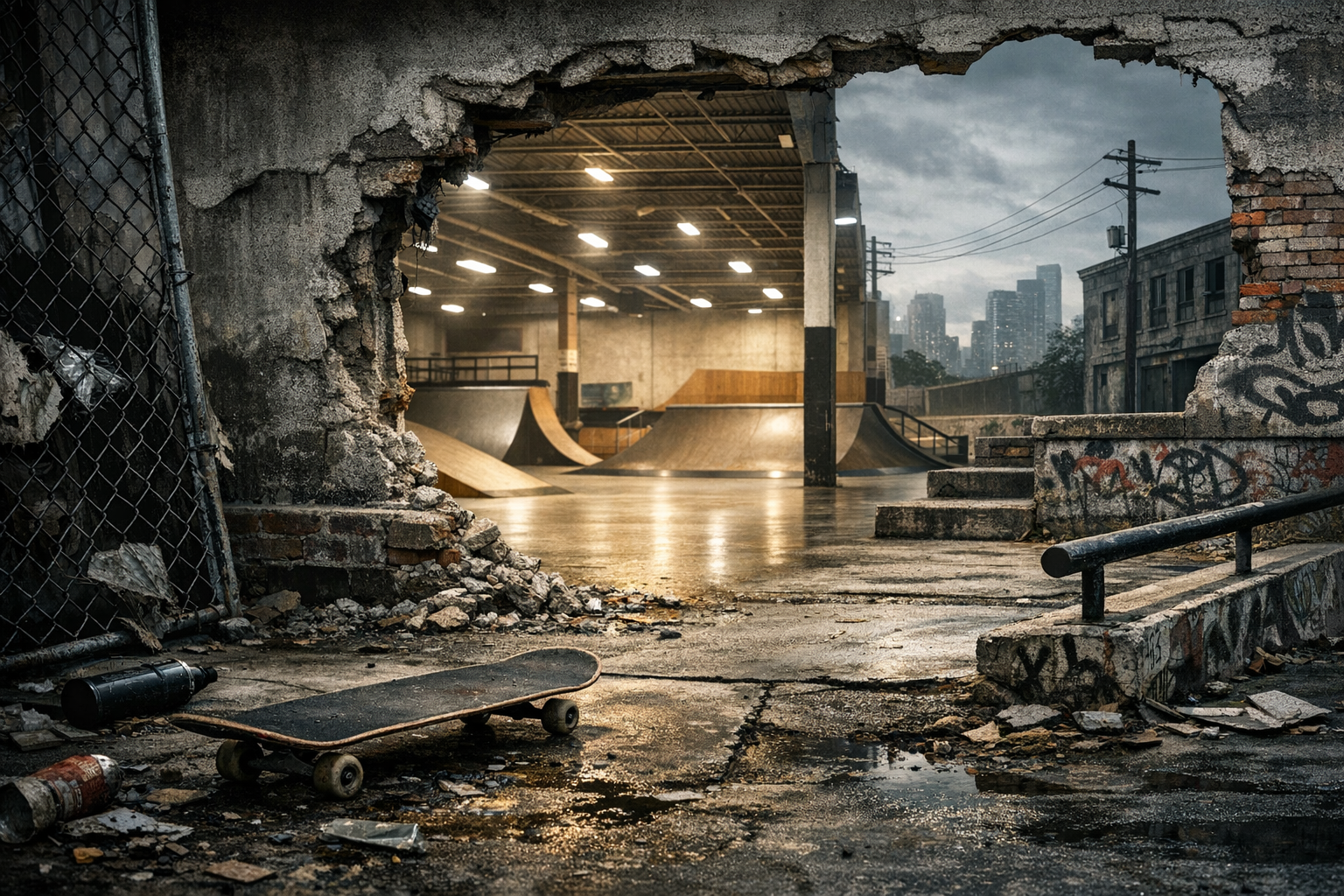
Are Indoor Skateparks Killing the Soul of Street Skating? The emergence of indoor skateparks has reshaped the landscape of skateboarding, raising an e...
The emergence of indoor skateparks has reshaped the landscape of skateboarding, raising an essential question among enthusiasts: Are these controlled environments diluting the raw authenticity that street skating embodies? With the sport's meteoric growth and more athletes transitioning from the streets to polished indoor venues, the debate reflects deeper concerns about the future of skate culture itself.
Context
The recent surge in the number of indoor skateparks mirrors the increasing mainstream popularity of skateboarding, particularly following its inclusion in the Olympics. As sponsors and investors pour resources into the sport, indoor facilities offer safety, accessibility, and a controlled environment—benefits that are particularly alluring for beginners and casual skaters. However, as skaters flock to well-designed parks and urban aesthetics blur, the cultural essence of street skating—characterized by its rebellion and spontaneity—finds itself at a crossroads. This tension is not merely about where one skates, but about how much one is willing to compromise on authenticity.
Perspective: Pro-Indoor Skateparks
To some, indoor skateparks represent a necessary evolution in the skateboarding world. Lizzie Armanto, a prominent figure in women's skateboarding, argues that these parks provide crucial opportunities for skaters—especially women and youth.
“Indoor parks are often more accessible, offering safety against weather and traffic,” Armanto states. She emphasizes that the growth of indoor facilities opens doors for diverse communities to engage in skateboarding without the barriers that street locations may impose.
Supporters like professional skateboarder Jason Dill note that while street skating is vital, the proliferation of indoor parks allows for a different kind of creativity.
“Some people think of skateboarding as purely about the streets, but it's about expression. Indoor parks can foster that creativity in new ways,” Dill explains.
The practicality of indoor parks is also hard to overlook. They provide a controlled atmosphere where skaters can practice their tricks repeatedly without the risks posed by city streets, which often include pedestrians and uneven surfaces. This can lead to increased skill levels and confidence, enabling skaters to take bold steps into street terrain with more experience.
Perspective: Against Indoor Skateparks
Conversely, many traditionalists argue that indoor skateparks are undermining street skating's rawness. Tony Hawk, an iconic figure in skateboarding history, suggests that the allure of street skating lies in its unpredictability and the creativity born from navigating urban landscapes.
“Street skating isn't just a sport; it’s an art form. Skaters pull authenticity from their environments, and indoor parks take away that connection,” Hawk remarks.
Additionally, critics fret that indoor skateparks can foster a 'cookie-cutter' culture, where skaters become accustomed to smooth ramps and controlled conditions rather than honing their skills in natural, imperfect settings. This concern extends to the potential for stifling innovation and reducing the thrill of improvisation that street skating uniquely offers.
Furthermore, Jason Dill also highlights a potential downside:
“Indoor parks can lead to a homogenization of skateboarding. Style and individuality are pushed aside for technical skills and trick lists.”
The charm of street skating lies in its disparities, and as skaters shift towards polished environments, some express worries over losing the rich variance that characterizes the sport.
Editorial synthesis
Where experts agree
- Both indoor parks and street skating serve as important expressions of skate culture.
- Accessibility and safety in skateboarding should be prioritized.
- Growth in skateboarding will likely continue, driven by both indoor and outdoor venues.
Where experts disagree
- The impact of indoor skateparks on the authenticity and creativity of skateboarders is heavily debated.
- Opinions differ on whether indoor environments stifle street culture or enhance it by improving skill levels.
- The necessity of street skating for the overall health of skate culture is contested among experts.
Why this matters
As skateboarding progresses into a new era, the rise of indoor skateparks raises fundamental questions about the roots and future trajectory of this beloved sport. Whether one views indoor parks as beneficial tools for growth or as venues that threaten the soul of street skating, the dialogue itself is crucial for the evolution of skate culture. The balance between innovation and tradition is delicate; understanding the implications of each side is essential for skaters, sponsors, and the entire skateboarding community. Navigating this landscape of preferences is vital. As skateboarding continues to expand into new territories—both in terms of skill and cultural identity—the voices of experts like Armanto, Dill, and Hawk will remain vital in shaping a balanced understanding of what it means to be a skateboarder in today's world.
The Balance Between Innovation and Authenticity
The emergence of indoor skateparks undoubtedly brings a fresh wave of opportunities for both new and seasoned skaters, fostering inclusivity and safety that were previously unattainable in many street environments. However, as we cheer for the growth and accessibility these facilities provide, we must remain vigilant about the essence of skate culture that thrives on exploration, creativity, and the spontaneity of street skating. The challenge lies in striking a balance between these controlled spaces and the gritty, organic nature of urban skating. The soul of skateboarding should not diminish but evolve, allowing both indoor and street skating to coexist—each enriching the other while preserving the rebellious spirit that defines the sport. By embracing this duality, we can ensure that skateboarders continue to forge their identities in and out of the skatepark.

Tony Hawk
Professional Skateboarder, Entrepreneur
"Indoor skateparks provide a safe, controlled environment for skaters of all ages, helping to grow the sport and make it accessible. They offer opportunities for skill development that may not be available in the unpredictable outdoor street scene."
𝕏 Tony Hawk in Tony HawkJason Dill
Professional Skater and Filmmaker
"Indoor skateparks can detract from the authenticity and rawness that define street skating. The freedom and creativity found in street environments foster genuine connection to the culture, something that artificial settings can seldom replicate."
𝕏 Jason DillLizzie Armanto
Professional Skateboarder
"While indoor skateparks can offer valuable training spaces and inclusivity, maintaining access to street skating is essential for the sport's heritage. A balance between both environments can cultivate diverse skate communities."
𝕏 Lizzie ArmantoHow Does This Hit You?


No comments yet. Be the first to weigh in.