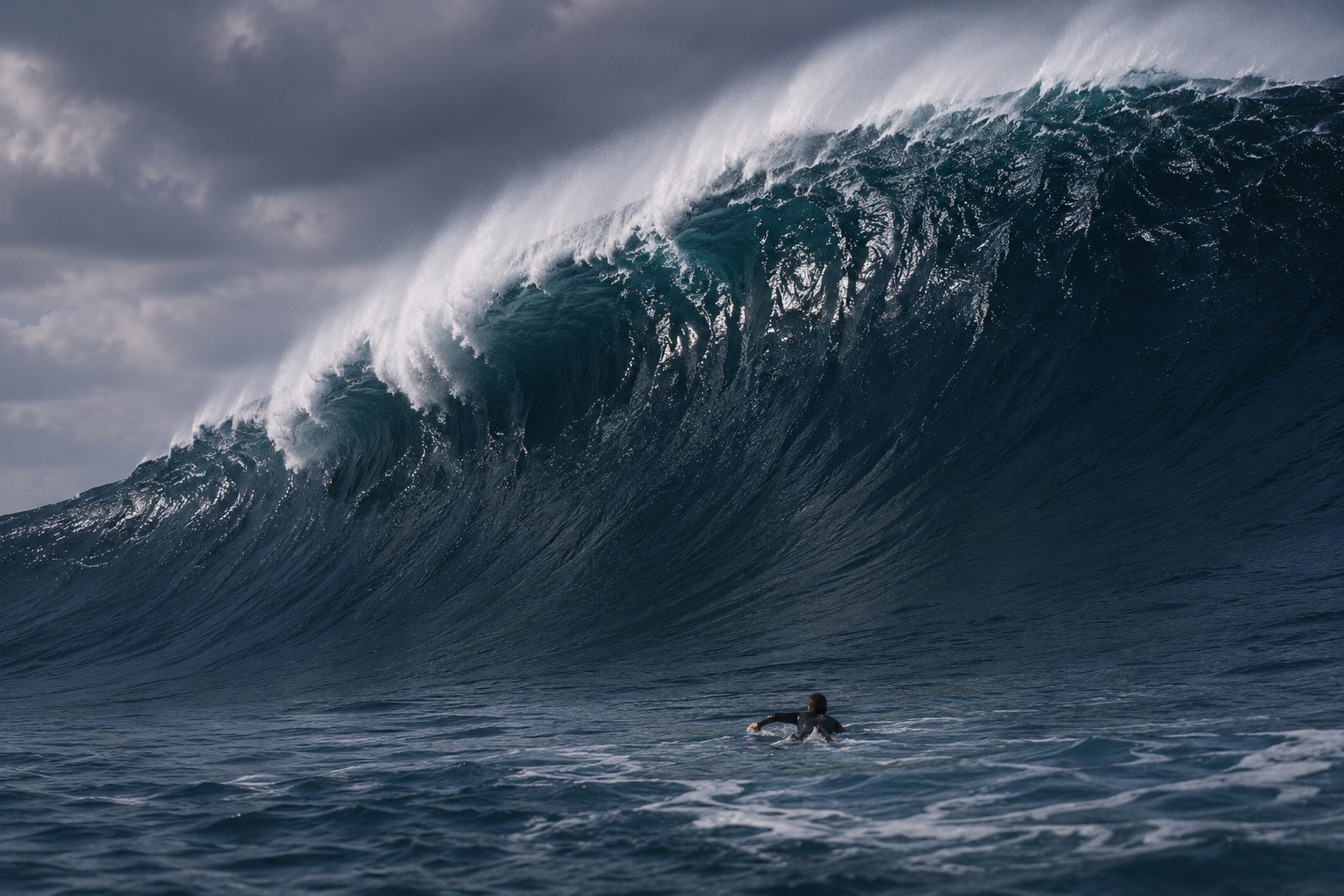
Someone just paddled into an 80-foot wave — and the surfing world is still processing it. Laird Hamilton, Tom Carroll, and Dr. John Stokes debate whether the limits of big wave surfing are mental, physical, or simply waiting for the next surfer brave enough to ignore them.
What happens when the boundaries of sport are tested and redefined? In the world of big wave surfing, a seemingly insurmountable limit was established for wave heights and surfing techniques. Many believed that advancements in big wave surfing had reached their peak. Yet, in a stunning display of courage and skill, a new generation of surfers proved that boundaries are not as solid as previously thought.
Why This Matters Now
The sport of big wave surfing has captivated audiences and surfers alike for decades, pushing the limits of human ability against nature's fury. With recent advancements in equipment, safety protocols, and training techniques, the surfing world is witnessing a re-evaluation of what it means to surf the most daunting waves. This is particularly relevant as the climate crisis continues to impact ocean conditions, resulting in unpredictable wave behaviors that challenge traditional understandings of big wave surfing limits.
Perspective: Laird Hamilton
Laird Hamilton, a professional big wave surfer renowned for his innovation in the sport, champions the notion that the limits of big wave surfing exist primarily in the minds of the surfers themselves. According to Hamilton, "The ocean is vast and powerful, and to say we have reached a limit is a disservice to both the sport and the adventurous spirit of humankind."
Hamilton emphasizes that advancements in paddling techniques and boards designed for extreme conditions enable surfers to tackle waves once considered out of reach. He cites the recent feats of athletes who have successfully paddled into waves taller than 80 feet. For Hamilton, these milestones signal a new era of possibility in big wave surfing where courage, technology, and training intersect to create unprecedented opportunities.
Perspective: Tom Carroll
Tom Carroll, a former world champion surfer with a deep understanding of the sport's history, offers a somewhat tempered perspective. While he acknowledges the achievements in wave heights, Carroll is cautious. He argues, "Innovation must come with an understanding of safety and respect for the ocean. Surfing bigger waves requires not just skill, but also a profound appreciation for the dangers involved."
According to Carroll, the feats of the new generation of surfers risk overshadowing the lessons learned by earlier surfers who faced similar challenges. He believes that while pushing limits is critical, safety protocols should always accompany any evolution in the sport — emphasizing that each wave carries inherent risks and demands respect.
Perspective: Dr. John T. L. Stokes
Dr. John T. L. Stokes, a sports scientist specializing in extreme sports, brings a scientific lens to the ongoing debate. He emphasizes the physiological limits of the human body, noting, "As surfers push themselves into larger and more powerful waves, we must consider the physical toll it takes on their bodies and the potential for injury."
Dr. Stokes argues that there are biological parameters to consider when it comes to big wave surfing. He advocates for systematic training programs that include not only surfing technique but also strength conditioning and cognitive training that prepares surfers for grappling with the unpredictable power of massive swells. In his view, while it is essential to push for new heights in the sport, it must be done with a rigorous scientific approach that prioritizes athlete health.
Editorial Synthesis
Where Experts Agree
The historical boundaries of big wave surfing are continuously being tested. Innovation in training and equipment plays a significant role in reshaping the sport. Safety considerations must remain a priority as surfers push their limits.
Where Experts Disagree
Hamilton believes that mental barriers are the primary limits to surfing, while Carroll asserts that respect for the ocean's dangers is vital. Dr. Stokes focuses on the physiological limits of surfers, suggesting the importance of scientific training — which may not be a priority for all surfers or advocates.
Why This Matters
The tension between pushing limits and respecting the ocean's power stands at the forefront of the big wave surfing debate. The remarkable courage displayed by modern surfers suggests that boundaries are destined to be challenged. However, as technology and techniques evolve, the conversation surrounding safety, respect for nature, and the physiological constraints of the human body must also adapt.
At a time when climate change threatens the very nature of the waves surfers hope to conquer, it becomes ever more crucial to balance ambition with awareness. The next chapter of big wave surfing will likely reflect the lessons of both those who dare to dream and those who remember the importance of reverence for the ocean. The answers lie ahead, shaped by the waves themselves and the spirits of those who dare to surf them.
Redefining Limits: The Future of Big Wave Surfing
The recent achievements in big wave surfing underscore a pivotal truth: the limits we impose are often a reflection of our imagination rather than the reality of what is possible. As Laird Hamilton and other pioneers illustrate, advancements in technique, equipment, and the unwavering spirit of surfers push the boundaries further into the ocean’s depths. The dynamic interplay of human tenacity and the ever-changing natural world not only inspires current surfers to explore new horizons but also emphasizes the responsibility of the sport's community to prioritize safety and sustainability in the face of climate change. As we witness these thrilling advancements, it's essential to remain aware of the risks they carry and the ethical considerations they prompt. This ongoing evolution invites us all to ponder – what other limits can we challenge and redefine in our lives and pursuits?

Laird Hamilton
Professional Surfer & Waterman
"Hamilton believes that the human spirit thrives on pushing limits, and pioneering new techniques in big wave surfing is essential for the sport's evolution."
𝕏 Laird Hamilton in Laird Hamilton
Tom Carroll
Former World Champion Surfer
"Carroll emphasizes the importance of safety and accountability in big wave surfing, arguing that pushing boundaries recklessly can lead to tragic consequences."
in Tom CarrollHow Does This Hit You?



No comments yet. Be the first to weigh in.