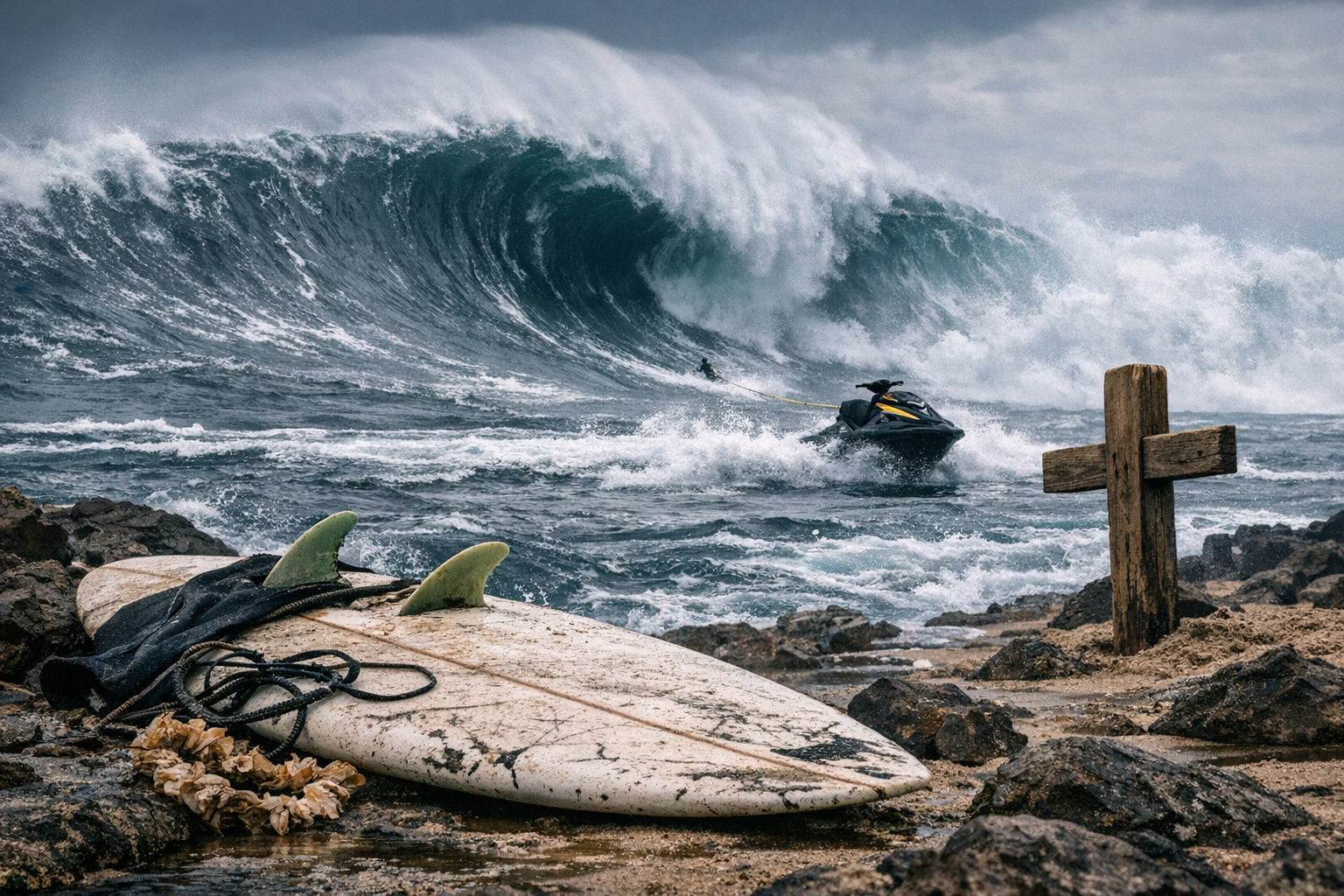
Big Wave Tow-In: Innovation or the Death of Real Surfing? What does it mean to truly surf?
What does it mean to truly surf? As the sport of surfing evolves, the introduction of tow-in surfing to tackle the formidable waves of places like Nazaré has stirred a controversial debate among surfers and enthusiasts alike. Are jet skis simply facilitating the act of surfing, or are they undermining its essence by prioritizing power and speed over skill and endurance?
Context
Tow-in surfing emerged in the late 1990s, introduced by pioneers like Laird Hamilton. The technique enables surfers to ride colossal waves that would be nearly impossible to paddle into. As global warming alters wave patterns and creates increasingly dangerous surfing conditions, the debate surrounding tow-in surfing has become more pressing. With iconic spots like Nazaré becoming synonymous with monster waves, the question of whether tow-in is a valid progression of the sport or a departure from its roots grows increasingly pertinent.
Expert Perspectives
Perspective: Innovation and Progress
Laird Hamilton, a proponent of tow-in surfing, argues that the technique is a natural evolution of the sport. "We are not out there to merely survive wave riding; we are there to push boundaries and explore new frontiers in surfing. Tow-in surfing has opened up a world previously inaccessible and encouraged surfers to embrace the challenge of enormous waves. It is a tool, much like a surfboard or a wetsuit, yet it allows us to approach the ocean with both respect and audacity."
While some claim that jet ski support takes away from the athleticism required in traditional surfing, Hamilton retorts that it is about safety and advancement. "It’s not just about riding a wave; it's about appreciating the ocean’s vastness and challenging ourselves against its might."
Those in favor of tow-in surfing argue that it expands the community and promotes interest in surfing at all levels. Gabriel Medina, a two-time world champion, shares this sentiment: "Tow-in is a thrilling experience that has brought more attention to surfing. It allows us, as athletes, to reach heights we never thought possible."
Perspective: Traditionalism and Preservation
On the other hand, traditionalists argue that tow-in surfing significantly alters the foundational aspects of the sport. Kelly Slater, an 11-time world champion, has voiced concerns over the legitimacy of riding massive waves with the assistance of jet skis. "Paddle surfing is about getting yourself into the wave through determination and skill. It’s a dance with nature. Tow-in takes away that intimate connection and dramatically changes the experience."
Critics assert that the surf culture risk losing its grassroots authenticity. They warn that tow-in surfing might create a chasm between enthusiasts who embrace the original essence of surfing and those who view it simply as a spectacle. Slater emphasizes, "Surfing should remain a personal battle between the surfer and the wave, a metaphor for overcoming challenges in life. Using a jet ski to eliminate that struggle diminishes its magic."
Editorial Synthesis
Where Experts Agree
- Tow-in surfing offers enhanced safety in extreme conditions.
- It attracts wider audiences and stimulates interest in the sport overall.
- The ocean’s unpredictable nature warrants innovations such as tow-in
Where Experts Disagree
- The legitimacy of tow-in surfing as a form of surfing.
- Whether tow-in enhances athleticism or diminishes skill and artistry.
- The cultural and philosophical implications of using technology in a traditionally primal sport.
Why This Matters
As surfing continues to evolve in the wake of climate change and technological advancements, understanding the implications of techniques like tow-in surfing becomes crucial. It is not merely a debate about methodology but a reflection of the sport’s values and its future direction. The tension between innovation and tradition encapsulates a broader question about identity in sports. Will surfing, as we know it, survive the tides of change or drown in the rush for spectacle? The answer may lie in a balancing act between respecting the roots of surfing while embracing the innovations that define modern athleticism. Each wave ridden, whether by paddle or tow-in, is a testament to human resilience—reminding surfers everywhere that it’s not just about riding the wave, but the journey of navigating it.
Embracing Innovation While Honoring Tradition
Tow-in surfing presents a compelling case for innovation within the sport, enabling surfers to confront challenges that were previously insurmountable. Proponents like Laird Hamilton articulate a vision where the technique not only enhances safety but also invites greater exploration of the ocean's might. However, this new wave of surfing must not overshadow the fundamental essence of the sport—namely, skill, endurance, and the deep connection surfers have with the ocean. As the surfing community grapples with its identity amidst these advancements, it is crucial to strike a balance between embracing progression and preserving the rich traditions that define surfing at its core.
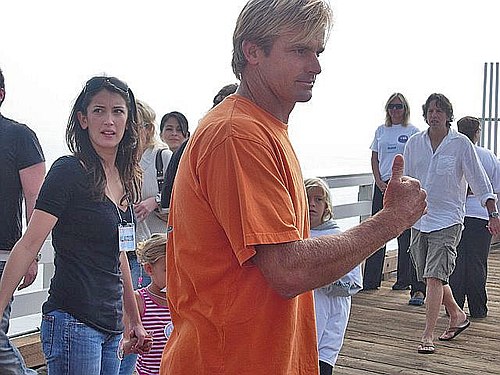
Laird Hamilton
Professional Surfer & Waterman
"Laird Hamilton believes that tow-in surfing has revolutionized the sport by providing access to waves that were previously deemed too dangerous to surf. He argues that this innovation has expanded the possibilities of what surfers can achieve."
𝕏 Laird Hamilton in Laird Hamilton
Kelly Slater
Professional Surfer & 11-Time World Champion
"Kelly Slater contends that tow-in surfing undermines the core essence of surfing, which is about harmony with the ocean and wave riding skill. He believes that reliance on technology detracts from the spirit of the sport."
𝕏 Kelly Slater in Kelly SlaterGabriel Medina
Professional Surfer & Two-Time World Champion
"Gabriel Medina provides a nuanced perspective, recognizing the advantages of innovation in surfing while valuing traditional methods. He advocates for a balance that respects both the cutting-edge of tow-in surfing and the classic art of riding waves."
𝕏 Gabriel MedinaHow Does This Hit You?


No comments yet. Be the first to weigh in.