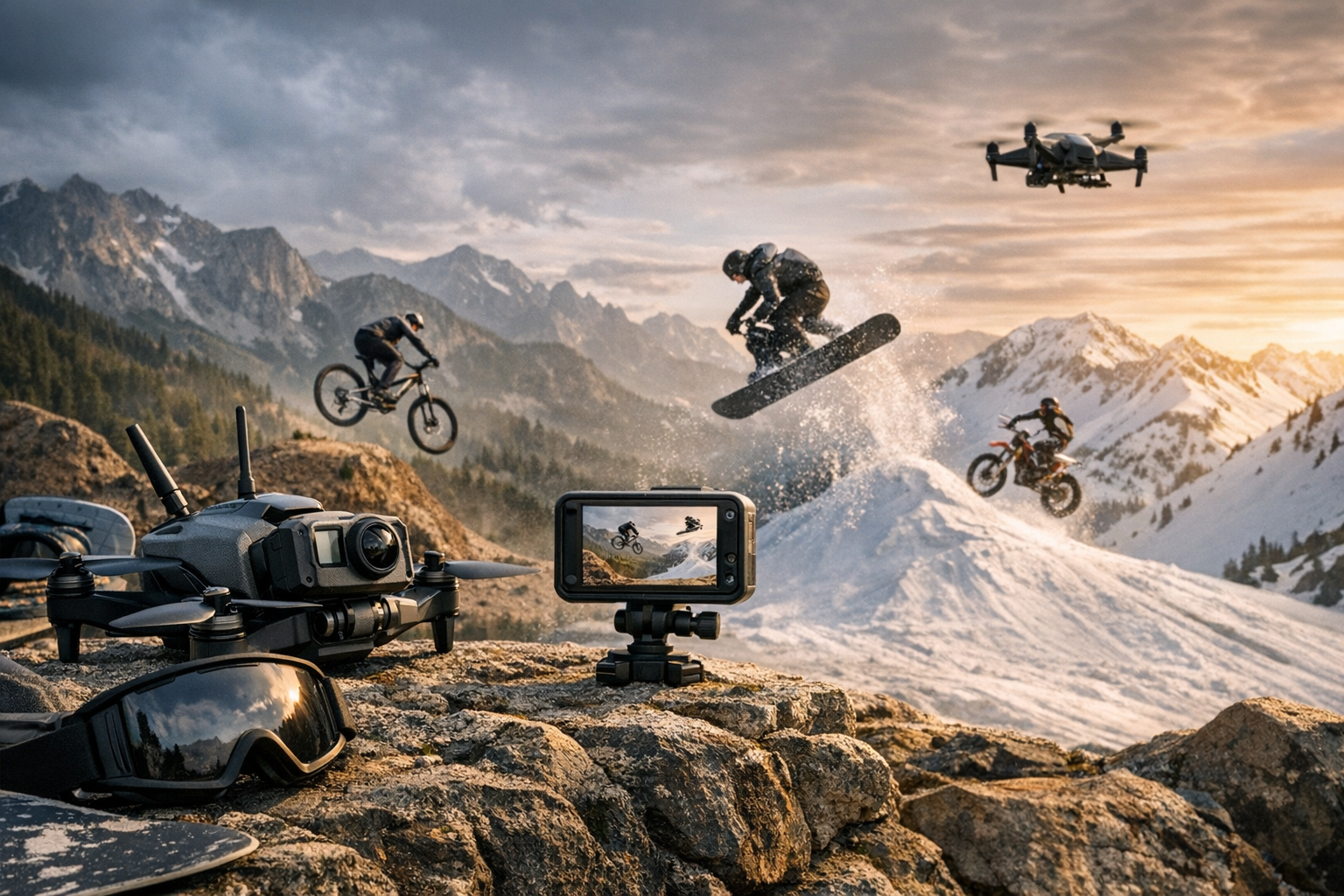
Drones have made extreme sports footage more spectacular than ever — but are jaw-dropping aerial shots bringing viewers closer to the action, or creating a polished spectacle that strips away the danger and raw emotion? Kirk McKoy, Anna Kovalchuk, and Dr. Emily Anderson investigate.
Are drones transforming the way extreme sports are filmed and, by extension, how audiences experience these high-octane events? With the rise of aerial filming technology, the relationship between filmmakers, athletes, and viewers is undergoing a significant evolution, promising sweeping changes in both production and consumption.
Context
As drone technology becomes more accessible, its impact on extreme sports film production is undeniable. Markets for extreme sports content are now more competitive than ever, and the demand for innovative visuals continues to grow. For industry veterans, this seismic shift in filming technology prompts questions about authenticity and the spectator experience.
This matter resonates with enthusiasts and professionals alike, as it interrogates not only how we watch sports but how we connect with the adrenaline-fueled actions we crave.
Perspective: Filmmaking Revolutionized
Kirk McKoy, VP of Production at the X Games, argues that drones fundamentally alter the art of extreme sports cinematography. "Drones provide a point of view that a camera on the ground simply can't replicate," he explains. "They allow us to capture the scale and dynamic nature of an environment, taking the viewer into the action in ways that were previously unimaginable."
In his view, drones enhance storytelling by encompassing spectacular scenery and athlete skill sets, offering audiences a multi-dimensional experience. Notably, the breathtaking aerial shots that once required expensive helicopter rentals — or even risking a human cameraman dangling from a harness — are now achieved with an ease and agility that revolutionizes production workflows.
Anna Kovalchuk, Director of Adventure Media, echoes this sentiment, emphasizing the versatility drones provide. "Whether it's a close-up of a skateboarder's flip or a sweeping view of a snow-covered mountain range, drones can adapt to the needs of different sports and settings. They democratize extreme sports filmmaking," she states. This versatility offers unprecedented opportunities for new filmmakers to enter the space and share unique narratives.
Perspective: Viewer Experience Transformed
Conversely, Dr. Emily G. Anderson, a sports psychologist and researcher, poses critical questions about the psychological implications of drone footage on viewer experience. While acknowledging the visual advantages of drone captures, she argues that these new perspectives could detach spectators from the raw adrenaline of extreme sports. "When viewers consume extreme sports as mere spectacle, they might miss out on the emotional stakes involved," she warns.
Dr. Anderson's research suggests that the excitement and risk often inherent in extreme sports may be diminished when these experiences are packaged as visually astonishing but inherently safe. "For many, part of the thrill of watching extreme sports is understanding the danger involved. Drones can sterilize that experience," she adds.
Kovalchuk agrees with Dr. Anderson's concerns, recognizing that while drones enrich the visual narrative, there's a risk of oversaturating content. "We need to balance exciting visuals with authentic storytelling. If a viewer becomes desensitized to the excitement through overexposure, the overall impact can diminish," she notes.
Editorial Synthesis
Where Experts Agree
Both McKoy and Kovalchuk assert that drones provide a unique perspective that enhances the narrative of extreme sports, making it more engaging for viewers. The technological advancements of drones also democratize the filmmaking landscape, enabling more people to produce content and share diverse stories.
Where Experts Disagree
Dr. Anderson believes that drone footage risks creating a detachment from the emotional stakes involved in extreme sports, while McKoy and Kovalchuk focus on the immersive potential drones provide. Anderson and Kovalchuk caution against a desensitized viewer experience, while McKoy emphasizes that innovation keeps the viewer engaged.
Why This Matters
The debate about drones in extreme sports filmmaking is more than a technical consideration; it reflects broader questions about how experience, safety, and authenticity intersect in the realm of high-risk sports. As filmmakers embrace technology to create breathtaking visuals, it is crucial that they remain vigilant regarding the emotional connection with their viewers. In the quest for captivating content, ensuring that the essence of the extreme sports experience remains intact must not be overlooked.
As audiences, filmmakers, and athletes navigate the evolving landscape of extreme sports, the answers to these questions will shape the future of how these dazzling feats are captured and consumed. Ultimately, the challenge lies in harnessing the power of drone technology while preserving the raw thrill of the sport itself — a balance essential for maintaining the excitement that has captivated audiences for generations.
Drones: Elevating the Extreme Sports Experience
The advent of drone technology in extreme sports filmmaking represents a pivotal shift, enhancing not only the visual spectacle but also our emotional engagement with these thrilling activities. Drones enable filmmakers to capture breathtaking angles and dynamic perspectives that immerse viewers deeper into the action, creating a more visceral experience. However, while this innovation brings unmatched opportunities for creativity and storytelling, it raises questions around the authenticity of the viewer's connection to the sport. Are we experiencing the thrill as the athletes do, or are we merely observing from a commodified distance? Striking a balance between enhanced storytelling and maintaining the raw, personal experience of extreme sports is essential. As filmmakers adapt to this new tool, it is crucial to keep the essence of the sport alive, ensuring that the adrenaline rush isn’t just seen but felt. Ultimately, drones hold the potential to elevate the experience, but the heart of extreme sports must not be lost in translation.

Kirk McKoy
VP of Production, X Games
"Drones enhance the viewing experience by providing unique perspectives that were previously impossible, allowing audiences to feel more immersed in extreme sports events and capturing the adrenaline of the moment like never before."
in Kirk McKoy
Dr. Emily G. Anderson
Sports Psychologist and Researcher
"Drones undeniably reshape how we capture extreme sports, yet it’s crucial to analyze their impact on viewer engagement and emotional connection, ensuring that technology enhances rather than diminishes the live experience."
in Dr. Emily G. AndersonHow Does This Hit You?


No comments yet. Be the first to weigh in.