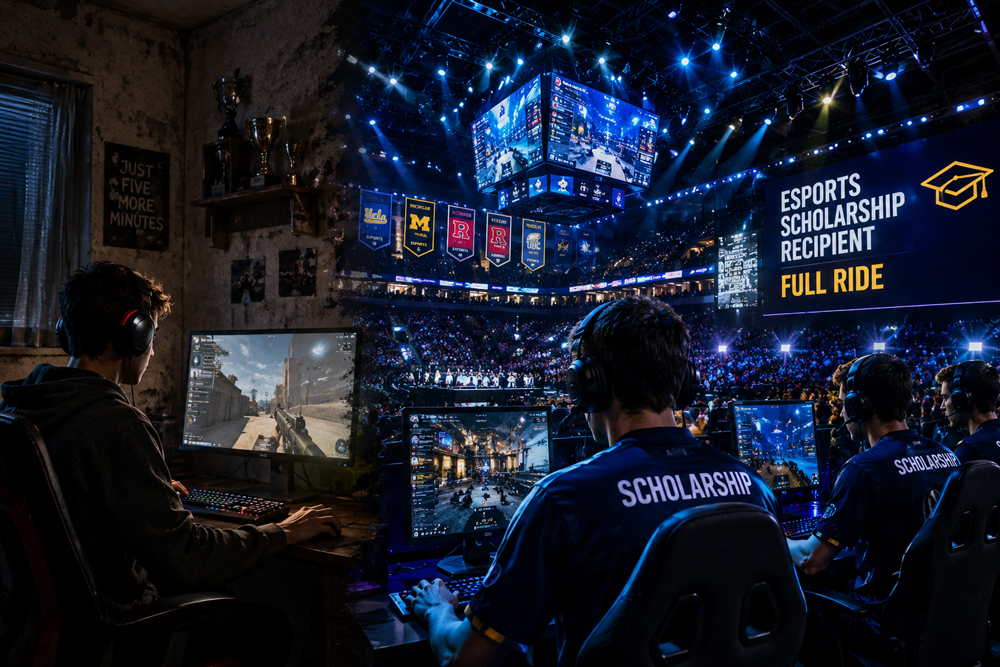
Once upon a time, the best player in the world was some kid in his bedroom with no coach, no team, and no budget. Scholarships changed that. The question is whether that's progress or a loss.
As esports increasingly gains legitimacy within the realm of competitive gaming, the introduction of scholarships has sparked a heated debate: does the emergence of structured financial support for gamers eliminate the classic underdog narrative that has long captivated audiences? This tension raises fundamental questions about accessibility, opportunity, and the evolving landscape of competitive gaming.
The growth of esports has outpaced many traditional sports, leading to the establishment of various college scholarship programs aimed at nurturing young talent. According to recent reports, over 200 colleges and universities in North America now offer esports scholarships, with total funding reaching an estimated $15 million in 2022 alone. The traditional notion of the underdog — where individuals rise through sheer talent and determination — is increasingly at odds with this new structure, potentially reshaping the very fabric of competitive gaming.
Nate Nanzer, CEO of the Overwatch League, emphasizes that scholarships can help elevate the standard of play and increase investment in player development. "By providing financial incentives to students, schools can attract dedicated gamers who might otherwise have been deterred from pursuing their passion. The more competitive the environment, the better the outcomes for players and fans alike."
Mark 'Marky' Johnson, co-founder of Community Gaming, adds, "Scholarships open doors for diverse talent, particularly in underserved communities. It ensures that all aspiring gamers have the opportunity to shine, rather than just those who can afford to invest heavily in training or equipment."
On the other hand, some experts caution against potential pitfalls, arguing that the ubiquity of scholarships may dilute the underdog narrative often celebrated in sports. Dr. Rachel Kowert, Research Director at Take This, asserts that while scholarships can provide access to gaming, they might inadvertently create barriers for non-traditional players. "When financial incentive becomes a primary motivator, the organic growth of grassroots talent could diminish. The underdog story thrives on unsponsored passion and challenges; taking that away can shift the focus away from pure skill and determination."
Kowert also points out that the pressure to perform, backed by scholarships, could lead to mental health issues among young gamers. "This competitive stress combined with academic expectations might create an environment where individuals feel they must win at all costs, which contradicts the spirit of sportsmanship."
Both sides agree that the introduction of esports scholarships is a sign of the professionalization of gaming, and that providing financial assistance can expand participation from diverse backgrounds. The need for more structured support in developing gaming talent is not in dispute. What is disputed is everything that comes with it.
Supporters see scholarships as a necessary evolution in esports, while critics argue they can undermine the traditional underdog narrative. The impact on the mental health of players remains the sharpest point of contention — while some see institutional support as beneficial, others warn of a pressure cooker that the original bedroom-gamer never had to face.
The debate surrounding esports scholarships reflects deeper societal values regarding competition, meritocracy, and opportunity. If schools can create environments that nurture talent and skill while maintaining the spirit of the underdog, then gaming may fully capitalize on its potential. However, if the scholarship model merely leads to commercialized gaming devoid of the intrinsic struggles that fuel true competition, the integrity of esports may be at risk.
Are esports scholarships paving the way for a new era of inclusivity and opportunity, or are they diluting the raw passion and struggle that has defined the underdog story? Only time will tell.
Balancing Opportunity and Authenticity in Esports
The introduction of esports scholarships undoubtedly marks a significant step towards legitimizing competitive gaming and making it accessible to a broader range of talents. However, while proponents tout these initiatives as pathways to inclusivity and professional growth, we must remain vigilant about the potential erasure of the classic underdog narrative that has long defined the spirit of gaming. The scholarships can enhance the competitive landscape but could also create an environment where only those with institutional support thrive. True diversity in gaming should encompass not just financial backing but also the raw talent and creativity that often come from grassroots stories. It is crucial for the esports community to foster environments that celebrate both structured opportunity and the authenticity of rising players who embody the underdog tale, ensuring that the heart of esports remains intact even as the industry evolves.

Nate Nanzer
CEO, Overwatch League
"Scholarships in eSports have helped to legitimize the industry and provide opportunities for underrepresented players. They do not kill the underdog story but instead offer a platform for potential talent to shine and level the playing field."
𝕏 Nate Nanzer in Nate Nanzer
Mark 'Marky' Johnson
Co-founder, Community Gaming
"While scholarships provide financial support, they can overshadow the traditional underdog narratives that have defined eSports. The emergence of a more corporate landscape may dilute the raw competition and grassroots spirit that originally attracted players."
𝕏 Mark 'Marky' Johnson in Mark 'Marky' JohnsonHow Does This Hit You?



No comments yet. Be the first to weigh in.