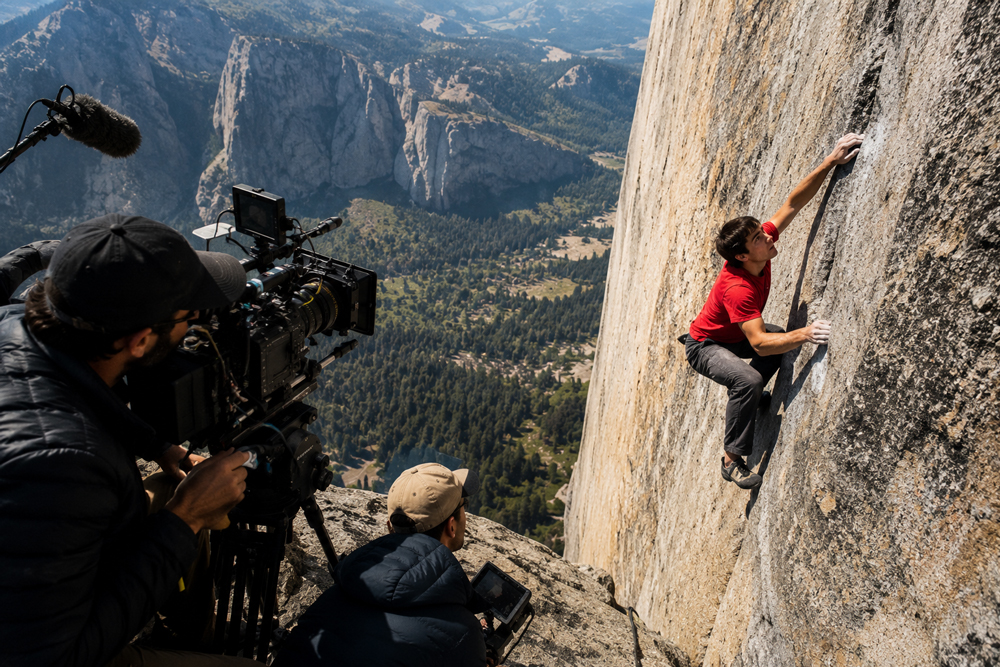
Alex Honnold climbed El Capitan alone, no ropes, no safety net. There was also a film crew. Somewhere in that sentence lives the whole debate.
What happens to the purity of extreme sports when the lens comes into focus? As free solo climbing continues to capture the imaginations of audiences worldwide, the question arises: does the presence of a camera dilute the essence of the ascent? This discourse captures the essence of what it means to be an extreme athlete in an age when documenting feats has become almost as crucial as the feats themselves.
The advent of documentary films like Free Solo, which chronicles Alex Honnold's historic solo ascent of El Capitan, has brought free solo climbing into mainstream consciousness. While these films celebrate the athletes' breathtaking achievements, they also create a paradoxical atmosphere: does the mere presence of cameras affect the climbers' performance or mindset? With growing scrutiny from the climbing community, this discussion is more relevant than ever.
Alex Honnold argues that filming can enhance the climbing experience. He believes that the intense focus required during a climb does not waver in the presence of cameras; rather, it can heighten the stakes. "The camera adds a layer of accountability," he states, suggesting that the anticipation of being filmed can motivate climbers to push their limits further.
For Honnold, the shared experience of film also serves as a means to inspire others. "If my ascent can lead someone to take up climbing, I feel that's a worthwhile exchange." However, he acknowledges that the relationship with media can be complex, especially concerning distractions.
Filmmaker and climber Jimmy Chin offers an insightful perspective from behind the lens. For Chin, documentation serves not only to showcase the sport but to preserve its cultural significance. "It's about storytelling," Chin explains, "and the story is often about overcoming fear and risk." However, he is acutely aware that the presence of cameras can alter the emotional landscape for climbers.
"In some instances, the climber may feel pressure to perform, which can shift their mental state. The authenticity of the climb can be influenced, and that is something we must consider." Despite this, he argues that, when done thoughtfully, filming can elevate both the sport and its narrative.
Tommy Caldwell presents another dimension to this debate. Caldwell asserts that pre-assigned filming often leads to a compromise of spontaneity, a crucial element of free solo climbing. "When you plan a climb around cameras, you lose the rawness," he argues.
"Climbing is about finding that personal flow, which can be disrupted by the awareness of being filmed. It's highly psychological," Caldwell states, signifying how the unusual blend of art and adventure can complicate authentic expressions of risk and thrill. He implores filmmakers to reflect on how to balance storytelling with the climber's intent.
All three agree on the psychological impact: awareness of being filmed can alter a climber's mental state, impacting the experience and outcome. They also share recognition that documentation plays a vital role in popularizing the sport and inspiring new generations of climbers. The camera, in that sense, is not going anywhere.
Where they diverge cuts to the core: Honnold sees filming as potentially enhancing the experience, while Caldwell views it as stripping away the raw essence of the climb. Chin believes in the storytelling power of documentation; Caldwell critiques the way planned filming can quietly kill the spontaneity that makes free solo climbing what it is.
As climbing evolves into a cultural phenomenon with widespread visibility, understanding the ramifications of filming is essential. The conflicting viewpoints reflect a broader tension in extreme sports: the desire for authentic experiences versus the allure of the cinematic portrayal. This dialogue urges climbers, filmmakers, and audiences alike to consider what is gained and lost when the lens turns toward the heights of human ability.
Are climbers performers or athletes? Do cameras embolden or ensnare? The answers will shape not only the future of free solo climbing but the very essence of sport itself.
The Dual Edge of the Lens
The advent of film in the realm of extreme sports like free solo climbing presents a complex dichotomy: while it enhances visibility and accountability, it can also distract and dilute the authenticity of the experience. Athletes like Alex Honnold emphasize that the presence of a camera can amplify focus and motivation, transforming a solitary ascent into a shared inspiration for others. Conversely, concerns linger within the climbing community about whether this spotlight could compromise the purity of the climb itself, shifting the dynamic from personal challenge to public performance. As we navigate this territory, we must balance the celebration of these extraordinary feats with a critical eye toward the potential impacts of media on the very essence of extreme sports. Ultimately, the camera's role may not be purely invasive but rather a catalyst for deeper engagement, urging us to rethink the boundaries of what it means to be an extreme athlete today.

Alex Honnold
Professional Rock Climber
"While climbing with cameras can change the dynamics of the experience, it also brings visibility to the sport, allowing a broader audience to appreciate its risks and beauty. The challenge remains to maintain authenticity while sharing these extreme pursuits."
𝕏 Alex Honnold in Alex Honnold
Jimmy Chin
Filmmaker and Climber
"Cameras can both elevate and complicate the narrative of extreme sports. They help capture pivotal moments but can lead to dilemmas regarding risk perception and climber safety, making it essential to find a balance between storytelling and ethical considerations."
𝕏 Jimmy Chin in Jimmy ChinTommy Caldwell
Professional Rock Climber
"The presence of cameras can create immense pressure on climbers to perform, potentially compromising their focus and safety. It's crucial to critically assess the impact of filming on pure climbing experiences and the inherent dangers it brings."
𝕏 Tommy Caldwell in Tommy CaldwellHow Does This Hit You?


No comments yet. Be the first to weigh in.