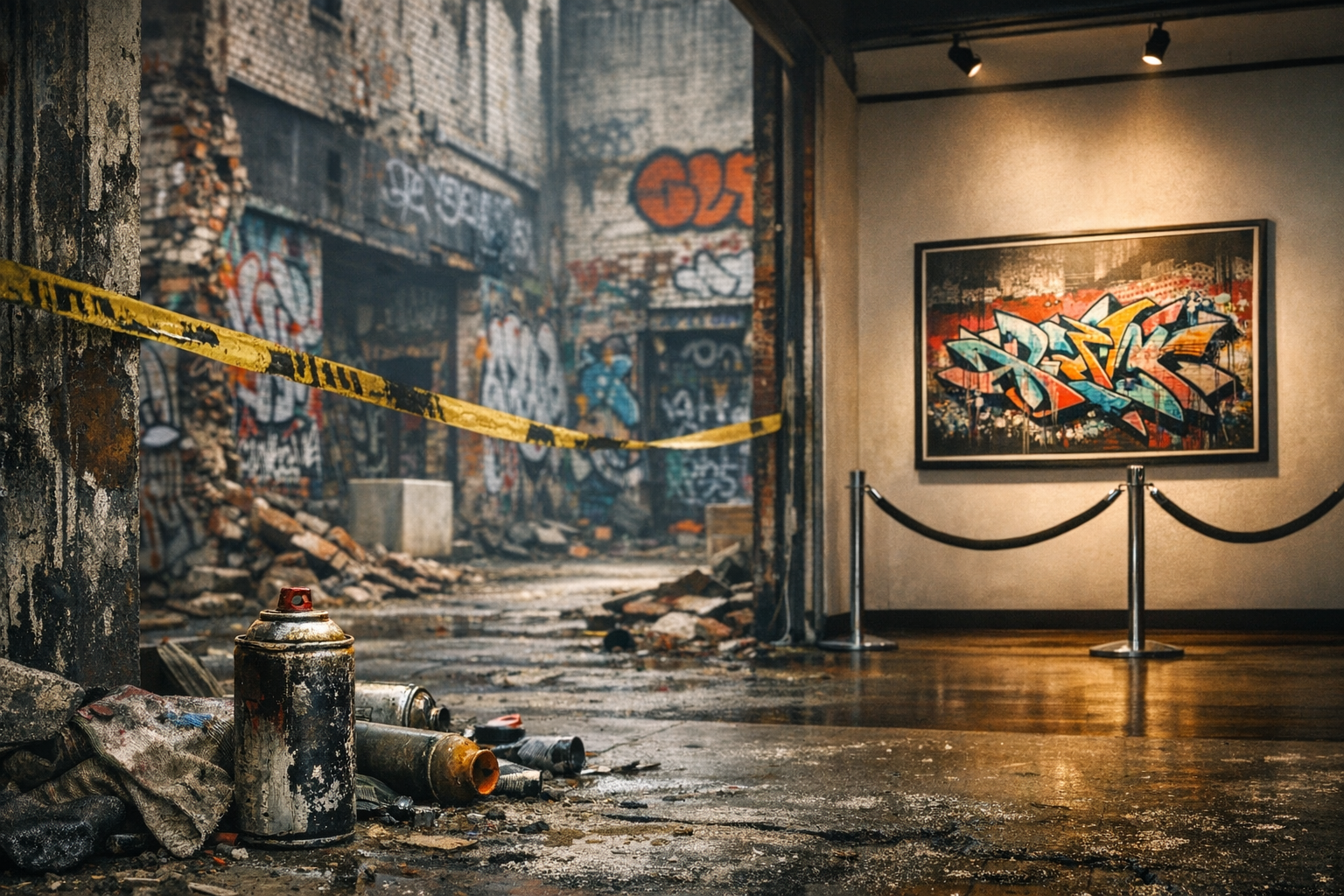
Graffiti Was Never Yours to Own: How Galleries Killed the Most Honest Art Form Left Opening Tension In the complex interplay between urban culture and...
Opening Tension
In the complex interplay between urban culture and commercial art, a provocative question arises: has the gallery system irreparably corrupted graffiti, one of the last bastions of unfiltered artistic expression? As cities teem with graffiti—from vibrant murals to simple tags—it is time to confront how this dynamic, once rooted in rebellion, has evolved under the capitalist spotlight.
The rise of street art as a legitimate art form within elite galleries has brought unprecedented attention and value but has simultaneously raised concerns about authenticity and ownership. Today, graffiti is a topic of heated debate, reflecting not only artistic views but broader socio-political dynamics. In an era defined by gentrification, urban renewal, and a growing interest in marginalized voices, understanding the implications of commercializing graffiti is crucial for preserving its essence and the communities it represents.
Jeffrey Deitch argues that the integration of graffiti into the mainstream art market is a necessary evolution. He contends that galleries can offer graffiti artists visibility and financial stability, allowing them to transcend their roots while reaching wider audiences. Deitch acknowledges that some may view this trend as commodification but believes it ultimately legitimizes graffiti as a significant art form.
"Artists like Banksy symbolize the potential for street art to engage global conversations and challenge societal norms. The gallery system doesn't dilute the message; it amplifies it."
Deitch sees the current trend not as a betrayal but as a step towards broader acceptance and understanding of urban art. He asserts that graffiti, thus showcased, can inspire dialogue about public space and community engagement.
Conversely, Banksy offers a more critical view of how galleries have altered the perception of graffiti. For him, the moment an artist's name is attached to a gallery show, the very essence of street art is compromised. Banksy argues that graffiti exists to challenge social norms and provoke thought in uncontrolled environments, not to become a consumable product.
"Once you put my work in a gallery, you are stifling its unique voice, turning it into a commodity. You lose the connection to the street, the community, and the dialogue it sparked. Graffiti thrives on its illegality and anonymity. That's its spirit."
Banksy's reservations encapsulate a broader concern within the street art community: once graffiti is monetized, it risks losing its raw authenticity and transformative power.
Cultural critic Henk Bunt supports Banksy's critical stance, arguing that the gallery system strips graffiti of its revolutionary potential. He posits that graffiti originated as an art form of protest against socio-economic oppression, and its placement within galleries signifies a troubling co-optation of a traditionally subversive medium.
"The galleries have their own set of rules, an institutional structure that changes what graffiti can say and who can engage with it. It's no longer just about the artwork—it becomes a transaction, a part of the economy, and loses its edge."
He believes that this commercialization creates a disconnect between artists and their original intents, ultimately depriving urban communities of a vital voice.
The relevance of graffiti within contemporary society cannot be denied, and it evokes strong sentiments that transcend simple aesthetics. Commercial avenues, such as galleries, can provide accessibility and visibility for previously marginalized artists. The role of graffiti in fostering dialogue about social issues remains a point of interest for all three experts.
Deitch supports the gallery system as a legitimate platform for artists, while Banksy and Bunt view it as detrimental to the integrity of graffiti. The interpretation of graffiti's evolution from street to gallery is contested: is it an enhancement or a dilution of its essence? The broader implications of commodification are debated, with some seeing potential gains while others foresee losses in artistic authenticity.
The debate surrounding graffiti and its relationship with galleries speaks volumes about the shifting landscape of urban culture. As cities continue to evolve and gentrify, the original voice of street art faces challenges against commodification. This conversation becomes particularly crucial for urban areas that use graffiti to narrate their histories and struggles.
In grappling with these issues, stakeholders must recognize that graffiti is not merely an aesthetic choice; it is a means to voice dissent, challenge societal norms, and celebrate community identity. The direction in which graffiti evolves—whether it fully enters the gallery mainstream or finds ways to continue thriving outside traditional systems—will shape urban culture for years to come. Preserving its essence while exploring opportunities for artists requires a delicate balance, one that must consider both the risks and rewards of commercial involvement.
Ultimately, the answer to whether galleries have killed graffiti or brought it into the limelight may lie in the eyes of the beholder. The debate is ongoing, and its resolution will define how urban art is perceived and valued in both cultural and commercial spheres.
The Paradox of Graffiti in the Gallery
The debate surrounding graffiti’s commercialization poses a paradox where the very platform that seeks to elevate it may also dilute its essence. Street art, historically a voice for the marginalized, risks becoming just another commodity within the gallery system. While mainstream success offers certain benefits, such as financial support and wider visibility, it ultimately raises critical questions about authenticity and ownership. As we navigate this evolving landscape, it is essential to advocate for a symbiosis that respects graffiti’s roots while fostering the artists' creative freedoms. Only by recognizing graffiti’s complex identity can we ensure that it remains a genuine reflection of urban life, rather than a sanitized version framed for consumption. The challenge lies in preserving the raw spirit of graffiti amidst its commodification, ensuring that this vibrant form of expression continues to resonate with the communities from which it originates.
Jeffrey Deitch
Art Dealer and Curator
"Deitch argues that galleries play a crucial role in legitimizing street art and giving artists a platform to reach broader audiences, thus preserving their culture and expanding artistic opportunities."
𝕏 Jeffrey Deitch in Jeffrey Deitch
How Does This Hit You?


No comments yet. Be the first to weigh in.