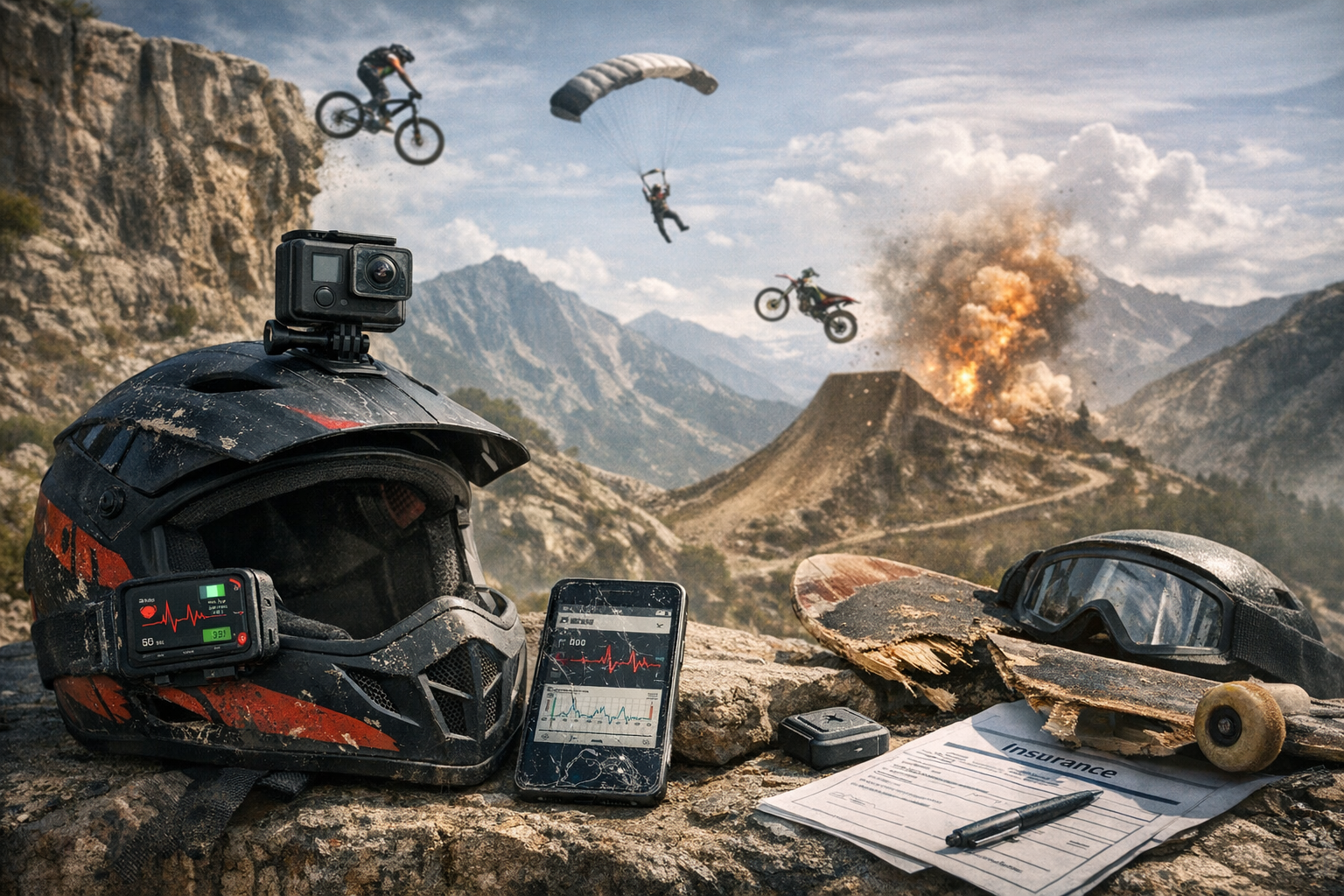
Safety gear used to protect you after the fall. Now it's watching you before it happens — and some athletes aren't sure they like what that means for the sport.
Extreme sports have long attracted thrill-seekers who are motivated by adrenaline and the challenge of pushing their physical limits. However, as innovative safety technologies—such as advanced helmets equipped with sensors—continue to emerge, a pressing question arises: Are these advancements making extreme sports too safe, potentially dulling the edge that defines them?
The evolution of safety technology in extreme sports is a double-edged sword. On one side, innovations like smart helmets and wearable sensors promise enhanced safety for athletes, reducing the likelihood of severe injuries. Conversely, some argue that these innovations might inadvertently remove the raw thrill from extreme sports, diminishing their inherent risks. As participation in extreme sports sees a steady increase, balancing equipment advancements with the culture of risk-taking poses a significant challenge.
Dr. Thomas J. Hwang, the Director of Safety Research at the National Sports Institute, emphasizes the transformative potential of safety technology. "Safety gear has traditionally been reactive, designed to protect after an injury occurs. Now, we are entering a proactive era where wearable technology and smart helmets monitor impacts in real-time and provide feedback to the athlete. This is crucial in extreme sports where injuries can be life-altering."
Dr. Hwang supports the integration of these technologies, arguing that they allow athletes to push their limits with greater awareness of their safety. The aim is to strike a balance—providing athletes with the freedom to explore challenging terrains while also maintaining critical safety measures.
Jessica O'Connor, a professional extreme sports athlete and advocate, offers a contrasting viewpoint. While she acknowledges the benefits of modern safety technologies, she expresses concern about their impact on the thrill-seeking spirit of extreme sports. "Every athlete has their own risk threshold, and some may feel tempted to take fewer precautions if they rely too heavily on safety gear. This could lead to riskier behavior and, paradoxically, more accidents."
O'Connor argues for a more nuanced understanding of safety technology in extreme sports, advocating for awareness and education alongside equipment use. "We must remember that extreme sports—by their very nature—embrace risk. Safety gear should be a complement, not a substitute for personal responsibility and skill."
Mike Reynolds, an insurance underwriter specializing in extreme sports, sheds light on the financial implications of safety technology. "We're witnessing a shift where underwriters are more inclined to offer policies for athletes using advanced safety equipment. This is a sign that the industry recognizes the potential for reduced liability and lower claims."
However, Reynolds warns that excessively relying on technology could misguide athletes regarding their own limits. "If athletes believe they are invincible due to safety tech, they may inadvertently increase their risk-taking behaviors. The key is to educate the users about both the benefits and limitations of their equipment."
Safety technology can enhance protection and reduce the risk of severe injuries in extreme sports. Education and personal responsibility remain vital components in the safe practice of extreme sports. There is potential for the insurance industry to adapt and evolve alongside advancements in safety gear.
The degree to which safety technology might dilute the thrill of extreme sports is contested; O'Connor sees potential risks while Hwang champions the safety benefits. The reliance on advanced safety gear may lead athletes to take more risks—a concern raised by both O'Connor and Reynolds but viewed differently by Hwang.
As participation in extreme sports continues to grow, the balance between safety and risk becomes ever more critical. Athletes often thrive on the adrenaline that comes with pushing limits; however, encouraging the use of safety technology is equally important. The discussion surrounding helmets, sensors, and insurance underscores a necessary evolution in both athlete mentality and safety standards.
Ultimately, the question remains: Can safety innovations coexist with the raw edge of extreme sports, or do they fundamentally alter the ethos of what it means to be an extreme athlete? As this debate continues, it is crucial for athletes, manufacturers, and insurers to prioritize an approach that respects the spirit of pushing boundaries while safeguarding well-being.
Finding Balance in Safety and Thrill
As extreme sports evolve, the embrace of safety technologies such as smart helmets and sensors represents a significant shift in the culture of these activities. While these innovations undeniably enhance safety and reduce the risk of severe injuries, they also raise legitimate concerns about dampening the raw thrill that has long defined extreme sports. Striking a balance between ensuring athlete safety and preserving the essence of risk-taking is crucial. Athletes, fans, and manufacturers must collaborate to advance safety tech while maintaining the heart-pounding excitement that attracts participants in the first place. In doing so, we can continue to foster a culture that values both innovation and the spirit of adventure.

Dr. Thomas J. Hwang
Director of Safety Research, National Sports Institute
"The incorporation of safety technology, such as advanced helmets and sensors, not only reduces injuries but also enhances the overall experience for athletes. Embracing these innovations allows extreme sports to evolve safely without diminishing the excitement of the challenge."
𝕏 Dr. Thomas J. Hwang in Dr. Thomas J. Hwang
Jessica O'Connor
Professional Extreme Sports Athlete and Advocate
"While safety technology is important, it can lead to a false sense of security, which might deter athletes from pushing their limits. Extreme sports are defined by their inherent risks and should maintain that essence for the sake of authenticity and personal growth."
𝕏 Jessica O'Connor in Jessica O'Connor
Mike Reynolds
Insurance Underwriter Specializing in Extreme Sports
"Safety technology in extreme sports can reduce risk exposure and influence insurance models significantly. While it aids in injury reduction, it is essential to find the right balance to ensure that athletes still engage with the thrill that makes extreme sports compelling."
in Mike ReynoldsHow Does This Hit You?



No comments yet. Be the first to weigh in.