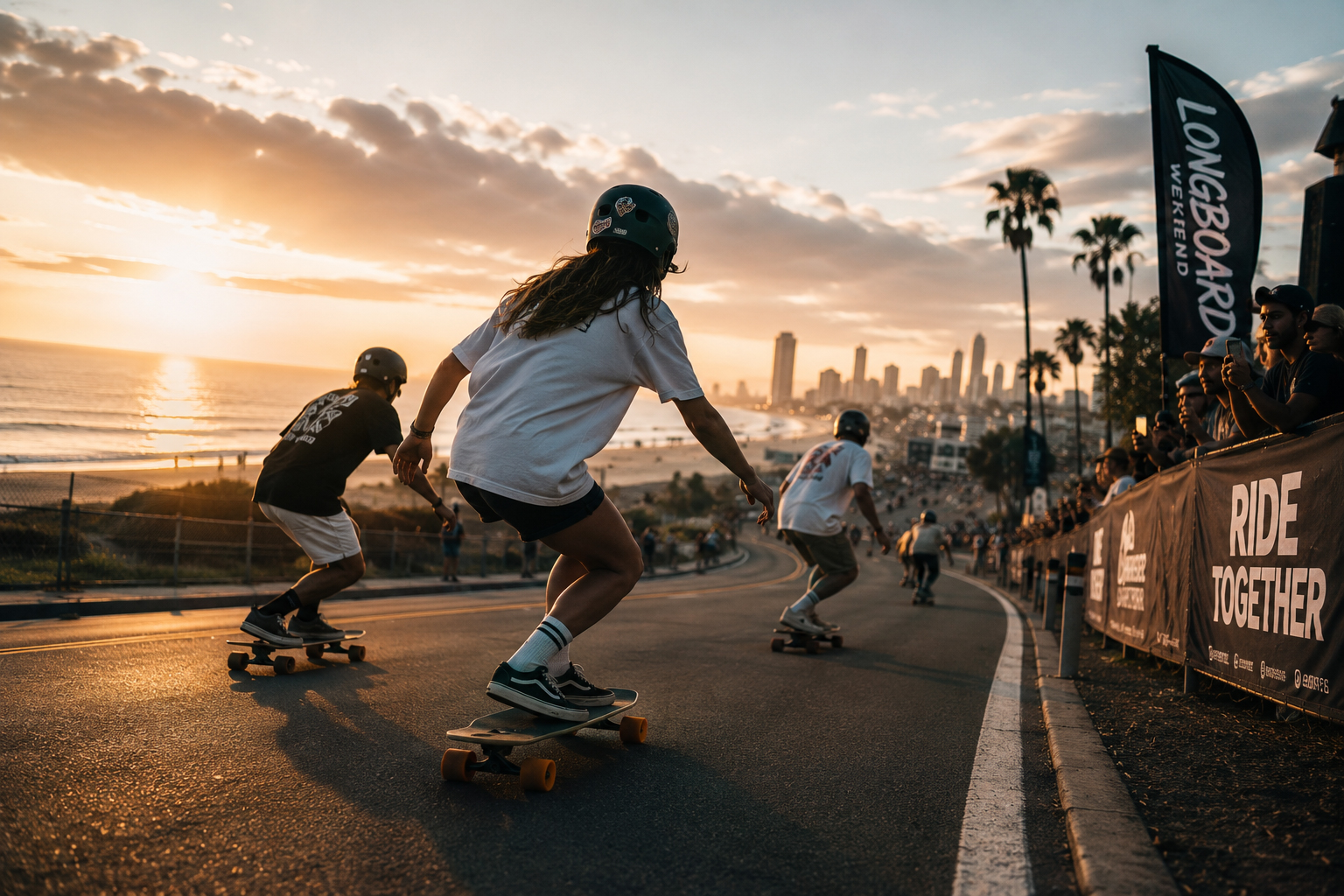
Longboarding was born on the street, built for anyone with four wheels and a hill. Then the judges showed up.
As the wheels of a longboard glide over concrete, a debate simmers beneath the surface: Has the rise of competitive longboarding alienated its roots as an inclusive, accessible sport? With the growing visibility of longboarding competitions, enthusiasts and professionals alike are questioning whether the sport has strayed from its original ethos of freedom and expression.
Longboarding emerged in the 1950s as a creative form of urban transport and recreation, celebrated for its accessibility to diverse audiences — from surfers looking for pavement to city dwellers seeking new thrills. However, in recent years, the establishment of formal competitions, complete with sponsorships and media coverage, has sparked concerns about elitism and exclusivity in a sport that was inherently for everyone. This debate is particularly relevant today as the sport is poised for recognition in further state-sponsored events and potentially the Olympics.
Kellen McCray argues passionately that the essence of longboarding lies in its accessibility. "Longboarding is meant to be for everyone — age, gender, or skill level doesn't matter. When competitions become the focus, the community-driven, exploratory nature of the sport may be jeopardized."
McCray notes that the rise of competitive events often emphasizes certain skills and styles that may inadvertently exclude beginners or those who prefer longboarding as a casual, recreational activity. He references numerous grassroots organizations that foster inclusivity through events that prioritize community engagement over competition. "We need to remind ourselves that longboarding is as much about the ride as it is about the destination."
In opposition, Tony Hawk believes competition can elevate the sport. "While it's important to nurture grassroots communities, competition serves as a catalyst for growth and innovation." Hawk acknowledges that competitions can create pressures to conform but insists that these events have also brought mainstream recognition and sponsorship opportunities that can benefit all athletes, including those at entry levels.
"More visibility leads to more resources, more gear, and ultimately more support for the entire longboarding community." Hawk emphasizes that competition can coexist with recreational longboarding, enhancing the sport's profile in the outdoor lifestyle market.
Roberta Smith, a sports sociologist, views the situation through a wider lens. "The commercialization of sports is not new, and it reflects broader trends in society where exclusivity often drives participation." She comments that while competitions can foster excellence, they can also stratify access to resources based on skill and socioeconomic status.
Smith highlights that longboarding, initially a grassroots movement, risks becoming a performance-driven sport that may deter newcomers. She suggests that rather than abandoning competition altogether, a new framework should be developed: one that celebrates both competitive excellence and the core values of inclusiveness that longboarding was built upon.
All experts agree on the importance of maintaining accessibility in longboarding, and that competitions can provide visibility and growth opportunities. There is also a significant shared concern about exclusivity and elitism as the sport evolves.
Where they diverge is sharper: whether competitions inherently detract from the inclusive nature of longboarding, the impact on grassroots movements, and the degree to which competitions can benefit or harm the sport's original ethos.
The ongoing debate raises essential questions about the identity of the sport itself. As it becomes increasingly commercialized, the risk of alienating the very communities that birthed it looms large. A balanced approach is critical — one that honors longboarding's roots while finding a way to adapt to evolving interests and desires for competition.
Longboarding enthusiasts should feel empowered to share their perspectives and experiences. The balance between competition and community involvement requires thoughtful dialogue and action. Otherwise, those who once found joy and connection through longboarding may find themselves on the outside looking in.
Can it remain an inclusive sport, or will it be confined to elite performers vying for trophies and sponsorships? Only through ongoing discussions among enthusiasts, sociologists, and professionals can a resolution emerge that honors the past while embracing the future.
Finding Balance in Longboarding's Future
The debate surrounding competitive longboarding reveals a critical tension between preserving the sport's inclusive roots and embracing the opportunities presented by formal competitions. As we advance, it’s essential to foster environments that promote both competitive spirit and community engagement. Competitions can provide a platform for showcasing talent, but they should not overshadow the core values of accessibility and expression that define longboarding. Encouraging events that blend competition with community, such as recreational meet-ups and inclusive challenges, can ensure that all enthusiasts feel welcome, regardless of skill level. Ultimately, the future of longboarding should reflect a harmonious balance, allowing newcomers to enjoy the freedom of the ride while also celebrating the achievements of skilled riders. This dual approach can reinvigorate the culture of longboarding, ensuring it remains a sport for everyone.

Tony Hawk
Professional Skateboarder, Entrepreneur
"Competitions have made longboarding more elite rather than inclusive, creating barriers for newcomers. It’s crucial to keep the culture open for everyone to enjoy the sport without feeling judged or pressured to compete."
𝕏 Tony Hawk in Tony Hawk
Kellen McCray
Longboarding Advocate
"While competitions can enhance visibility, they can also create exclusivity. It's important to find a middle ground where competitions coexist with grassroots movements that promote accessibility and enjoyment for all."
Profile Kellen McCrayHow Does This Hit You?


No comments yet. Be the first to weigh in.