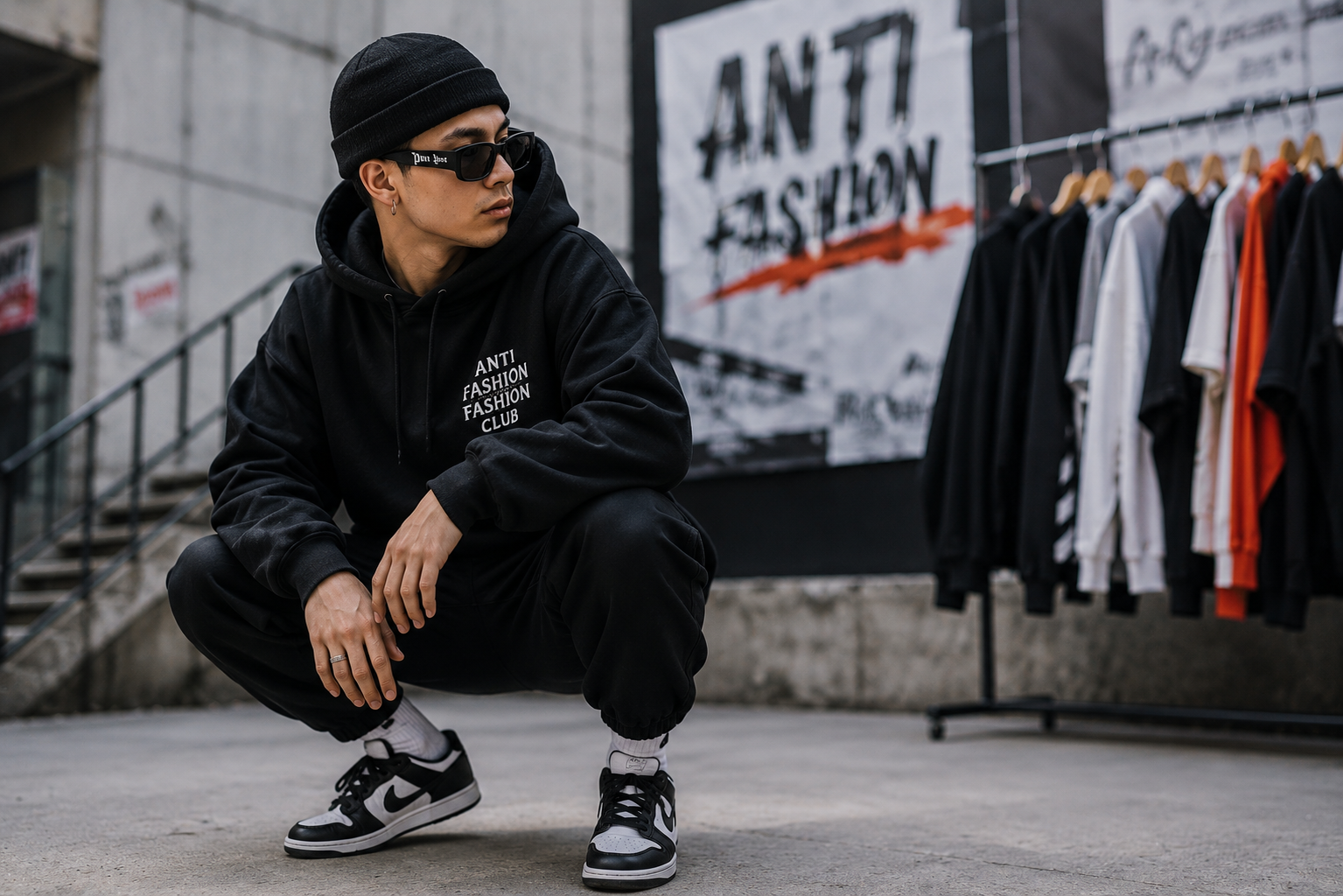
Streetwear started as rebellion — now it's on the runway at Louis Vuitton. Aimee Song, Jeff Staple, and Daniel Arsham debate whether the mainstreaming of street culture is a victory for inclusivity or a sellout of its roots.
Streetwear: Anti-Fashion to Fashion Industry – Who Won?
Has streetwear, once a countercultural beacon of anti-fashion sentiment, now become the very framework of the fashion industry? This pressing question invites reflection on a cultural evolution where values once reserved for underground movements have melded into high fashion's mainstream practices. As streetwear's influence permeates luxury brands and traditional couture, experts in the fields of fashion, design, and art offer their insights.
Context: Why This Matters Now
The landscape of fashion is continually shifting, shaped by societal changes, the digital age, and the rise of influencers. Streetwear, which embodies elements of youth culture, rebellion, and authenticity, has gained unprecedented traction. High-profile collaborations, celebrity endorsements, and social media have catapulted streetwear from obscurity to center stage, leading to a complex dialogue surrounding identity, culture, and commercialism. The stakes are high as traditional fashion houses grapple with the integrative wave of streetwear.
Perspective: Aimee Song (Fashion Influencer & Author)
Aimee Song posits that the transition of streetwear into high fashion is a reflection of societal progress. "Fashion should evolve," she states, emphasizing that the blending of streetwear with established brands offers greater inclusivity and diversity. According to her, this evolution challenges preconceived notions about what constitutes style. "Streetwear's rise has democratized fashion and made it accessible," she argues, illustrating how younger generations connect through platforms like Instagram, where cultural representation thrives.
Moreover, Song believes that streetwear's ascendance signifies a liberation from rigid norms. "It's about self-expression, not just clothing," she asserts, suggesting that the surge in streetwear's popularity presents an opportunity for authenticity and personal branding.
Perspective: Jeff Staple (Founder, Staple Design)
Jeff Staple, who has been at the forefront of the streetwear movement since its inception, offers a contrasting viewpoint. He acknowledges the commercial triumphs of streetwear but warns of losing its original essence. "The commercialization of streetwear feels like a double-edged sword," he admits. While acknowledging the growth and visibility for small brands, Staple stresses that the move into high fashion dilutes the core values that originally defined the genre.
He articulates a concern that the melding of streetwear with luxury brands could alienate its grassroots origins. "Some brands have forgotten their roots — where they came from," Staple says. He cautions against the notion that streetwear should conform to high-fashion aesthetics, arguing that true street culture thrives outside traditional fashion frameworks. Staple believes this shift could risk authenticity, suggesting that the industry often prioritizes profit over genuine cultural representation.
Perspective: Daniel Arsham (Artist & Designer)
Daniel Arsham takes a nuanced approach, highlighting both the artistic and commercial evolution of streetwear. "Streetwear requires a bridge of cross-disciplinary collaboration," he explains, meaning that its intersection with art, music, and design creates a unique platform that goes beyond mere fashion. Arsham sees the incorporation of streetwear into mainstream fashion as an opportunity for modern redefinition: "We can elevate the conversation beyond the product — it's about ideas."
He appreciates how established fashion houses are now engaging with streetwear to reinvent themselves. "It's a dialogue; when streetwear meets haute couture, it pushes the boundaries of what fashion can represent," he states. Yet, Arsham concedes there is a delicate balance between maintaining originality and leveraging broad commercial appeal.
Editorial Synthesis
Where Experts Agree
All three experts acknowledge that fashion must evolve and adapt to remain relevant. They recognize the role of social media in making streetwear more accessible and visible to a broader audience. Each expert also emphasizes that streetwear transcends mere clothing, serving as an authentic expression of culture and identity.
Where Experts Disagree
Aimee Song sees commercialization as an avenue for inclusivity, while Jeff Staple warns against the dilution of streetwear's original values. Daniel Arsham offers a reconciliatory view, allowing for both approaches to coexist. Staple seems pessimistic about streetwear's inclusion in high fashion threatening its essence, whereas Song and Arsham see it as an opportunity for greater artistic expression.
Why This Matters
Understanding the transformation of streetwear from anti-fashion to a key player in the fashion industry invites deeper conversations about authenticity, culture, and the future of style. As young people increasingly find their voices through fashion, the question of who wins in this discourse reflects broader societal trends: inclusivity, representation, and artistic collaboration. The fashion industry must navigate these changes thoughtfully to embrace the nuances of streetwear — a movement that has become almost synonymous with modern culture — while striving to retain its original spirit.
As streetwear continues to shape fashion's narrative, the challenge lies in balancing commercial interests with genuine cultural representation — an endeavor that ultimately defines who truly wins in fashion's ever-evolving landscape.
The Fashion Frontier: Embracing Streetwear's Evolution
The transformation of streetwear from anti-fashion to mainstay within the fashion industry highlights a pivotal cultural shift that cannot be ignored. As Aimee Song articulates, this change signifies a democratization of style, promoting inclusivity and self-expression that resonates deeply with today’s youth. However, while the blending of high fashion and streetwear presents opportunities for authenticity and representation, it may also risk diluting the original rebellious spirit of streetwear. It is crucial for both emerging designers and established brands to maintain a balance that honors the roots of streetwear while embracing its evolution. Ultimately, the challenge for the fashion industry will be to preserve the essence of streetwear as it continues to intersect with luxury, ensuring that this evolution remains a genuine reflection of cultural identity rather than mere commercial exploitation.
Aimee Song
Fashion Influencer & Author
"Streetwear's evolution into mainstream fashion illustrates a natural progression rather than a compromise. It’s a testament to the genre's influence and its ability to adapt and thrive in the fashion industry."
𝕏 Aimee Song in Aimee Song
Jeff Staple
Founder, Staple Design
"While streetwear began as a rebellion against the norms of traditional fashion, its assimilation into the mainstream has diluted its original intent. The essence of streetwear lies in its authenticity and connection to subcultures, which risks being lost in the commercial landscape."
in Jeff StapleDaniel Arsham
Artist & Designer
"The intersection between streetwear and high fashion can be viewed as a dialogue rather than a battle. Both realms can coexist and learn from each other, enriching the overall landscape of fashion and creativity."
in Daniel ArshamHow Does This Hit You?


No comments yet. Be the first to weigh in.