
Every surf break has its locals. And every local has a story about why outsiders don't understand it. The question is whether that story ever justified what happened in the water.
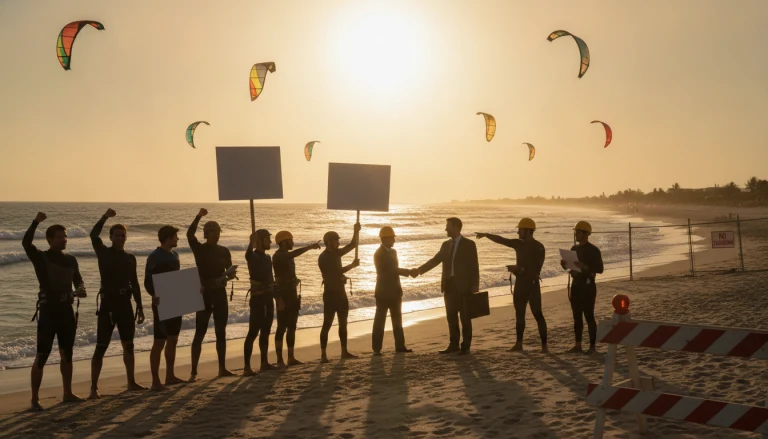
Is the localism that defines surf culture an essential aspect of its identity, or has it perpetuated exclusivity and aggression under the guise of protecting one's home break? This question looms large as surfing gains mainstream attention and global exposure.
Localism is a complex phenomenon within surf culture, often lauded as a form of community protection against outsiders perceived as threats. It provides a sense of belonging to local surfers, who feel that they have a deeper connection to their home breaks. However, as surfing continues to evolve with increasing commercialization and worldwide interest, it raises questions: has localism turned into a means for exclusion, and is it time to rethink its role?
Robbie Naish supports localism as a necessary part of surf culture. He believes that localism fosters a sense of responsibility and pride. "When you surf your home break, you develop a unique understanding of its nuances, and it creates a bond within the community. It's not about exclusion." He argues that local surfers have a right to protect their waves, that this guardianship sustains the surf culture's authenticity.
Naish points to initiatives where localism has benefitted the environment, noting that community-driven cleanup programs often emerge from local surfers invested in their home breaks. However, he acknowledges that aggressive localism can morph into territorialism, which can have negative repercussions for newcomers.
On the flip side, Drew Kampion, a respected surf journalist and author, sees localism as often exacerbating conflicts rather than resolving them. He argues that localism can morph into gatekeeping, where the local community's protective instincts lead to hostility against those newly arriving. "Surfing is meant to be a universal experience. When we start blocking people from accessing waves, we tarnish the spirit of what surfing should represent."
Kampion cites incidents where aggressive localism led to physical confrontations, deterring newcomers and painting surfing as an exclusive club rather than a shared passion. He advocates for a more inclusive approach, encouraging experienced surfers to extend a hand to newcomers, fostering camaraderie instead of competition.
Kelly Slater, an 11-time world champion and outspoken environmentalist, finds himself somewhere between these two perspectives. He recognizes the importance of local culture while calling for greater inclusivity. "Localism can be okay as long as it doesn't lead to violence or exclusionary practices."
He emphasizes the need for local surfers to be stewards of their beaches, conducting community outreach for beach preservation. Slater believes that while local surfers have a duty to protect their home breaks, they can still welcome and educate newcomers about the local culture and surf etiquette — striking a balance between pride and open-heartedness.
All three experts acknowledge a unique bond between surfers and their local waves, emphasizing that localism is an integral part of surf culture's identity. They also share recognition that local surfers often take the lead in ecological initiatives, showcasing a collaborative effort to protect their surf environments.
Where they diverge cuts to the core: Naish supports the idea that localism fosters community pride, while Kampion views it as a potential barrier that can and does lead to exclusion. Slater advocates for education and inclusion, standing in contrast to the aggressive territorialism sometimes exhibited by local surfers — the version of localism that Kampion says has done the most damage.
As surfing continues to expand in popularity, an understanding of localism becomes increasingly crucial. While localism can create a sense of belonging and stewardship, it challenges the ethics of community by sometimes fostering hostility towards outsiders. Surf culture's ability to evolve relies on finding that balance: honoring local roots while inviting new participants into the fold.
The tension between local surfers and newcomers is not just about waves — it reflects broader societal challenges around exclusivity, community, and access. In redefining localism, surfers can play a pioneering role in reshaping what belonging looks like in a rapidly changing world. Ultimately, the surf community has the opportunity — and responsibility — to harness localism for positive change, both for the environment and the culture as a whole.
Navigating the Tides of Localism in Surf Culture
Localism in surf culture presents a double-edged sword, straddling the line between community protection and exclusion. While it can enhance environmental stewardship and foster deeper local connections, it can also foster aggression and territorialism that alienate newcomers. As surfing transitions into the global spotlight, it's crucial for enthusiasts to reevaluate localism's role, ensuring it evolves into an inclusive practice that respects both tradition and diversity. Ultimately, embracing a broader definition of localism that welcomes all surfers, regardless of origin, could enrich the surf community without sacrificing its foundational identity.
Robbie Naish
Professional Surfer, Innovator
"Localism serves to protect surf spots from over-commercialization and maintain community integrity. Embracing local culture can preserve the essence of surfing while promoting respect among surfers."
in Robbie Naish
Drew Kampion
Surf Journalist, Author
"While localism can foster a strong sense of community, it can also lead to exclusion and conflict. A balanced perspective is needed to understand its benefits and drawbacks in a rapidly changing surf landscape."
in Drew Kampion
Kelly Slater
Professional Surfer & 11-Time World Champion
"While localism has its roots in protecting local surf spots, it often fosters a culture of exclusion and can be detrimental to the sport's growth. Inclusivity and accessibility should be prioritized to promote surfing as a global community."
𝕏 Kelly Slater in Kelly SlaterHow Does This Hit You?

No comments yet. Be the first to weigh in.