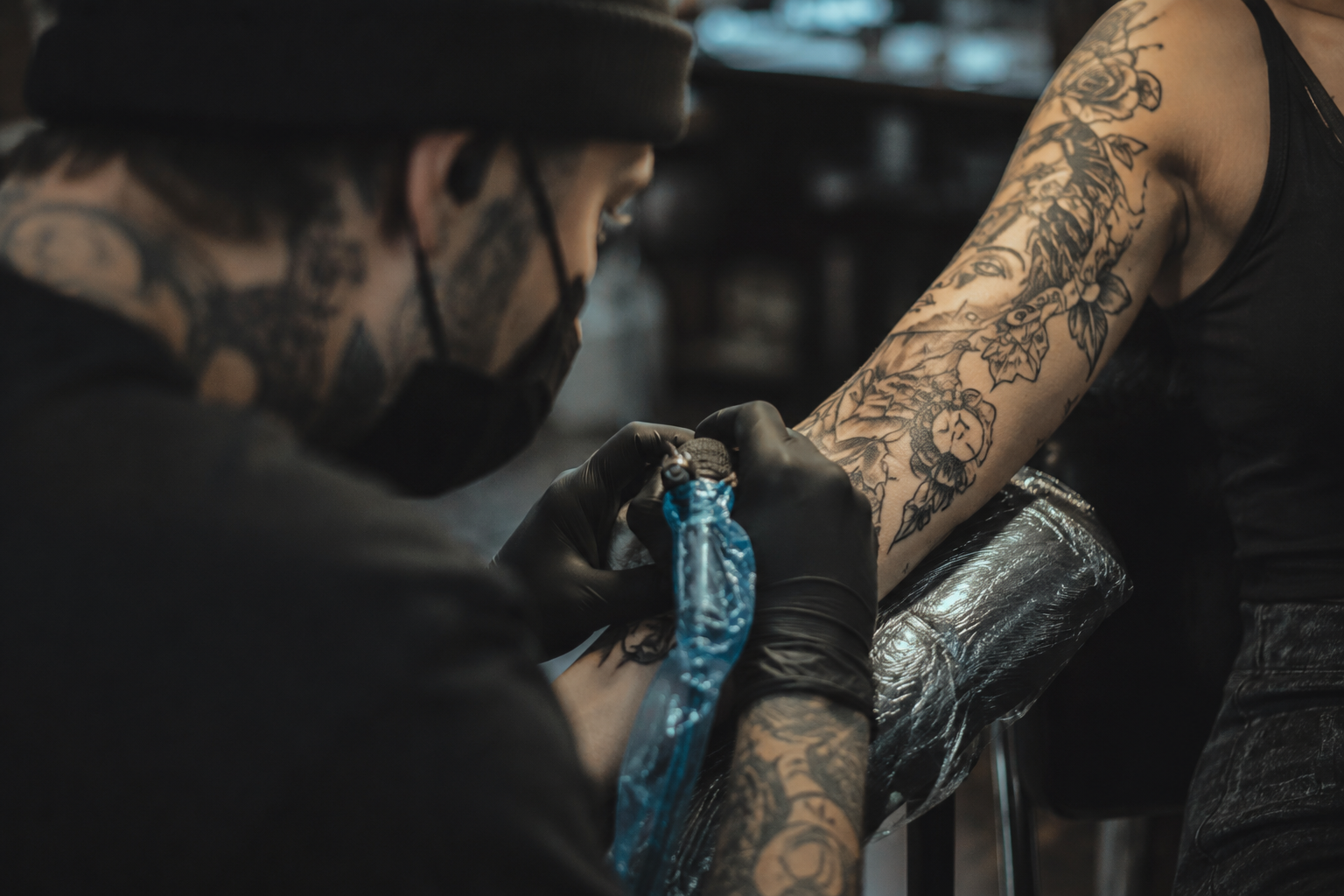
Tattoos used to mean something specific — rebellion, identity, a story you carried on your skin forever. Now they're on the mood board next to the throw pillows.
As tattoos have surged into the mainstream, crossing over from subcultures into everyday life, a pressing question arises: Has this trend diluted the art form's authenticity and cultural significance? The fascination with tattoos has not only become a fashion statement but also a point of contention within the community that cherishes them.
In recent years, tattoos have become a common sight across various demographics, transcending age, socio-economic status, and professional environments. Celebrities showcase elaborate inked art on social media, while television shows centered around tattoo culture garner massive audiences. Yet, as the practice becomes increasingly normalized, some fear that its soul — the sense of rebellion, individuality, and craftsmanship — may be at risk of fading.
Patrick McCarthy, a renowned tattoo artist and cultural commentator, identifies a dichotomy within the tattoo community. "While mainstream acceptance has provided a platform for many talented artists to flourish, it has also attracted individuals who may not have a genuine appreciation for the art. The rise of flash tattoos and commercialization poses a threat to the intricate artistry that tattooing embodies."
His perspective emphasizes that as the craft gains visibility, it becomes susceptible to commodification. Self-expression risks being overshadowed by trends, leading to a scenario where the artistry feels less personal and more like a manufactured product.
Dr. Claudia L. DeLuca, a cultural sociologist, analyzes the societal implications of this transition. She argues that tattoos have transitioned from an avant-garde symbol of individuality to a mainstay representing conformity. "As major brands co-opt tattoo culture for marketing purposes, they dilute the original meaning of rebellion and resistance. When something is embraced by the mainstream, its power to challenge societal norms often diminishes."
DeLuca warns that the unique narratives behind tattoos risk being lost amid a wave of superficial trends. The meaning behind tattoos — often rooted in personal experiences, cultural identity, or rebellion — may become homogenized in a quest for aesthetic consistency. This could lead to a future where tattoos are nothing more than decorative marks without the layered meanings they once held.
Mike McCabe, a tattoo historian, provides a historical lens through which to evaluate this phenomenon. "Throughout history, tattooing has evolved with societal shifts. In many cultures, tattoos have served as rites of passage, protective symbols, and markers of status. The current trend signifies a new chapter, but one that may inadvertently erase the narratives of these forgotten histories."
McCabe posits that mainstream acceptance can serve to enrich the cultural tapestry of tattooing if approached thoughtfully. "If the newcomers take the time to research and understand the history, they can preserve the legacy of tattoos while still enjoying their contemporary interpretations. It's about balance."
All three experts agree that the rise of tattoos in popular culture presents both opportunities and challenges for the art form. Mainstream acceptance introduces real risks of commercialism and loss of narrative depth. Historical context, they unanimously agree, remains crucial in fostering genuine appreciation of tattoo culture.
Where they diverge is in tone: McCarthy emphasizes the threat of commercialism overshadowing artistry, while DeLuca focuses on the societal implications of conformity. McCabe offers a more optimistic view — that history can inform current practices — while the others fear a homogenization of meaning that no amount of good intentions can reverse.
The current discourse surrounding tattoo culture reflects broader themes of authenticity, identity, and societal values. As tattoos become increasingly prevalent in mainstream settings, understanding their historical and cultural contexts is vital for preserving their significance. If new practitioners and enthusiasts can engage with the rich narratives behind tattoos, they can help maintain the art's integrity while allowing it to evolve.
Is mainstream acceptance leading to a dilution of tradition, or is it enriching the cultural landscape of tattooing today? Only time will tell if this new chapter marks a decline or a renaissance for the world of ink.
Navigating the Inked Landscape: Preservation vs. Commercialization
The mainstream acceptance of tattoo culture undoubtedly brings opportunities for artists and fosters a wider appreciation of the art form. However, as we embrace this evolution, it is crucial to advocate for the preservation of tattooing's roots in rebellion and individuality. The risk of commodification looms large, threatening to dilute the craftsmanship that defines true artistry. It’s a pivotal moment for tattoo culture—one where both artists and enthusiasts must engage in thoughtful dialogue about authenticity and artistic integrity. By advocating for personalized expressions over fleeting trends, the community can carve out a space that honors its rich history while embracing its modern evolution.

Patrick McCarthy
Tattoo Artist and Cultural Commentator
"Patrick believes that the mainstream acceptance of tattoos has brought positive visibility and appreciation for the art form, allowing for diverse expressions of identity. He argues that this visibility has enriched both the art and the community surrounding tattoo culture."
𝕏 Patrick McCarthy in Patrick McCarthy
Dr. Claudia L. DeLuca
Cultural Sociologist
"Dr. DeLuca contends that the commercialization of tattoo culture risks diluting its authentic meaning and roots, transforming personal expression into mere trend. She emphasizes that this shift may alienate traditional tattoo communities and reduce the significance of body art."
𝕏 Dr. Claudia L. DeLuca in Dr. Claudia L. DeLuca
Mike McCabe
Tattoo Historian
"Mike acknowledges both the benefits and drawbacks of tattoos entering mainstream culture. He suggests that while it allows for broader acceptance, it also raises questions about authenticity and the commodification of art. He advocates for a nuanced understanding of tattoo culture's evolution."
𝕏 Mike McCabe in Mike McCabeHow Does This Hit You?



No comments yet. Be the first to weigh in.