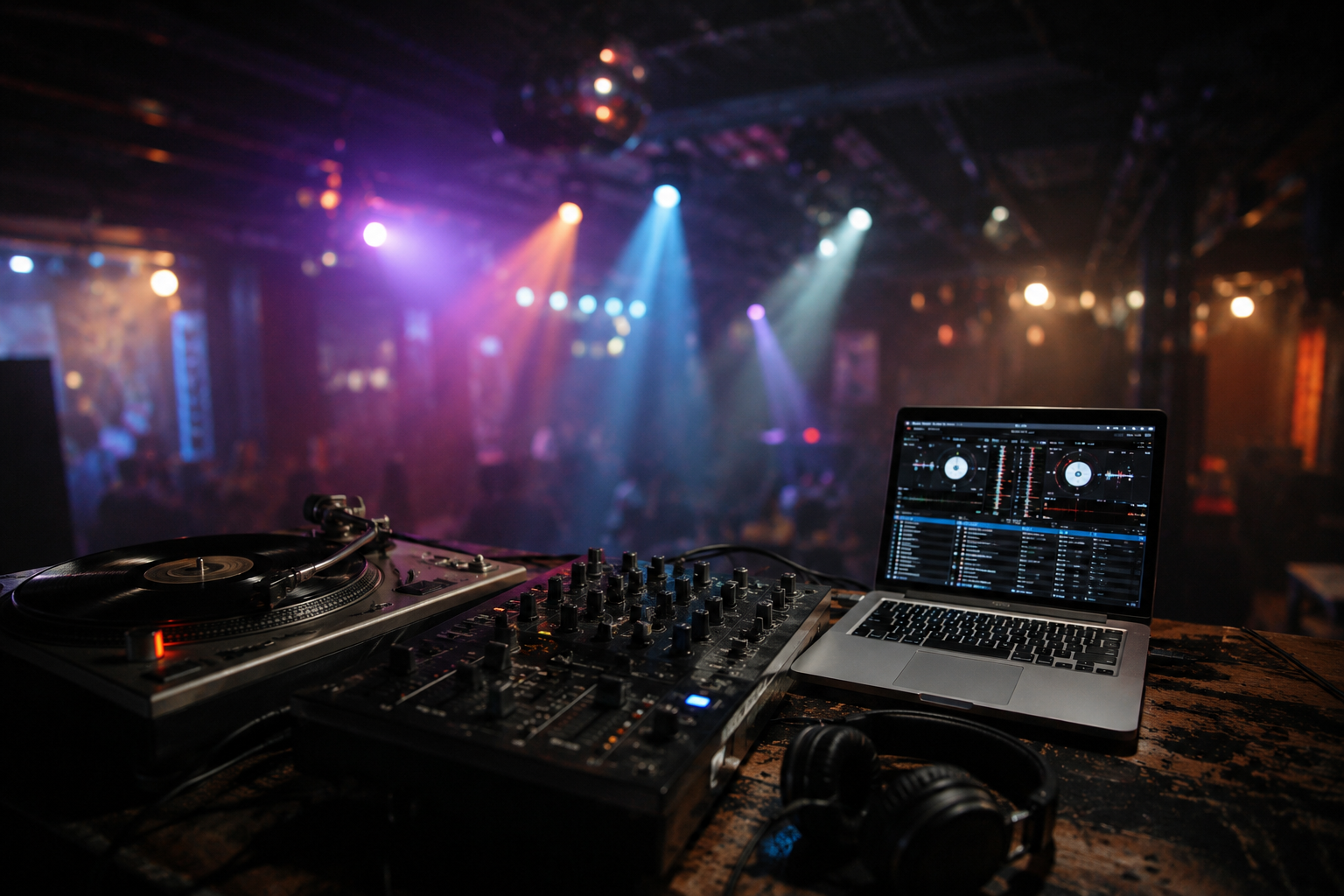
Vinyl crates gave way to laptops, and the DJ booth was never the same. But did something essential die in the process? David Guetta, DJ Shadow, and Carl Cox debate whether digital tools liberated the art of DJing or quietly hollowed it out.
PAGE EXCERPT
Vinyl crates gave way to laptops, and the DJ booth was never the same. But did something essential die in the process? David Guetta, DJ Shadow, and Carl Cox debate whether digital tools liberated the art of DJing or quietly hollowed it out.
TEXTO CON NEGRITAS
The DJ Died the Night the Laptop Replaced the Crates. Or Did They?
The transition from vinyl to digital has sparked an ongoing debate within the DJ and music production community: Has the essence of DJing changed irrevocably? As laptops now often replace traditional crates of records, this evolution raises an important question: Did the DJ die the night the laptop replaced the crates, or is this a natural progression of an art form?
Context
As electronic music continues to surge in popularity globally, the tools used by DJs have undergone a significant transformation. Laptops, digital audio workstations (DAWs), and advanced software have become standard equipment in many DJ setups. This shift has prompted passionate discussions about the authenticity and artistic value of modern DJing. With music consumption patterns evolving and audience expectations changing, understanding the implications of these technological advancements is crucial for the future of the art form.
Perspective: David Guetta
Renowned DJ and producer David Guetta views the change brought about by laptops and digital technologies as an evolution rather than a replacement. He argues that the core of DJing — creating unforgettable experiences for audiences — remains intact regardless of the tools. "The goal has always been to connect with people and make them feel something. The method may have changed, but the mission hasn't," Guetta asserts.
According to Guetta, laptops enable a level of creativity and flexibility that was previously unimaginable. They allow for seamless integration of different music styles and elements that enhance the overall performance. With the rise of technology, he believes there's a broader canvas for self-expression, enabling DJs to innovate and push boundaries further than traditional vinyl setups permitted.
Perspective: DJ Shadow
On the other hand, DJ Shadow, a pioneer in sample-based music, takes a more contemplative approach. He argues that while technology has democratized music creation, it has also diluted certain aspects of DJing's rich history. "There's something profoundly visceral about digging through crates and finding that one track. It's a physical connection to music that clicking through a digital library lacks," says Shadow.
For him, the ritual of searching for records involves a level of dedication and passion that is inherently tied to the identity of a DJ. He sees the rise of laptops as both liberating and limiting — while they offer accessibility, they also risk creating a homogenized soundscape where creativity is not rooted in the same history and culture. DJ Shadow calls for a balance, blending tradition with innovation, to maintain the art form's authenticity.
Perspective: Carl Cox
Carl Cox, an iconic figure in the electronic dance music scene, presents a more pragmatic viewpoint. He acknowledges the transformative power of technology but maintains that the role of the DJ remains essential. "Whether it's vinyl, CDJs, or laptops, at the end of the day, it's about how you engage with the crowd," Cox explains.
Cox embraces the digital tools available today while emphasizing that they should not overshadow the foundational skills required to be a successful DJ. He warns against the potential of technology to create a divide between audiences and artists, suggesting that the soul of DJing is found in the connection made with the energy of a live crowd. Success lies not in the technology but in the craft and the emotional experience delivered during a performance.
Editorial Synthesis
Where Experts Agree
The essence of DJing as a performance art focused on audience connection remains unchanged. Digital tools enhance creativity and expand the possibilities for live sets. A caution exists regarding the risk of losing historical and cultural ties to the craft.
Where Experts Disagree
Guetta views the technological evolution as a purely positive change, while Shadow emphasizes the experience of vinyl digging. Cox focuses on engagement over tools, whereas Shadow critiques the homogenization of sound. The extent to which new technology can alter the identity of a DJ remains debated.
Why This Matters
The discussion around the evolution of DJing matters now more than ever as new generations of artists grapple with the tools available to them. The essential question remains: how does one maintain the integrity of the art form amidst rapid technological advancement?
As the industry evolves, the perspectives of established artists shed light on the complexities of these developments. For both nostalgic purists and innovative pioneers, the heart of DJing transcends the medium — it resides in the ability to inspire and energize the audience. The DJ may not have died with the rise of the laptop, but rather entered an exciting new chapter infused with both challenges and opportunities for growth.
Evolving Artistry in the DJ Scene
The debate over the transition from crates to laptops in DJing goes beyond mere nostalgia; it reflects the ongoing evolution of an art form that adapts to technological advancements. While some may argue that the essence of DJing has been diluted, figures like David Guetta remind us that the fundamental purpose—creating memorable connections with audiences—remains steadfast. Modern technology can enhance creativity, allowing for unparalleled innovation and versatility in performances. However, DJs must also acknowledge the roots of their craft, ensuring that the soul of the music isn't lost amidst the complexities of digital tools. Ultimately, this transformation is not a death but a rebirth, pushing the boundaries of what DJing can be while keeping its core values intact. The future calls for a blend of traditional artistry and modern innovation, where both vinyl and digital coexist harmoniously within the evolving landscape of music.
David Guetta
DJ and Producer
"David Guetta emphasizes that digital tools have revolutionized DJing, allowing for unprecedented creativity and accessibility that enhances the art form rather than diminishing it."
𝕏 David Guetta in David GuettaDJ Shadow
Producer and DJ
"DJ Shadow argues that the physicality and craftsmanship involved in mixing with vinyl records cannot be replicated digitally, marking a significant loss in artistry and authenticity."
𝕏 DJ Shadow in DJ ShadowCarl Cox
DJ and Producer
"Carl Cox recognizes the benefits of technology in enhancing DJ performances while emphasizing the need to preserve the roots and traditions of the craft, advocating for a hybrid approach."
𝕏 Carl Cox in Carl CoxHow Does This Hit You?



No comments yet. Be the first to weigh in.