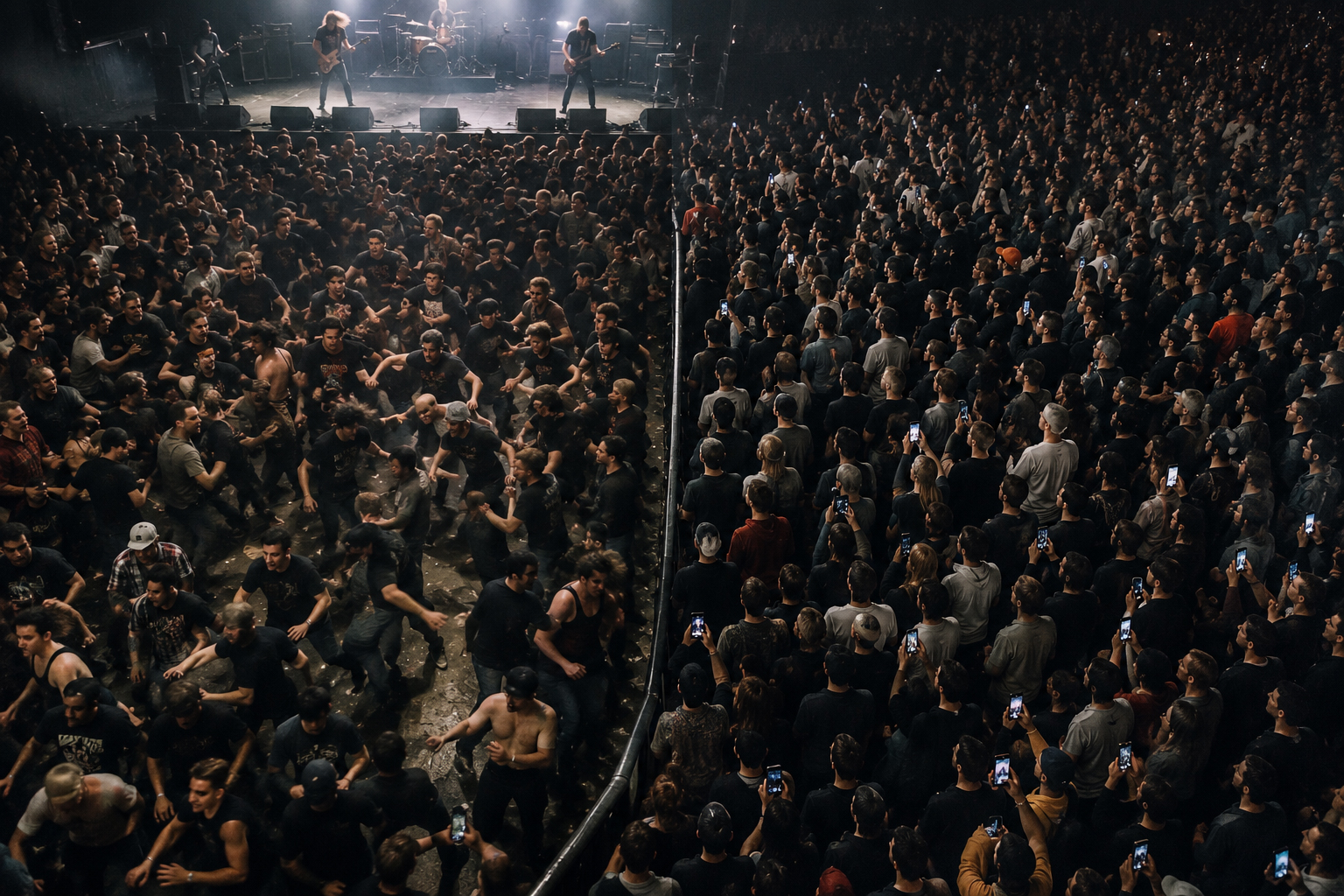
The mosh pit was never meant to be comfortable — that was the point. But after tragic incidents, tighter regulations, and shifting generational values, is the pit being made safer or just slowly sanitized out of existence? Margo Roberts, Jake Mitchell, and Lisa Chen investigate.
In recent years, the vibrant, chaotic atmosphere of mosh pits at concerts has begun to fade. Once a sanctuary for exuberant expression, the pit is increasingly becoming a site of contention. The dynamics surrounding this cultural phenomenon are undergoing change, leading some to believe that the very essence of the mosh pit is eroding. But are modern concertgoers genuinely enhancing safety, or are they inadvertently stifling the raw energy that defined the experience?
Context
The debates surrounding mosh pits have intensified following several tragic incidents at live shows. Safety measures have been reinforced more rigorously, with venues adopting stricter regulations and event organizers pushing for more responsible behaviors among attendees. While this might seem like a necessary evolution, critics argue that these changes come at a substantial cultural cost. As different generations attempt to bring their perspectives to a common space, the resulting friction raises questions: Is kindness truly benefiting the community, or is it inadvertently leading to the pit's demise?
Expert Viewpoints
Perspective: Margo Roberts, Cultural Critic
Margo Roberts argues that the mosh pit has historically served as an emblem of uninhibited self-expression within the punk and metal music scenes. She contends that these unfiltered experiences can serve as a vital social release, allowing participants to process their emotions and frustrations in a communal setting. However, Roberts acknowledges that increased safety protocols — such as the emergence of "safer spaces" — have altered the character of these pits.
"While it's essential to ensure the safety of attendees, there's a fine line between protection and over-regulation," she explains. "The very nature of a mosh pit encapsulates the wild energy of youth — something that, if overly stifled, may lead to a sterile environment that lacks vibrancy."
Perspective: Jake Mitchell, Music Journalist
Music journalist Jake Mitchell echoes Roberts's sentiments but offers a more critical view on the current state of the mosh pit. He believes that the influx of newcomers to music scenes, often without understanding the culture, contributes to a dilution of the experience.
"Social media has reshaped the way fans engage with live music," he points out. "People come to concerts with different expectations — a desire for a selfie moment over a cathartic, collective experience. Consequently, the pit, once a free-for-all, is now mired in confusion about how to engage responsibly."
Mitchell posits that while the intentions behind new safety protocols are commendable, they may actually alienate long-time fans who rely on the pit for emotional release and community connection.
Perspective: Lisa Chen, Sociologist
Lisa Chen offers a sociological lens through which to view the decline of the mosh pit. She notes that societal standards and norms are evolving, with younger generations prioritizing emotional and physical safety in ways that previous generations might not have understood.
"Social movements geared towards inclusivity and empathy have led to a heightened awareness of personal space and boundaries," Chen explains. "In this context, the traditional mosh pit can be perceived as an aggressive or even dangerous space. Thus, concertgoers look for alternative ways to experience music without the risk of physical harm or emotional trauma."
Chen believes that while it can feel like the pit is dying, what it's actually undergoing is transformation — a shift towards a new ethos around collaboration and shared experience.
Editorial Synthesis
Where Experts Agree
The essence of mosh pits as spaces of emotional release is critical to their cultural identity. New safety measures, while well-intentioned, may impede the natural energy of live music experiences. The evolution of concertgoer expectations significantly alters participation in moshing.
Where Experts Disagree
Roberts believes the mosh pit can adapt without losing its core essence, while Chen sees the need for a complete transformation to align with new societal norms. Mitchell is more pessimistic about the future of the mosh pit, arguing it may never return to its former glory, whereas Chen suggests it can evolve into a new form of community engagement.
Why This Matters
The discussion around the mosh pit is not merely about whether attendees should push and shove — it touches on broader issues of community, expression, and generational evolution in music culture. As more individuals voice concerns about safety, it raises questions about the kind of experiences that might be sacrificed in the name of security.
In today's landscape where live music faces challenges like declining attendance and rising costs, understanding what motivates attendees — whether nostalgia, connection, or sheer exhilaration — becomes paramount. The mosh pit may be dying, but this loss could signify a deeper crisis in how society values the unabashed freedom of expression that music has traditionally facilitated. Ultimately, the future of the mosh pit may rely not solely on measures of safety but on a collective decision about what music's emotional landscapes should look like as they continue to evolve.
Safety vs. Spirit: The Mosh Pit Dilemma
The mosh pit, once a pulsing heart of concert culture, finds itself at a crossroads where safety and self-expression clash. While the introduction of increased safety measures in response to tragic incidents is commendable, the essence of the mosh pit—a space for uninhibited release and communal energy—is at risk of being lost. By prioritizing control over chaos, we may be stripping away the fundamental joy and camaraderie that attendees seek. It's crucial for venues and organizers to balance safety with the electric atmosphere that defines live music experiences. Rather than eliminating risks entirely, the focus should be on fostering an environment that respects both the need for safety and the spirit of the mosh pit. Only through thoughtful dialogue can we preserve this cultural landmark while adapting to a changing landscape. The vibrant energy needs nurturing—let's ensure it evolves, not evaporates.

Margo Roberts
Cultural Critic
"Margo argues that the changing nature of mosh pits reflects a broader movement towards inclusivity and safety at concerts, where prioritizing participant well-being is essential."
𝕏 Margo Roberts in Margo Roberts
Lisa Chen
Sociologist
"Lisa emphasizes the need for a balanced view, recognizing the importance of both safety and traditional practices, advocating for solutions that honor both community spirit and well-being."
𝕏 Lisa Chen in Lisa ChenHow Does This Hit You?


No comments yet. Be the first to weigh in.