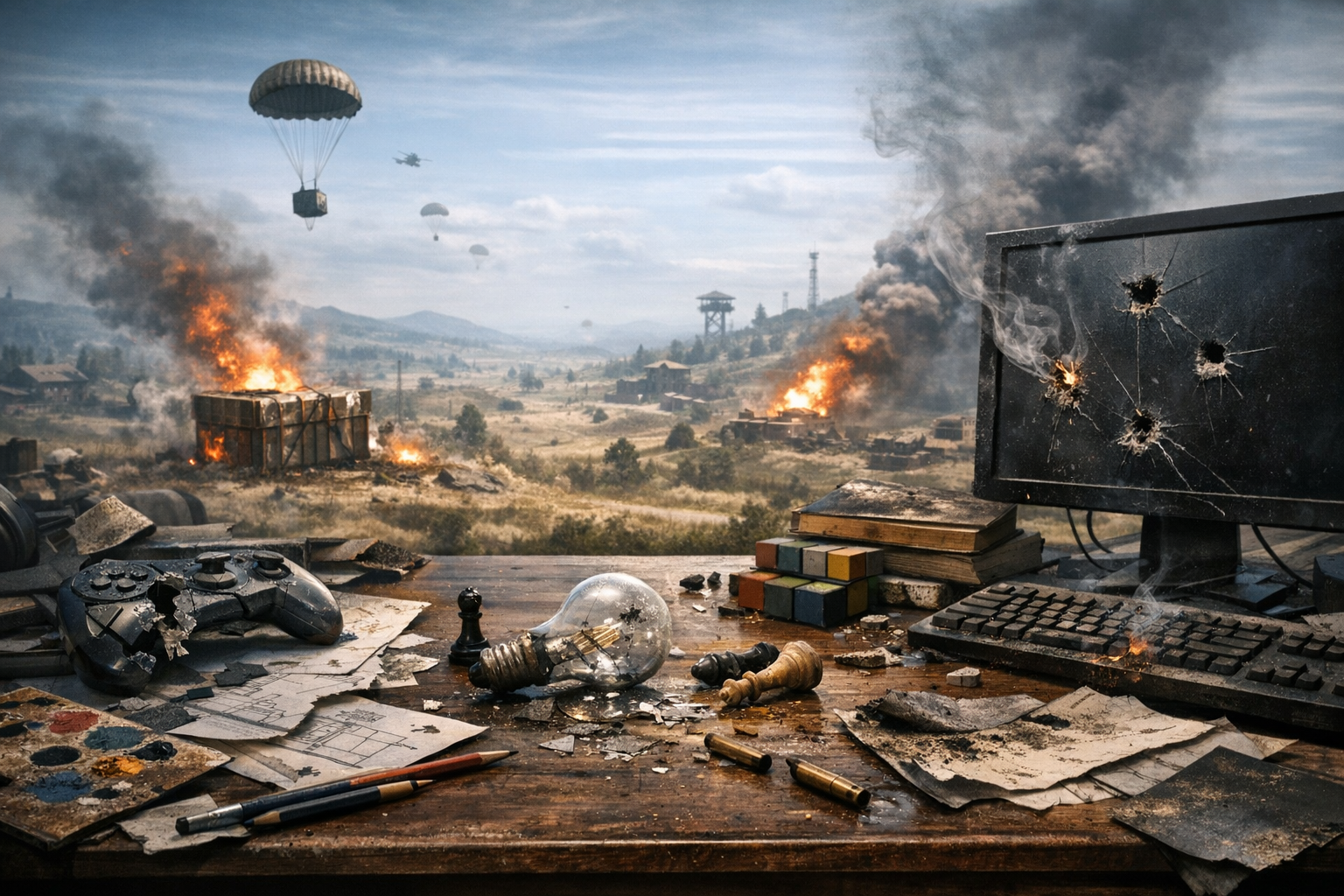
Are Battle Royale Games Killing Game Design Creativity? In recent years, the rise of battle royale games has sparked a contentious debate in the gamin...
In recent years, the rise of battle royale games has sparked a contentious debate in the gaming community: are these titles stifling innovation and creativity in game design? As game developers continue to imitate the formulaic elements of battle royale success, the concern grows that the industry may be sacrificing originality at the altar of profitability.
Context
Battle royale games like PUBG, Fortnite, and Apex Legends have not only reshaped the gaming landscape but also generated tremendous financial success. A study from research firm Newzoo reports that the battle royale genre accounted for 20% of global video game revenues in 2020. With impressive statistics like these, it’s no wonder designers are drawn to the format. However, as Brendan Greene, creator of PUBG, warns, such success could lead to a homogenization of games, where creativity takes a back seat.
Perspective: Brendan Greene
Brendan Greene views the proliferation of battle royale games with both pride and caution. He acknowledges the creativity that the genre has inspired but raises concerns about the trend toward cloning successful titles. "When a gameplay style becomes a mega-hit, it’s tempting for developers to follow that path, often at the expense of originality," Greene states. He believes that while battle royales can foster new mechanics, they may overshadow diverse genres that deserve more attention.
According to Greene, the hallmark of great game design lies in risk-taking and exploration. "If everyone is trying to create the next big battle royale, we risk losing the games that break the mold and innovate beyond mere mechanics."
Perspective: Jade Raymond
Contrasting Greene's viewpoint, Jade Raymond, CEO of Haven Studios, emphasizes the potential for hybridization in game design that battle royales have introduced. "The battle royale format invites a new audience to engage with video games, and we can’t underestimate how this impacts other genres. Designers can take inspiration from its mechanics and bring them into different contexts," she argues.
Raymond asserts that battle royale games have pushed the industry to explore new avenues such as cross-platform play and evolving narratives. This presents an opportunity to appeal to a broader demographic and refresh traditional gameplay mechanics.
She adds, "It’s important to challenge ourselves, not to dismiss what is popular but to leverage it in innovative ways. For example, imagine a narrative-driven RPG with battle royale elements—there's a wealth of untapped potential."
Perspective: Troy Baker
Troy Baker, a voice actor and game developer, provides a middle ground in the debate, recognizing both sides while advocating for balanced creativity. "There’s a reason battle royales are popular; they offer engaging experiences that bring people together. Still, that doesn’t mean they should dominate development narratives," Baker insists.
Baker highlights the importance of artistic expression in game design and fears that the overwhelming focus on a single genre may limit storytelling possibilities. "Game makers need to ask themselves: What messages are we conveying with our games? Are we merely replicating a successful formula, or are we crafting a meaningful experience?" According to him, creativity should never be sacrificed for short-term financial gain.
Editorial synthesis
Where experts agree
- Caution Against Homogenization: Both Greene and Baker express concerns about the risk of losing unique game experiences due to an oversaturation of battle royale titles.
- The Importance of Innovation: All three experts acknowledge that while borrowing elements from successful genres can drive engagement, developers must prioritize originality to keep the industry vibrant.
- Emerging Avenues for Creativity: Jade Raymond’s perspective on the hybridization of genres resonates with Baker's call for meaningful storytelling, suggesting that there’s room for evolution within established frameworks.
Where experts disagree
- Potential for Originality: Greene believes that the focus on battle royales detracts from the exploration of diverse genres, while Raymond sees these popular genres as springboards for further innovation.
- Audience Engagement: Raymond emphasizes the opportunity to expand player demographics through battle royale elements, whereas Greene and Baker raise concerns about the impact on gameplay diversity.
- Financial Motivations: Greene leans towards a more cautious view, warning that profit-driven approaches may compromise creativity. Baker, however, argues for a balanced understanding of market dynamics and artistic expression in game design.
Why this matters
The debate surrounding battle royale games and their impact on game design is more than just an industry conversation; it touches on fundamental questions about creativity and innovation in a medium that thrives on artistic expression. As the gaming landscape becomes increasingly crowded with battle royale titles, the challenge lies in fostering environments where diverse genres can coexist and flourish. Greene's warnings serve as a crucial reminder for designers to remain vigilant against the diminishing space for unique game experiences.
In conclusion, the future of game design hinges on balance. While battle royale mechanics may continue to attract massive audiences, the industry must cultivate avenues for fresh narratives and innovative gameplay. As highlighted by Baker, the challenge remains: how can creators tell compelling stories while acknowledging the current trends? The responsibility lies with developers, who must navigate these waters and ensure that creativity remains at the forefront of game design.
Navigating the Balance Between Innovation and Imitation
The debate surrounding battle royale games highlights a complex dichotomy in the gaming industry. While it's undeniable that titles like *PUBG* and *Fortnite* have generated incredible revenues and captivated vast audiences, the risk of stagnating creativity is real. Brendan Greene's warning against the allure of cloning successful formats serves as a crucial reminder of the importance of originality in game design. Conversely, Jade Raymond's perspective on hybridization introduces a glimmer of hope, suggesting that new audiences can spark unforeseen innovations. Ultimately, the challenge lies in embracing the battle royale phenomenon while simultaneously fostering an environment where unique, diverse gaming experiences can flourish. Game designers must strike a balance between profitability and inventiveness to ensure the dynamic evolution of the medium continues, paving the way for the next groundbreaking genre that reinvigorates creativity in game development.
Brendan Greene
Game Designer, Creator of PUBG
"Greene argues that battle royale games foster innovation by focusing on dynamic game mechanics and player-driven narratives. He believes that the genre provides a unique canvas for creativity in multiplayer experiences."
𝕏 Brendan GreeneJade Raymond
CEO, Haven Studios
"Raymond contends that the overwhelming focus on battle royale games stifles original game design and leads to repetitive mechanics. She believes this trend undermines the diversity and richness of the gaming landscape."
in Jade RaymondTroy Baker
Voice Actor and Game Developer
"Baker takes a neutral stance, acknowledging that while battle royale games can provide engaging experiences, they also risk overshadowing more narrative-driven titles. He calls for a broader exploration of game genres to ensure creativity thrives."
𝕏 Troy BakerHow Does This Hit You?


No comments yet. Be the first to weigh in.