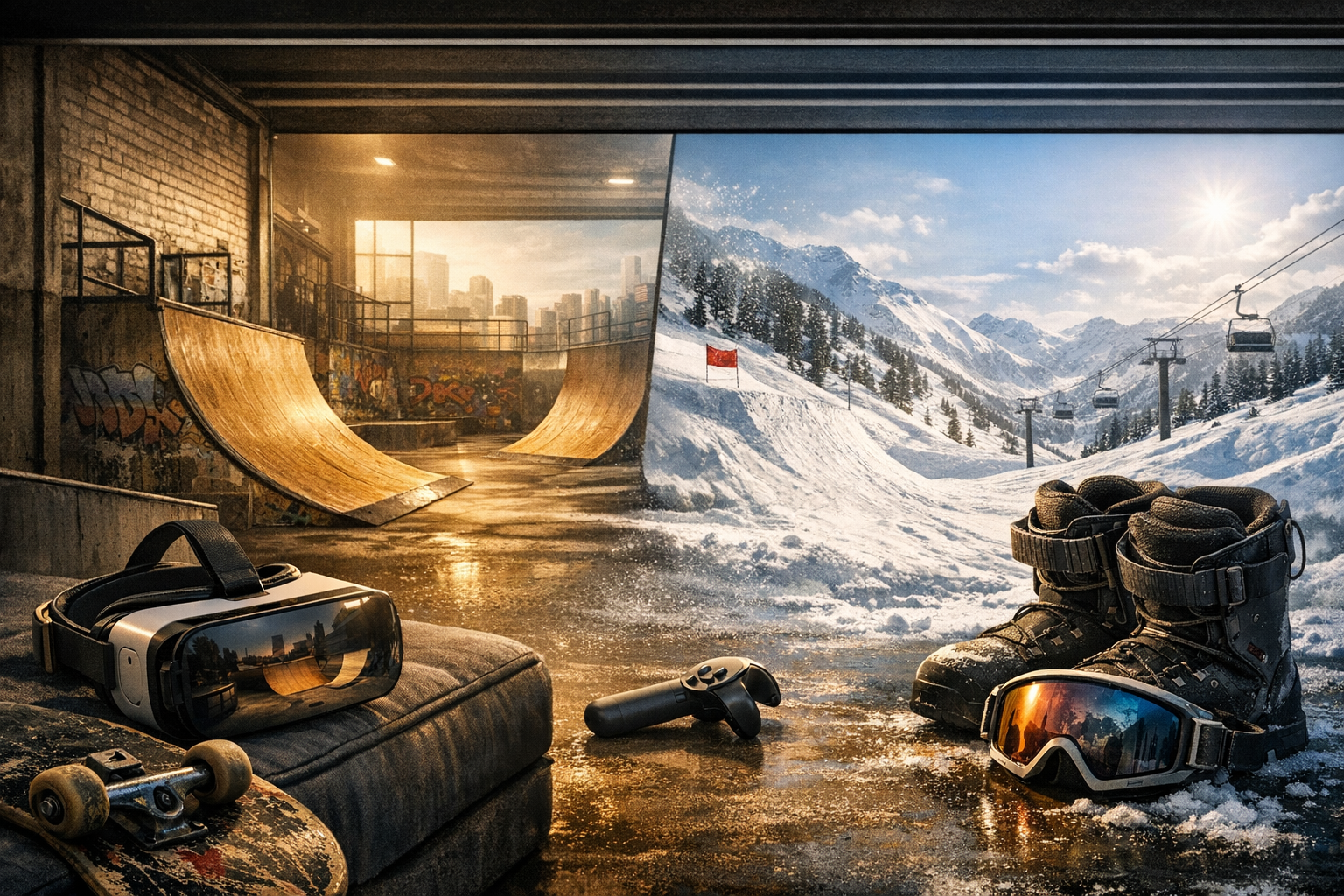
VR Skateboarding and Snow Sports: The Future of Training or a Lazy Substitute? As technology continues to encroach upon various aspects of our lives,...
As technology continues to encroach upon various aspects of our lives, the question arises: Are virtual reality (VR) applications in skateboarding and snow sports revolutionizing training methods, or are they merely fostering a culture of laziness? With legendary figures such as Tony Hawk and Mark McMorris weighing in, the debate is heating up as enthusiasts and professionals alike scrutinize the role of VR in these dynamic sports.
Why This Matters Now
The integration of VR into the world of athletics is becoming increasingly prevalent, especially in high-risk sports like skateboarding and snowboarding. With its ability to simulate the thrills and challenges of real-world environments, VR promises to provide cost-effective and safe training options for athletes at all levels. However, as the allure of the digital realm grows stronger, questions regarding effectiveness, motivation, and the essence of athleticism itself remain unresolved. The onset of the COVID-19 pandemic and subsequent social distancing measures only intensified this discussion, as many athletes turned to virtual solutions for training.
Expert Viewpoints
Perspective: Pro VR as an Essential Training Tool
Tony Hawk, a household name in skateboarding, sees the potential in integrating VR technology into training regimens. Hawk articulates that VR can provide a different, enriching experience without the physical risks associated with actual skateboarding. "It allows young athletes to learn techniques in a virtual space, mitigating injuries while providing instant feedback," he says.
Moreover, Mark McMorris, a professional snowboarder, echoes this sentiment, believing that VR not only enhances performance but also amplifies understanding of intricate movements. “It’s about preparing for the mountain even when you can’t be on it,” McMorris explains, emphasizing how VR can keep an athlete's mind sharp and improve muscle memory.
Both athletes agree that VR combines entertainment with education, making learning new tricks more engaging. It offers a way to practice specific skills repeatedly without the physical toll that comes from traditional training methods.
Perspective: Skeptical of VR as a Replacement
On the other hand, Dr. Emily Baker, a sports psychologist, urges caution, questioning whether VR could inadvertently undermine an athlete's core connection to their sport. "While it can be an excellent supplementary tool, relying solely on VR for training can lead to a disconnect from the actual physical and emotional experiences of real-world sports," Baker cautions.
She highlights that the tactile sensations, the environmental variables, and even the risk elements are essential components that VR simply cannot replicate. Baker warns that reliance on virtual training may create a false sense of security and limit the development of adaptive skills needed for real-life outcomes. In her view, mastery of a sport involves understanding it in three-dimensional space, something that might get lost in a VR environment.
Editorial Synthesis
Where Experts Agree
- VR offers cost-effective and safe training options when physical practice is not feasible.
- Instant feedback and analysis can lead to faster learning curves.
- VR can help maintain mental skills and strategies when traditional training isn't an option.
Where Experts Disagree
- While some view VR as an essential training tool, others feel it may promote a disconnect from the reality of physical sports.
- The effectiveness of VR versus traditional training methods is still a matter of debate.
- Valid concerns exist that over-reliance on VR could lead to skill decay in real-world scenarios.
Why This Matters
As the conversation evolves, it's critical for athletes, coaches, and sports organizations to carefully evaluate the role of VR in training. While it is clear that VR provides an innovative means of preparing athletes, the discussion invites deeper exploration into how these tools can complement, rather than replace, traditional methods. As Tony Hawk aptly states, “VR should not be a crutch but a stepping stone.”
In a world that increasingly favors convenience, finding the balance between technological aid and physical engagement may ultimately define the future of skateboarding and snow sports training. Will VR emerge as a supplementary enhancement to training, or could it cultivate a generation too reliant on virtual simulations?
In this age of evolving technology, the stakes are high not just for training techniques but also for the authenticity and integrity of sports themselves. The future awaits, and how athletes choose to navigate these waters may shape the culture of their sports for years to come.
Embracing Virtual Reality: A New Frontier in Training
The emergence of VR as a training tool in skateboarding and snow sports is not merely a workaround for physical limitations; it represents an exciting evolution in athletic training methodologies. While concerns about it fostering laziness are valid, the potential benefits, such as reduced injury risk and enhanced skill development, are too significant to ignore. Legends like Tony Hawk and Mark McMorris highlight how VR can deepen athletes' understanding of their craft in a controlled environment. It offers a unique space for athletes to experiment and refine their techniques without the immediate consequences of failure. As we embrace this technology, it's crucial to strike a balance, ensuring that it complements, rather than replaces, the physical practice essential to these exhilarating sports. Thus, VR can serve as an innovative ally in training, fostering both safety and performance advancement without sacrificing the essence of athleticism.

Tony Hawk
Professional Skateboarder, Entrepreneur
"Tony advocates for VR skateboarding as a revolutionary training tool that allows both beginners and seasoned athletes to practice techniques safely and analyze movements without the risks of injury."
𝕏 Tony Hawk in Tony HawkDr. Emily Baker
Sports Psychologist
"Dr. Baker argues that while VR can enhance skill acquisition and psychological readiness, it should complement, not replace, traditional training methods to ensure comprehensive athlete development."
𝕏 Dr. Emily Baker in Dr. Emily BakerMark McMorris
Professional Snowboarder
"Mark questions the effectiveness of VR as a training substitute, believing it lacks the physical and adrenaline elements of actual sports, which are crucial for developing real-world skills."
𝕏 Mark McMorris in Mark McMorrisHow Does This Hit You?


No comments yet. Be the first to weigh in.