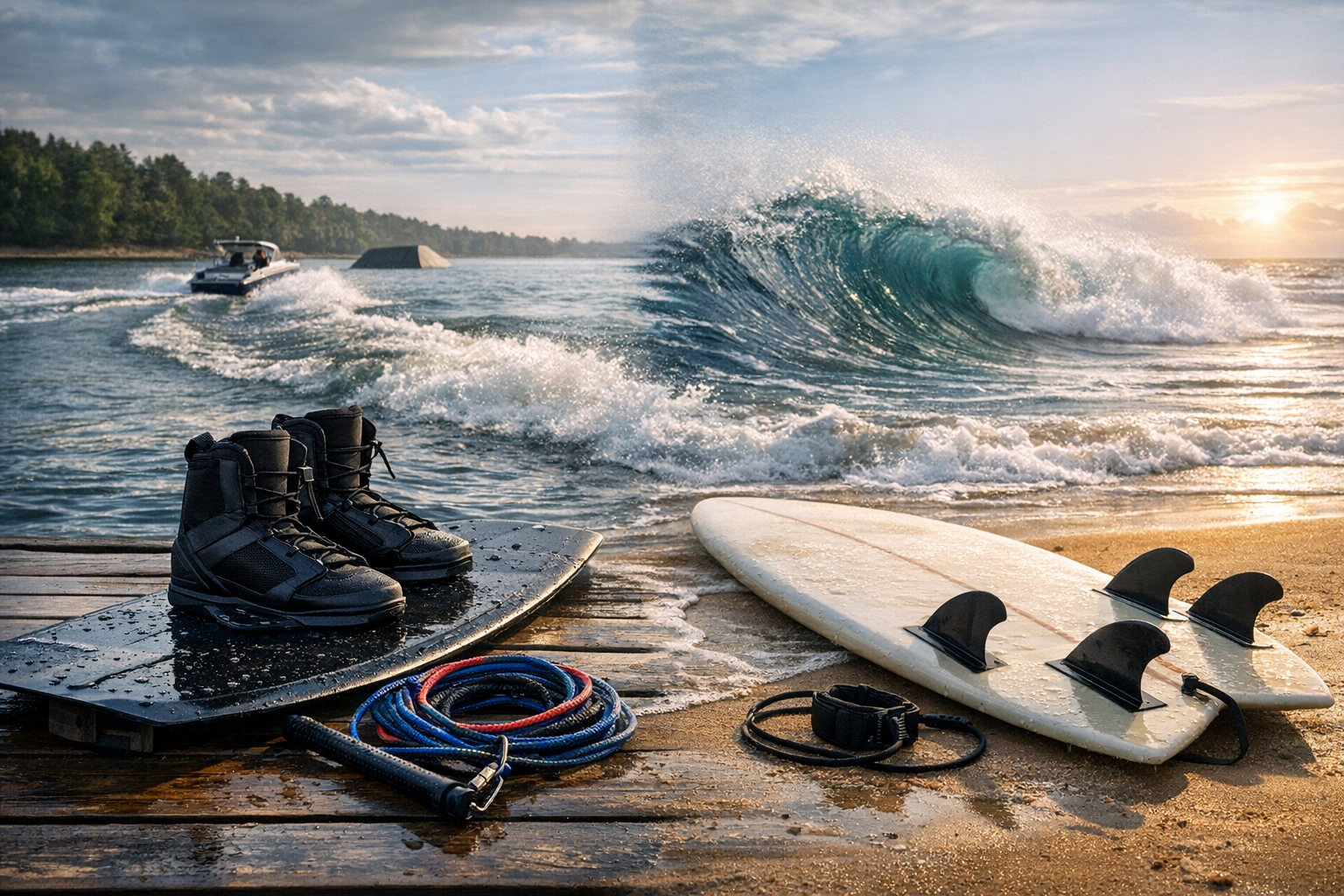
Wakeboarding vs. Surfing: Which One Actually Takes More Skill? As the summer sun blazes and water sports enthusiasts flock to the coastlines and lakes...
As the summer sun blazes and water sports enthusiasts flock to the coastlines and lakeshores, a longstanding debate resurfaces: which sport demands more skill, wakeboarding or surfing? Proponents on both sides assert the superiority of their chosen discipline, but what do the experts say?
Context
In recent years, the popularity of both wakeboarding and surfing has soared, each sport attracting a diverse community of athletes. With wakeboarding often perceived as a more accessible option due to its familiarity and controlled environments, many wonder if it truly requires the same level of skill and tenacity as surfing, which is deeply rooted in ocean dynamics and wave riding. This debate is not merely an academic exercise; it has significant implications for the sports’ respective cultures, training methodologies, and future growth.
Perspective: Sean O'Brien (Professional Wakeboarder)
Sean O'Brien, a professional wakeboarder renowned for his performance tricks, emphasizes the unique skill set required for wakeboarding. He argues, "Wakeboarding involves a distinct combination of elements, including board control, aerial tricks, and cable management. The precision needed in these areas is something not commonly addressed by surfing." O'Brien points out that wakeboarding has a strong emphasis on tricks and moves that require a particular artistry, often involving flips and spins executed at high speeds. He believes that wakeboarding's controlled environment allows for the refinement of skills, providing opportunities for consistency that surfing might lack.
Perspective: Laird Hamilton (Big Wave Surfer)
Contrasting this viewpoint is Laird Hamilton, a legendary figure in big wave surfing who has redefined the boundaries of his sport. Hamilton insists that surfing, especially big wave surfing, requires a different breed of skill altogether. "In surfing, you're negotiating with nature—you have to read the ocean, anticipate wave movements, and harness the power of the sea. This requires immense adaptability, balance, and a deep understanding of the environment," he claims. Hamilton argues that while wakeboarding excels in technical tricks, surfing embodies the essence of skill as it relates to environmental awareness and the unpredictability of waves.
Perspective: Tommy McNamara (Sports Analyst)
Tommy McNamara, a respected sports analyst, seeks to offer an overarching view by dissecting the two disciplines. He notes, "Both sports require a type of skill that is unparalleled in their own right. Wakeboarding may have a technical edge when it comes to tricks, but surfing's demands are intricately tied to the ocean's temperament." McNamara adds that the level of commitment in either sport cannot be understated, suggesting that both have their unique challenges. Ultimately, he highlights that the skill sets are not directly comparable, but rather complementary, each attracting enthusiasts based on their personal strengths and interests.
Editorial synthesis
Where experts agree
- Both sports require significant skill but in different domains.
- Each discipline has its own set of unique challenges that appeal to different types of athletes.
- Passion and commitment play a crucial role in mastering either sport.
Where experts disagree
- Sean O'Brien believes wakeboarding has a greater emphasis on technical skill and artistry.
- Laird Hamilton argues that surfing requires a more profound connection to nature and adaptability to environmental variables.
- Tommy McNamara holds the view that both sports have valuable merits but should not be directly compared.
Why this matters
The ongoing debate about the skill levels required in wakeboarding versus surfing captures more than just athletic prowess; it reflects the culture surrounding water sports and influences how each is perceived in mainstream media and among enthusiasts. By examining the insights provided by renowned professionals like Sean O'Brien and Laird Hamilton, it becomes clear that the merits of both sports are inextricably linked to personal experience and fulfillment rather than a singular hierarchy of skill.
As the popularity of both wakeboarding and surfing continues to grow, understanding these differing skill sets can help both newcomers and seasoned veterans navigate their choices more thoughtfully. This is a conversation that resonates well beyond the water; it invites advocates of both sports to appreciate the nuances of each other’s disciplines, ultimately fostering a community buoyed by respect and recognition.
The Skills Behind the Boards: A Balanced Perspective
When weighing the skill sets required for wakeboarding and surfing, both sports shine in their own right, each demanding unique competencies. Wakeboarding thrives in a controlled environment, allowing for precision and technical artistry that appeals to trick enthusiasts. On the other hand, surfing offers a raw interaction with nature, testing an athlete's adaptability and instinct. The debate ultimately isn't about one sport being superior to the other, but rather an appreciation of the diverse skills each discipline cultivates. Both require dedication and passion, and neither can be easily benchmarked against the other. As enthusiasts, we should celebrate the distinct artistry present in both wakeboarding and surfing while fostering mutual respect among their communities.
Sean O'Brien
Professional Wakeboarder
"Wakeboarding demands a unique set of skills that combine acrobatics, balance, and strength. The ability to perform tricks while being towed behind a boat requires precision and athleticism that is distinct from surfing."
𝕏 Sean O'Brien in Sean O'Brien
Laird Hamilton
Professional Surfer & Waterman
"Surfing, particularly big wave surfing, requires an extraordinary level of skill and respect for nature's power. The ability to read waves and navigate unpredictable conditions is a profound skill that speaks to the heart of the sport."
𝕏 Laird Hamilton in Laird HamiltonTommy McNamara
Sports Analyst
"Both wakeboarding and surfing have their unique challenges and skills. Comparing them directly is complicated, as each sport requires different types of physical and mental acumen, making it hard to definitively say one takes more skill than the other."
𝕏 Tommy McNamara in Tommy McNamaraHow Does This Hit You?


No comments yet. Be the first to weigh in.