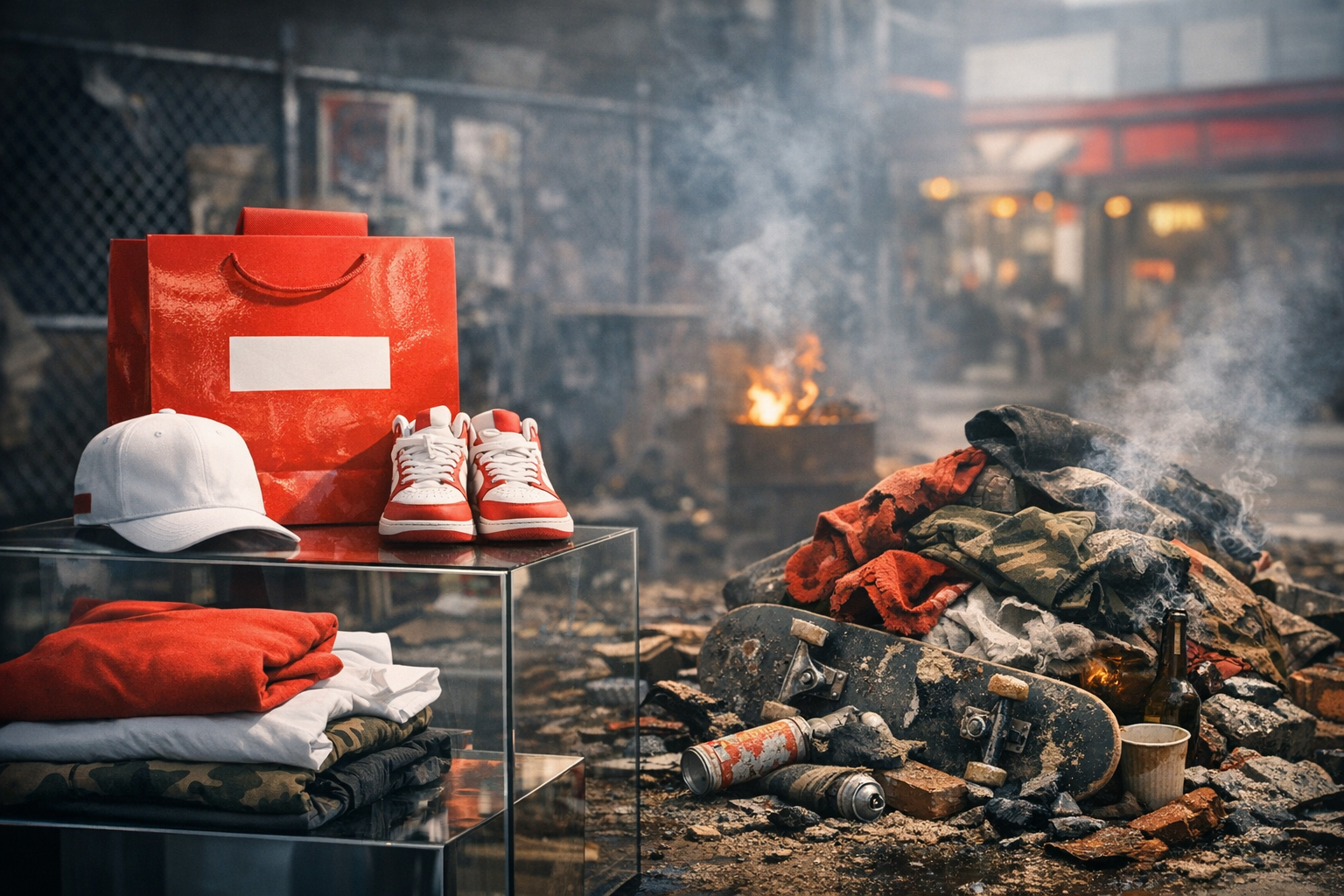
Did Supreme Ruin Streetwear or Save It? In the ever-evolving fashion landscape, few names resonate as powerfully as Supreme. Launched in 1994, the bra...
In the ever-evolving fashion landscape, few names resonate as powerfully as Supreme. Launched in 1994, the brand catalyzed a revolution in streetwear, morphing a niche subculture into a billion-dollar industry. However, with its integration into the mainstream—especially after being acquired by the private equity firm Carlyle Group in 2020—questions arise about its impact: Did Supreme ruin streetwear by diluting its essence, or did it save it by bringing it to a wider audience? This debate has become increasingly pertinent as fashion circles witness shifts in cultural relevance and authenticity.
Context
The significance of this rivalry isn't just theoretical; it affects the livelihoods of countless designers, influencers, and consumers. As sustainability and social justice become focal points in the fashion world, the streetwear industry grapples with its identity. Following the rise of influencers and the online retail boom, Supreme's role in defining streetwear culture is under scrutiny. Understanding whether it harmed or helped is crucial for anticipating the future trajectory of the genre.
Expert Viewpoints
Perspective: Kanye West
Kanye West, a fashion mogul renowned for his Yeezy brand, presents a passionate perspective on the impact of Supreme on streetwear. According to West, Supreme's commercialization led to a dilution of the rebellious spirit that originally characterizes street culture. In an interview, he remarked:
"Streetwear was born from underground culture, art, and expression. When it becomes a corporate product, it loses its soul."
West argues that the scarcity and exclusivity that once defined streetwear are now overshadowed by mass production and widespread availability. He emphasizes that while Supreme introduced the broader public to street style, it also paved the way for inauthenticity in fashion—encouraging brands to prioritize profits over genuine artistry.
Perspective: Virgil Abloh
Virgil Abloh, the late founder of Off-White and former artistic director of Louis Vuitton's menswear, presents a more nuanced view. He acknowledges Supreme's role in climaxing streetwear as a distinctly American form of cultural expression while simultaneously emphasizing its need to evolve:
"Streetwear has a unique voice that must adapt and grow. Supreme's influence has inspired a generation to embrace the avant-garde, allowing new creators to express themselves. We shouldn’t dismiss the brand but rather see it as a catalyst for change."
Abloh contends that Supreme's mainstream success opened doors for myriad designers, pushing streetwear into high fashion. Consequently, he believes the brand has driven innovation, encouraging broader dialogues about racial and cultural identities. His assertion that streetwear needs to transform to remain relevant contrasts sharply with West's more critical lens.
Perspective: Matt Welty
Matt Welty, Senior Editor at Complex, presents an analytical approach to the Supreme debate. According to Welty, Supreme’s evolution marks a double-edged sword for streetwear:
"On one hand, Supreme has popularized street fashion, making it accessible to a global audience. On the other hand, it risks commodifying what has always been a subcultural form of expression."
Welty posits that Supreme’s collaboration with luxury houses has blurred the lines between authenticity and commercialization. He notes that while Supreme’s existence strengthens the streetwear community by legitimizing it, it also invites an onslaught of fast-fashion imitations—forcing original creators to scrap for recognition in an overcrowded market.
Editorial synthesis
Where experts agree
- All experts recognize that Supreme has fundamentally altered the streetwear landscape.
- There is a consensus that commercialization has changed the original intent behind streetwear.
- Each expert acknowledges Supreme's role in promoting streetwear to mainstream audiences.
Where experts disagree
- Kanye West believes Supreme's commercialization harms authenticity, while Virgil Abloh sees it as essential for evolution.
- Matt Welty takes a balanced view, acknowledging both positive and negative outcomes of Supreme's influence.
- West advocates for a return to underground roots, while Abloh and Welty posit that adaptation can foster growth and inclusivity.
Why this matters
The ongoing debate surrounding Supreme's impact on streetwear raises larger questions about authenticity in art and commerce. As streetwear continues to evolve—exemplified by brands like Off-White, Fear of God, and even Yeezy—understanding the consequences of Supreme's corporate strategy can help emerging designers navigate the complex fashion landscape. The discussion is not merely about one brand; it encapsulates the tension between artistry and capitalism, a struggle relevant to multiple cultural expressions today.
In a world increasingly defined by global connectivity and rapid change, the implications of this discourse reveal that streetwear, like any robust cultural phenomenon, can neither be entirely preserved nor commercially oversold. Instead, it thrives on the dynamic interplay of voices, aesthetics, and market forces, ensuring the conversation—like streetwear itself—remains vibrant and ongoing.
As streetwear continues to tread the delicate line between radical expression and capitalist enterprise, the role of brands like Supreme becomes ever more crucial. Will the future lean more toward preservation of the underground, or will it continue to evolve into new realms of innovation? This remains to be seen as the industry continues to adapt and transform.
Supreme: A Double-Edged Sword for Streetwear
The debate surrounding Supreme's impact on streetwear exemplifies the tension between authenticity and accessibility. While Kanye West boldly critiques Supreme for commodifying a once-rebellious culture, it's undeniable that the brand has opened doors for countless designers and has introduced streetwear aesthetics to mainstream fashion. This evolution has led to both commercialization and representation, affecting how streetwear is perceived and consumed. In this complex landscape, it’s not about absolutes—Supreme has both diluted and enriched the streetwear scene. Observer or participant, we must recognize that this transformation reflects broader societal shifts. Ultimately, Supreme's legacy will depend on how future creators navigate the balance of maintaining authenticity while embracing broader audiences.
Kanye West
Fashion Mogul
"Kanye West argues that Supreme's commercialization of streetwear has allowed for greater accessibility and influence, fostering a broader appreciation for street culture."
𝕏 Kanye WestVirgil Abloh
Founder, Off-White
"Virgil Abloh posits that while Supreme has commercialized streetwear, it has also served as a launching pad for various designers and movements, making the conversation about its impact complex."
𝕏 Virgil AblohMatt Welty
Senior Editor, Complex
"Matt Welty believes that Supreme's rise has led to the commodification of streetwear, detracting from its original subcultural roots and turning it into a cash-grab enterprise."
in Matt WeltyHow Does This Hit You?

No comments yet. Be the first to weigh in.