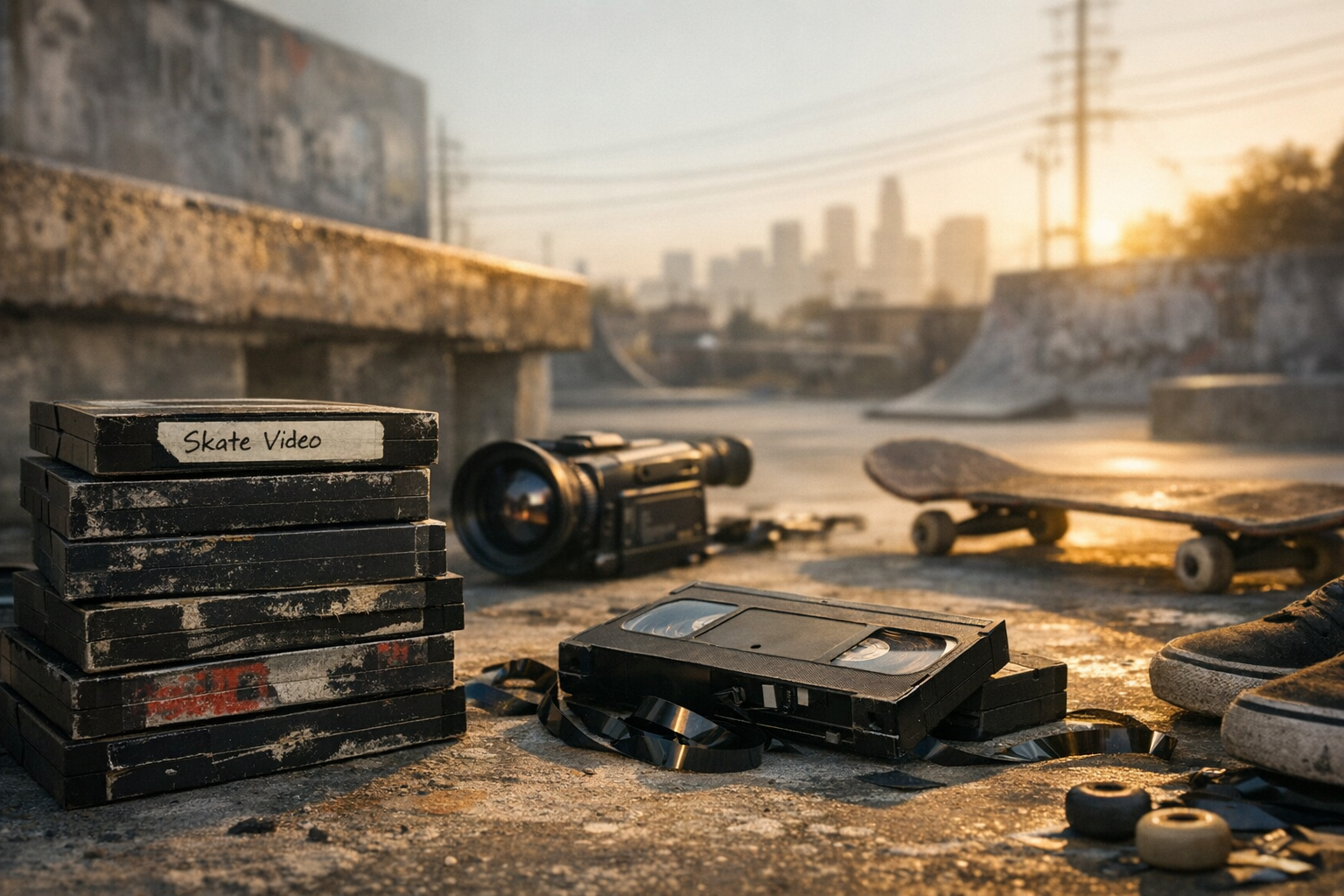
Before YouTube, There Were VHS Skate Tapes — And They Were Better Opening Question: Nostalgia vs. Accessibility As skate culture continues to evolve i...
Before YouTube, There Were VHS Skate Tapes — And They Were Better
Opening Question: Nostalgia vs. Accessibility
As skate culture continues to evolve in the digital age, a lingering question emerges: Are the golden days of VHS skate tapes more significant than the instant accessibility offered by platforms like YouTube? This debate not only captures the essence of skateboarding as an art form but also pits the nostalgic allure of the past against the immediacy of modern technology.
Context: Why This Matters Now
As skateboarding finds a new audience thanks to Olympic inclusions and viral content, the roots of the sport — notably its representation in VHS tapes — are often overlooked. These tapes served not only as a medium for showcasing talent but also as vessels of culture, community, and storytelling. Understanding their impact can shed light on where skateboarding has been and where it might go next.
Perspective: The Golden Age of VHS
Tony Hawk, renowned professional skateboarder, is a staunch advocate for the unique charm of VHS skate tapes. Hawk argues that these tapes had a depth of authenticity that current digital formats often lack. "VHS tapes allowed for a rawness in production that captured not just the tricks but the whole vibe of skateboarding. You felt like you were in the scene, in the moment. It was gritty, real, and that resonated with us."
The tactile nature of VHS — the anticipation of winding, rewinding, and the occasional tape jam — became part of the experience for skaters. Hawk reflects that waiting for the next skate release created an anticipation that YouTube can’t replicate. "You were involved in the community more as everyone — from pros to newbies — was sharing the same tape."
Bob Burnquist, another skateboarding icon, adds to this notion by highlighting that the artistry behind VHS tapes held a unique place in skate history. “Some of the most influential skaters rose to prominence because of the exposure they received from these films. It was about more than skating; it was about creating a visual language around what we do.” According to Burnquist, the storytelling in these bespoke productions gave viewers a sense of identity and belonging.
Perspective: The Digital Revolution
Conversely, Zach Smith, a prominent skateboarding documentary filmmaker, champions the digital transition embodied by platforms like YouTube. Smith argues that the access and variety provided by these platforms cannot be ignored. "For many budding skaters today, YouTube is a crucial gateway. They can discover skating styles from all over the world without the limitation of location or the cost of VHS tapes."
Smith also points out the marketing and community-building potential that YouTube affords skaters and brands alike. "The algorithms of social media allow new talent to shine alongside seasoned pros, often within the same video. That democratization of talent is a huge leap forward for the culture. It makes it more inclusive and far-reaching."
Furthermore, he mentions that unlike VHS tape releases, which could take months or even years to launch, uploading a video to platforms like YouTube is instantaneous, fostering rapid feedback and engagement. "This pacing allows for a more dynamic evolution of skate styles and trends."
Editorial synthesis
Where experts agree
- Skating has always been about community, whether through VHS tapes or digital platforms.
- The rawness and authenticity of original skate tapes resonate with long-time fans.
- Both mediums showcase the artistry and athleticism central to skate culture.
Where experts disagree
- The accessibility of YouTube democratizes skateboarding versus the unique community experience tied to VHS.
- The quality and storytelling in skate videos have evolved with digital technology versus remaining nostalgic for the past.
Why this matters
The clash between nostalgia and modernity presents a fascinating crossroad for skateboarding. As skate culture continues its evolution, the lesson becomes clear: both formats — VHS and digital — contribute something invaluable to the sport. VHS tapes may carry an emotional weight and rich history, fostering a profound sense of identity within skaters. On the other hand, platforms like YouTube offer unprecedented access to new audiences, innovation, and diverse skating styles.
Ultimately, this debate is emblematic of much larger conversations within the arts and sports landscapes about authenticity versus accessibility. Understanding and appreciating both the raw essence of VHS skate tapes and the advantages of the digital age will shape the future narrative of skateboarding, blending the old with the new while respecting the foundational cultures that have propelled it forward.
Nostalgia vs. Modernity: The VHS Legacy in Skate Culture
In the ongoing debate between the nostalgic value of VHS skate tapes and the convenience of YouTube, it’s clear that both mediums offer distinct experiences that shape skate culture in unique ways. VHS tapes represent a time when storytelling, community, and authenticity were paramount, creating a sense of anticipation and shared excitement among skaters. Icons like Tony Hawk and Bob Burnquist remind us that these tapes were more than just videos; they were cultural artifacts that fostered connections within the skateboarding community. Conversely, platforms like YouTube democratize access, allowing a new generation to explore skateboarding without barriers. While the immediacy of modern technology brings inclusivity, we should not overlook the depth and artistry embedded in those beloved VHS tapes. As skateboarding continues to evolve, embracing both the cherished past and the innovative present will ultimately enrich the sport's narrative and community.

Tony Hawk
Professional Skateboarder, Entrepreneur
"VHS skate tapes encapsulated the raw essence of skateboarding culture, providing authenticity and a sense of community that today’s digital platforms often lack."
𝕏 Tony Hawk in Tony Hawk
Zach Smith
Skateboarding Documentary Filmmaker
"While VHS tapes offered a unique viewing experience with tangible memories, digital platforms allow for broader accessibility and the preservation of skate history."
in Zach Smith
Bob Burnquist
Professional Skateboarder
"While VHS tapes had their charm, the digital age has democratized skateboarding, giving everyone the ability to share and witness incredible talent instantly."
𝕏 Bob Burnquist in Bob BurnquistHow Does This Hit You?



No comments yet. Be the first to weigh in.