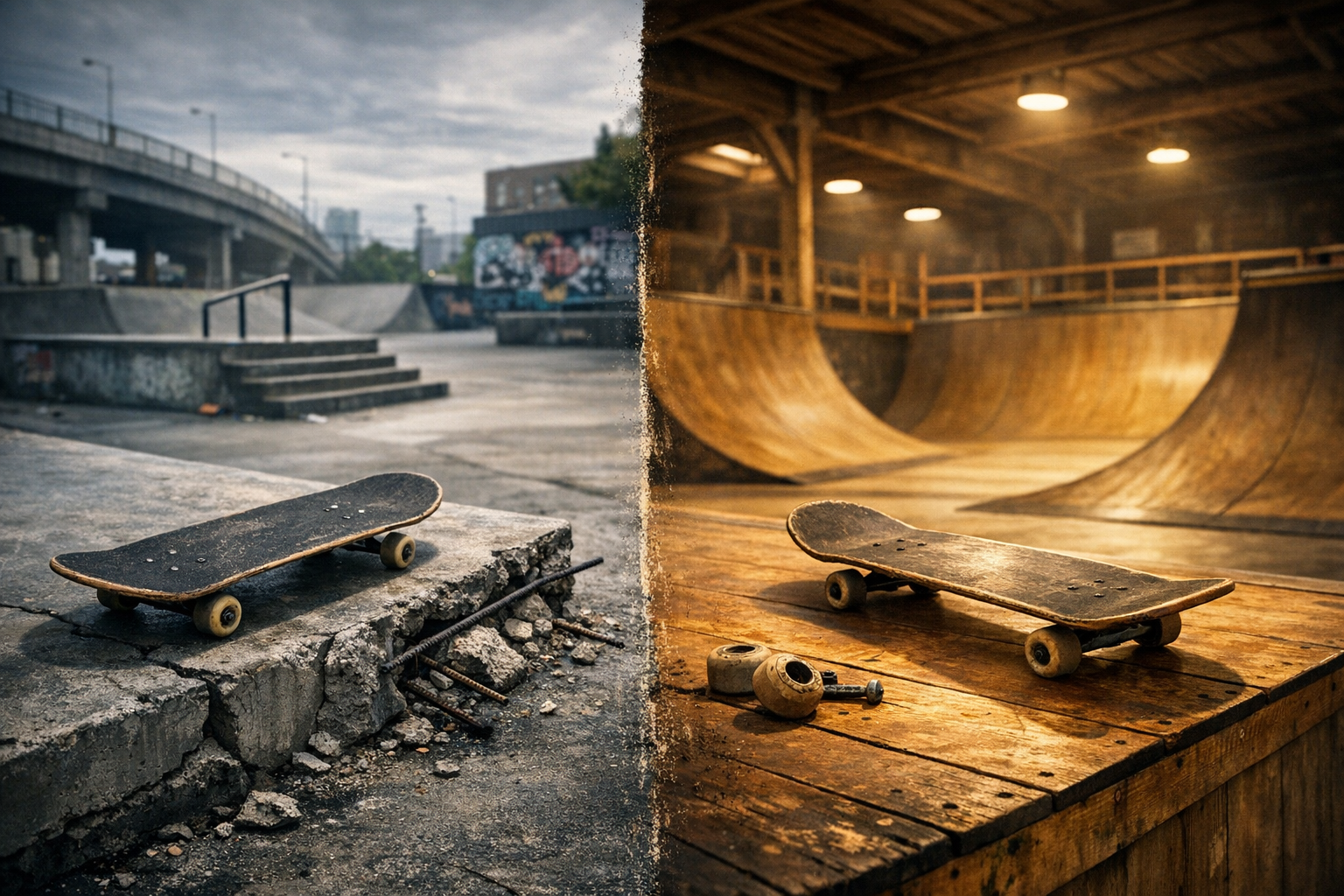
Is the Future of Skateboarding Concrete or Wood? The ongoing tension between street skaters and park skaters exemplifies a deeper rift in the skateboa...
Is the Future of Skateboarding Concrete or Wood?
The ongoing tension between street skaters and park skaters exemplifies a deeper rift in the skateboarding community. Street skaters thrive on urban obstacles, while park skaters often gravitate toward structured, smooth concrete environments. As skateboarding grows into a mainstream sport, it raises the question: What surface truly embodies the essence of skateboarding? The recent surge in skate parks and community funding for concrete parks pits these two factions against each other in a silent, yet significant, cultural battle.
Context: Why This Debate Matters Now
With the recent inclusion of skateboarding in the Olympic Games and the rapidly evolving skate culture, the divide between wood and concrete surfaces becomes more than just a preference; it symbolizes the identity of modern skateboarding. The COVID-19 pandemic also accelerated investment in skate parks, drawing in young skaters who may have never had a chance to experience urban street setups. As a result, the dialogue surrounding wood versus concrete surfaces is reshaping skateboarding's landscape and altering its future trajectory.
Perspective: Tony Hawk (Professional Skateboarder)
Tony Hawk has long been a proponent of skateboarding in all its forms. He acknowledges that while he has a personal affinity for wooden ramps and halfpipes, he recognizes the vital role of concrete parks in promoting accessibility.
"Concrete parks are crucial for young skaters who may lack safe street spots," Hawk explains. He points out that these parks not only provide a place to skate but also foster a sense of community. However, he also cautions against losing the spontaneity and creativity that come from street skating, which often serves as a breeding ground for innovation in tricks and styles.
"Wood has its own magic. The way it feels under my board, the sound it makes—there's a history there," Hawk adds. He advocates for a balance where both arenas coexist, enabling skaters to choose their preferred type of terrain.
Perspective: Zion Wright (Professional Skateboarder)
Zion Wright, a talented young skater known for his versatility, echoes Hawk’s sentiments but with a more contemporary lens. "Concrete has become the norm because it gives skaters a consistent surface to work on. But street skating is where I hone my skills. You learn to adapt, and that's where real creativity lies."
Wright emphasizes the importance of diversity in skating structures, allowing skaters to develop a versatile skill set. Yet he acknowledges a trend that favors the polished finishes of concrete. "I’ve seen more skaters becoming park skaters simply because that’s where the money and visibility are. But it shouldn’t come at the cost of street skating.
"Both realms feed off each other. After all, without street skating, park skating wouldn’t exist as it does today," he concludes, signaling a desire for both forms to coexist despite their apparent differences.
Perspective: Jeff Grosso (Skateboarding Historian & Advocate)
Jeff Grosso, known for his iconic status in the skateboarding community, has observed this divide over decades. His historical perspective adds a layer of depth to the conversation, making it clear that the push toward concrete isn’t just a trend but a structural change in how skateboarding is perceived.
"Concrete parks are fantastic for community building, but they risk homogenizing the sport. The randomness of the streets is priceless," Grosso asserts. He believes that the urban environment fosters an aesthetic and grit that is integral to skateboarding's roots.
According to Grosso, the shift towards concrete also reflects societal trends where youth are increasingly directed toward organized settings over spontaneous play. "It raises questions about what skateboarding will look like in the future. Will we lose the rebellious edge that has defined the culture?" he asks.
Editorial Synthesis
Where experts agree
- Cultural Identity: All three experts agree that both concrete parks and wooden structures play significant roles in shaping the identity of skateboarding.
- Community Engagement: Each expert acknowledges the importance of skate parks in promoting community engagement and accessibility to young skaters.
- Evolution of Skills: There is a consensus that both surfaces encourage different skill sets and trick development.
Where experts disagree
- Future Viability: Hawk advocates for a growth model that includes both surfaces, while Grosso worries that concrete parks may overshadow street skating's spontaneity and creativity.
- Market Influence: Wright points out that material factors, including sponsorship and visibility, affect a skater's path toward one surface or the other, which Grosso views with skepticism, fearing the culture may conform to corporate interests.
Why This Matters
As skateboarding continues to surge into the mainstream, the debate between concrete and wooden surfaces signals broader themes of identity, cultural preservation, and access. The fascination with concrete parks reflects societal shifts towards structured environments, often overshadowing the gritty essence of street skating.
Skateboarding has always been a platform for self-expression, creativity, and rebellion. The concern that the culture could lean too heavily toward one side risks stifling innovation and diversity in the sport. As skaters navigate their individual journeys, it is crucial to sustain a balanced approach that honors the roots of the craft while embracing new opportunities for growth. A future where both concrete and wood thrive together could preserve the spirit of skateboarding—ensuring that the quiet war between street skaters and park skaters evolves into a collaborative celebration of all that skateboarding has to offer.
Bridging the Divide: Embracing Both Concrete and Wood
The evolving skateboarding landscape demands that we celebrate both concrete parks and wooden features. Each surface offers distinct advantages that cater to diverse skateboarding experiences. Concrete parks provide safe spaces for young skaters to hone their skills, while wooden ramps maintain the spontaneity and innovation that urban street spots cultivate. As skateboarding continues to rise in popularity and becomes more structured through initiatives like the Olympics, fostering a community that respects and incorporates both styles will be essential. By embracing diversity in skateboarding surfaces, we can honor its rich history while paving the way for future generations of skaters. Let’s champion a culture that values creativity across all terrains, ensuring that the spirit of skateboarding remains vibrant and inclusive.

Tony Hawk
Professional Skateboarder, Entrepreneur
"Tony Hawk advocates for park skating, highlighting that concrete structures offer innovative designs and safer environments for skaters. He believes that parks are essential for the growth and longevity of skateboarding as a sport."
𝕏 Tony Hawk in Tony Hawk
Zion Wright
Professional Skateboarder
"Zion Wright is an outspoken advocate for street skating, emphasizing its roots in urban culture and creativity. He argues that street spots provide unique challenges and a sense of community that parks often lack."
𝕏 Zion Wright
Jeff Grosso
Skateboarding Historian & Advocate
"Jeff Grosso often offered a nuanced perspective, recognizing the value of both park and street skating. He believed in the importance of appreciating each style's contributions to the overall skateboarding culture."
Profile Jeff GrossoHow Does This Hit You?


No comments yet. Be the first to weigh in.