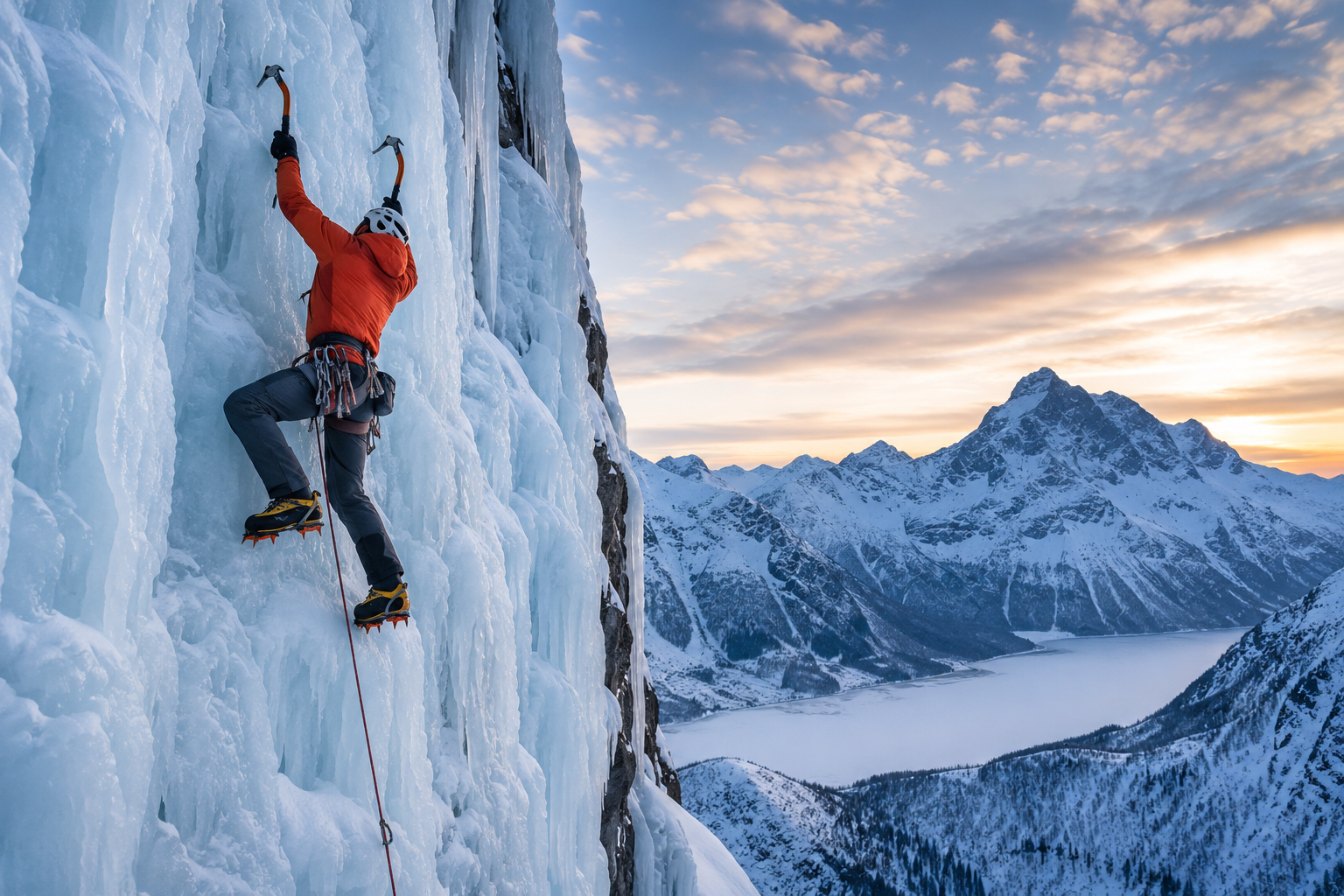
Ice climbing is brutal, technical, and completely unbothered by trends — but Instagram and lifestyle branding are coming for every sport eventually. Conrad Anker, Dr. Laura Shillington, and Sarah Hueniken debate whether making ice climbing more accessible and appealing would grow the sport or quietly kill what makes it special.
PAGE EXCERPT
Ice climbing is brutal, technical, and completely unbothered by trends — but Instagram and lifestyle branding are coming for every sport eventually. Conrad Anker, Dr. Laura Shillington, and Sarah Hueniken debate whether making ice climbing more accessible and appealing would grow the sport or quietly kill what makes it special.
Ice Climbing Is the Last Sport Nobody Has Tried to Make Cute. How Long Can That Last?
As winter sets in, enthusiasts of a different breed of sport prepare for their icy adventures. The allure of ice climbing — where athletes ascend frozen waterfalls and sheer ice faces — remains untouched by the cultural shifts that have made most other sports more whimsical or "cute". Is this rugged, adrenaline-fueled activity doomed to remain unadorned forever, or is the burgeoning influence of social media and lifestyle branding about to change that?
The Context
In a world where sports like basketball and surfing have embraced aesthetics and lifestyle branding, ice climbing stands out as a gritty, raw adventure that relies heavily on technique and physical endurance. The rise of "cute" sports — often marketed with vibrant colors, playful branding, and an emphasis on community — raises questions about whether there is room for a transformation in the perception of ice climbing. In an era dominated by Instagram-ready pursuits, the stark environment and intense physical demands of ice climbing can seem at odds with a "cute" ethos.
Perspective: The Enduring Rawness
Conrad Anker, a veteran professional climber and renowned mountaineer, argues that ice climbing's allure lies precisely in its rawness. "There's a sense of authenticity that many climbers are drawn to. It's not about being cute; it's about the challenge. This sport connects you with nature in a visceral way that can't be replicated by fluff," Anker states.
Anker believes that efforts to soften the sport's image might dilute its essence. "Trying to make ice climbing adorable could lead to a loss of respect for the risks involved. We should celebrate the grit instead of packaging it into a sitcom." His belief rests on the notion that extremes inspire admiration and respect — elements often absent in more gimmicky pursuits.
Perspective: The Cultural Shift
In contrast, Dr. Laura Shillington, a cultural anthropologist who studies sports culture, offers a different take. "Every sport evolves. What we're seeing is a natural progression influenced by youth culture and the need for inclusivity," she explains.
Dr. Shillington notes that this conversation isn't just about aesthetics. "By making ice climbing more accessible and relatable, more people will engage with it. This could open the floodgates for more diverse participants, which is a net positive. But it requires a careful balance to maintain its core identity." Her research indicates that sports which adapt tend to thrive in the long run — a transition toward more appealing branding doesn't have to mean a loss of authenticity.
Perspective: Guiding and Growing
Sarah Hueniken, a respected ice climbing guide and advocate for the sport, finds herself straddling both perspectives. "As a guide, I see the joy this sport brings to people, even those who wouldn't typically consider climbing," she says. Hueniken emphasizes that a playful approach can attract newcomers while still honoring the sport's challenges. "We can celebrate the fun elements of ice climbing — be it through colorful gear or community events — without undermining the skill and dedication required."
Hueniken advocates for initiatives that introduce youth groups to ice climbing, emphasizing its therapeutic benefits. She sees the potential for growth while encouraging respect for the sport's heritage.
Editorial Synthesis
Where Experts Agree
Ice climbing has a unique identity rooted in challenge and resilience. The influx of new participants can enhance community and diversity in the sport. The evolution of sports branding affects participant engagement.
Where Experts Disagree
Whether "cute" branding will dilute the core elements of ice climbing depends on execution. The extent to which ice climbing needs to adapt to attract newcomers varies among experts. The relevance of a soft aesthetic versus raw authenticity in promoting the sport remains contested.
Why This Matters
The future of ice climbing resides amid a fascinating crossroads. Anker highlights that maintaining the raw essence of the sport is critical for its preservation. Dr. Shillington urges that adaptability must happen for ice climbing to remain relevant, while Hueniken advocates for a middle ground where fun and challenge coexist.
With increased exposure through social media, can ice climbing leverage its rawness while appealing to a broader audience? The growing popularity of outdoor sports suggests room for innovation without sacrificing authenticity. As the conversation unfolds, stakeholders from the climbing community may find that embracing change while holding onto tradition could be the key to the sport's future — at a pivotal moment where it can choose to evolve or remain steadfastly pure in its rugged identity.
The Authenticity of Ice Climbing Must Be Preserved
As the debate unfolds around the image of ice climbing, it’s essential to recognize that its rawness is not a drawback but a defining characteristic. While the charm of modern branding and social media can breathe new life into many sports, ice climbing thrives on its authenticity and the profound connection to nature it fosters. Attempts to ‘cute-fy’ this rugged endeavor risk undermining the respect it commands and the real dangers it entails. Instead of homogenizing ice climbing into another palatable pastime, we should celebrate its uniqueness, honoring the grit that defines it. Thus, the future of ice climbing should embrace its authenticity while skillfully navigating the interests of a more visually oriented audience.
Conrad Anker
Professional Climber
"Ice climbing, while demanding and rugged, can attract a broader audience if we embrace a more aesthetic and playful approach to its marketing and imagery. Transforming its image could create a new wave of interest among younger generations."
𝕏 Conrad Anker in Conrad Anker
Dr. Laura Shillington
Cultural Anthropologist
"While embracing cuteness in ice climbing might attract new participants, it risks diluting the sport's authentic essence. A balance needs to be struck between appealing to a wider audience and preserving the inherent challenges of the sport."
in Dr. Laura ShillingtonSarah Hueniken
Ice Climbing Guide
"Rather than attempting to make ice climbing 'cute,' we should celebrate its rawness and challenge. The beauty of this sport lies in its tough nature, and sugarcoating it might deter authentic climbers who value grit and adventure."
𝕏 Sarah Hueniken in Sarah HuenikenHow Does This Hit You?


No comments yet. Be the first to weigh in.