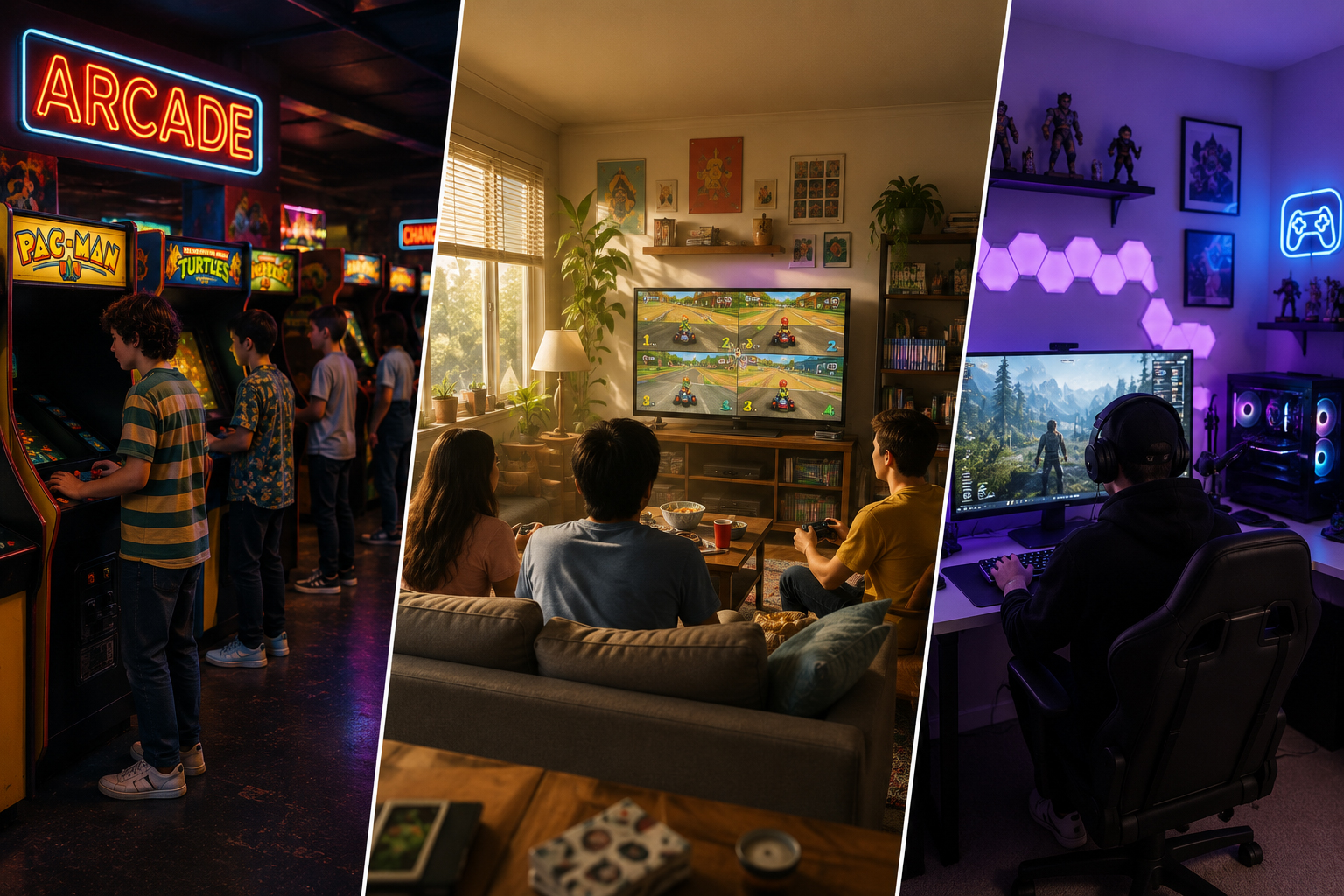
The arcade cabinet was a public object — strangers gathered around it, competed, jeered, cheered. The console took gaming home. The phone made it invisible. Henry Jenkins, Danielle Riendeau, and James Paul Gee debate whether that shift was a loss of genuine community or just the birth of a different kind.
As digital landscapes evolve, questions about community, engagement, and privacy in gaming loom larger than ever. The transformation from arcade cabinets that thrived on public spectacle to personal consoles and smartphones invites speculation: did the gaming industry, perhaps intentionally, detach itself from communal experiences?
Why This Matters Now
The rise of eSports and online multiplayer indicates a resurgence of social gaming, yet it exists against a backdrop of solitude fostered by mobile devices. How did we navigate this shift, and what does it mean for the future of communal gaming?
Perspective: Henry Jenkins
Henry Jenkins, a prominent media theorist, emphasizes the social context of gaming. He suggests that the early arcade experience encouraged social interaction and a sense of community, allowing strangers to share a physical space filled with cheers and jeers. "Arcades were not just about the games. They were places where social skills were honed, where friendships sparked and bonds were forged. When the experience became private, we lost some of that essential social interaction," Jenkins argues.
He also raises concerns about mobile gaming, suggesting that while it offers convenience, it ultimately distances players from communities and shared experiences — reflecting a broader trend of isolating entertainment consumption in a digital world.
Perspective: Danielle Riendeau
Game designer and journalist Danielle Riendeau takes a more nuanced view, highlighting the opportunities that evolved technologies offer. While acknowledging the loss of communal arcade gaming, she points out that modern platforms facilitate new kinds of social interactions through online gameplay and community platforms.
"The notion of privacy in gaming can be liberating. It allows for a more personal connection with the game, and for some players, online gaming creates new spaces for social interaction, albeit in different formats," she explains. However, she cautions about the quality of these engagements. "The challenge is ensuring that interactions don't become purely transactional or superficial. We need to consider how we can build meaningful connections, regardless of the medium."
Perspective: James Paul Gee
James Paul Gee's insights focus on the educational and learning aspects of gaming. He argues that the move from public arcades to private consoles has altered how players interact with games and each other. "Games are increasingly designed to be played in isolation, but that doesn't negate their potential for learning and development in communal settings," he notes.
Gee suggests that many current gaming experiences inherently offer a social dimension, even within solitary play — with complex mechanics facilitating player cooperation, achievement recognition, and motivation. Yet he cautions against forgetting the role physical spaces played: "Understanding how learning occurs within physical contexts can help game designers incorporate those elements into future digital experiences."
Editorial Synthesis
Where Experts Agree
All experts acknowledge that the arcade experience cultivated a sense of community. They recognize that modern gaming platforms offer different forms of social engagement. There is consensus on the potential for new forms of interaction within solitary play.
Where Experts Disagree
Jenkins emphasizes the emotional richness of physical spaces, while Riendeau sees opportunity in digital interaction. Gee focuses on educational aspects and the potential for learning, potentially downplaying the need for physical social connection.
Why This Matters
The arcade cabinet was a public object, inviting everyone to participate; the console made gaming private; and the phone made it almost invisible. As the gaming industry continues to innovate, the challenge lies in harnessing technology to maintain genuine community engagement while navigating the complexities of modern-day privacy.
The balancing act of preserving communal aspects while embracing new technologies will define the next chapter of gaming — a chapter that could reshape not just the industry, but the way society interacts on a broader scale.
Navigating the Shift: Community in Gaming's Evolution
The evolution of gaming from arcade cabinets to mobile devices encapsulates profound shifts in community engagement. While the arcade era fostered social bonds and collective experiences, the rise of consoles and smartphones seems to veer us towards solitary play, raising questions on the intent behind this shift. As highlighted by thinkers like Henry Jenkins, the thrill of public gaming not only cultivated camaraderie but also offered a space for social skills to flourish. However, with the emergence of online multiplayer and eSports, we see a simultaneous resurgence of socialization in gaming—yet often stripped of the physicality and immediacy of earlier experiences. It becomes essential to reclaim elements of community in our gaming practices and consider how industry choices have shaped these dynamics. The future of gaming will require a balance between individual convenience and communal essence, reminding us that our interactions—whether virtual or physical—are crucial to cultivating a vibrant gaming culture.
Henry Jenkins
Author & Media Theorist
"Jenkins argues that the arcade cabinet fostered a communal experience, allowing for socialization and shared cultural experiences. He believes that the evolution to private consoles and mobile gaming has diminished these communal interactions, leading to a more isolated gaming culture."
in Henry Jenkins
Danielle Riendeau
Game Designer & Journalist
"Riendeau contends that the shift to consoles and mobile gaming provided gamers with much-needed privacy, enabling them to engage with games on a personal level without the pressure of onlookers. She believes this shift has allowed for deeper emotional connections with games, despite the potential loss of social interactions."
in Danielle RiendeauJames Paul Gee
Linguist & Educator
"Gee holds a neutral stance, recognizing the benefits of both communal arcade environments and the private nature of console gaming. He highlights the importance of understanding the diverse experiences gamers have across different platforms, suggesting that both forms serve unique purposes in the gaming landscape."
in James Paul GeeHow Does This Hit You?



No comments yet. Be the first to weigh in.