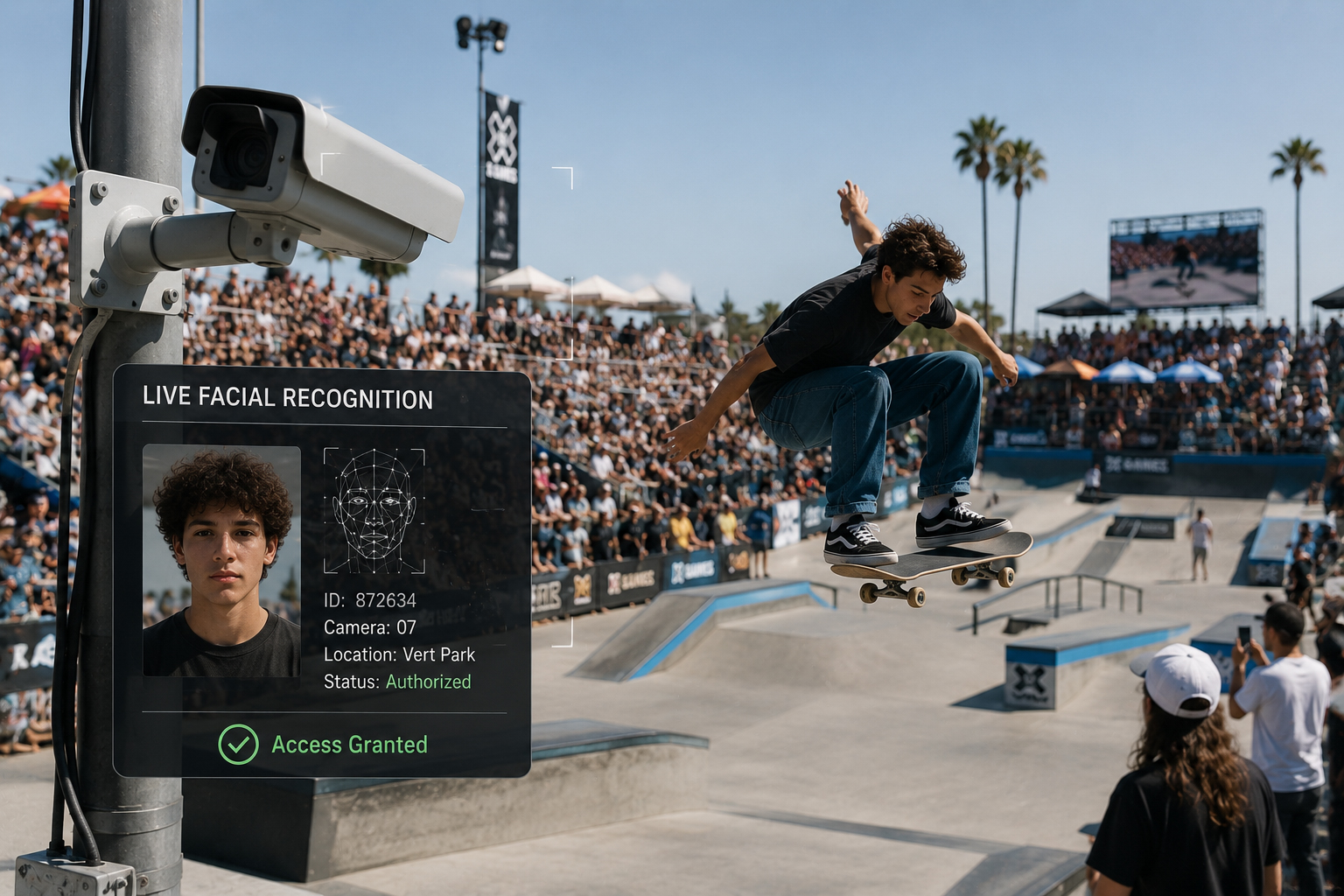
Extreme sports venues are looking at live facial recognition to prevent accidents and manage large crowds — but the fans showing up for the thrill might not expect to be identified while they watch. Jake Reynolds, Evelyn Dubrow, and Dr. Anna Lindholm debate whether safety at the venue is a fair trade for surveillance of the audience.
As live facial recognition technology gains traction in various sectors, extreme sports venues stand at the forefront of this debate. The question arises: will the increased safety of attendees justify the potential erosion of privacy?
Context
High-profile incidents at extreme sports events have prompted venue operators to consider these technologies as a means to enhance spectator safety. However, with increasing public awareness about privacy issues, the implementation of such systems at crowds of adrenaline-seeking fans presents unique ethical dilemmas.
Perspective: Pro-Safety
Jake Reynolds, CEO of SafeWatch Technologies, emphasizes that facial recognition technology can be instrumental in preventing incidents and ensuring rapid responses in emergencies. "The ability to identify individuals in real-time could potentially thwart dangerous situations before they escalate," Reynolds argues.
Reynolds further notes that extreme sports attract large crowds in unpredictable and chaotic environments where quick decision-making is crucial. By integrating facial recognition systems, venues could bolster their security protocols and reassure patrons about their safety.
Perspective: Pro-Privacy
Conversely, Evelyn Dubrow, a cybersecurity analyst with a background in digital rights, views the technology with skepticism. "While the intent may be safety, the ramifications can be quite the opposite, leading to a surveillance state where attendees feel constantly watched," she warns.
Dr. Anna Lindholm, a professor of sociology with expertise in privacy and technology, echoes these concerns. She emphasizes that extreme sports venues are often spaces of freedom and expression where patrons expect a certain level of anonymity. "Bringing facial recognition to these spaces could deter people from being themselves, altering the very essence of extreme sports culture," Lindholm explains.
Editorial Synthesis
Where Experts Agree
Both sides recognize that safety at events is essential, particularly in high-risk environments. Experts agree that if implemented, appropriate regulations should govern the use of facial recognition technology. The deployment of such technologies necessitates public trust to be effective and accepted.
Where Experts Disagree
Pro-safety experts generally downplay privacy concerns, while pro-privacy advocates view them as paramount. The potential normalization of surveillance is seen as a minor concern by proponents, while detractors see it as a threat to civil liberties. Pro-safety advocates focus on immediate concerns, whereas privacy experts warn of a gradual cultural shift toward pervasive surveillance.
Why This Matters
The arrival of live facial recognition at extreme sports venues compels a crucial examination of the trade-offs between enhanced safety and personal privacy. The path forward will require dialogue, regulation, and perhaps the formulation of a societal contract regarding surveillance technologies.
As venues consider their next steps, it is imperative that they engage the public in meaningful conversations about their safety and privacy expectations — ensuring that the ethical implications are never overshadowed by the promise of improved security.
Safety vs. Privacy: A Balancing Act
As live facial recognition technology finds its way into extreme sports venues, the debate between enhanced safety and individual privacy intensifies. While proponents like Jake Reynolds highlight the potential for real-time identification to prevent dangerous situations, this promise must be weighed against the erosion of personal privacy that comes with surveillance. In a world increasingly concerned about data privacy, it's crucial to implement stringent regulations and transparency measures to safeguard civil rights. The essence of this discussion is not merely about safety; it’s about how much privacy we are willing to sacrifice for a promised sense of security. A compromise must be reached, ensuring that safety enhancements do not come at the cost of personal liberties. Our sporting experiences should empower us, not surveil us — ultimately prioritizing both safety and privacy in this ever-evolving landscape.
Evelyn Dubrow
Cybersecurity Analyst, Digital Rights Group
"The introduction of live facial recognition in extreme sports venues compromises individual privacy and can lead to a culture of constant surveillance, where innocent spectators are treated as potential threats."
𝕏 Evelyn Dubrow in Evelyn Dubrow
Jake Reynolds
CEO, SafeWatch Technologies
"Implementing live facial recognition at extreme sports venues significantly enhances safety, allowing for quick identification and response to potential threats, thereby protecting attendees and participants alike."
𝕏 Jake Reynolds in Jake Reynolds
Dr. Anna Lindholm
Professor of Sociology, Privacy and Technology Expert
"While the safety benefits of live facial recognition cannot be overlooked, we must weigh them against the potential erosion of privacy and the psychological impact on those being monitored. A careful, nuanced approach is necessary to address these concerns."
in Dr. Anna LindholmHow Does This Hit You?

No comments yet. Be the first to weigh in.