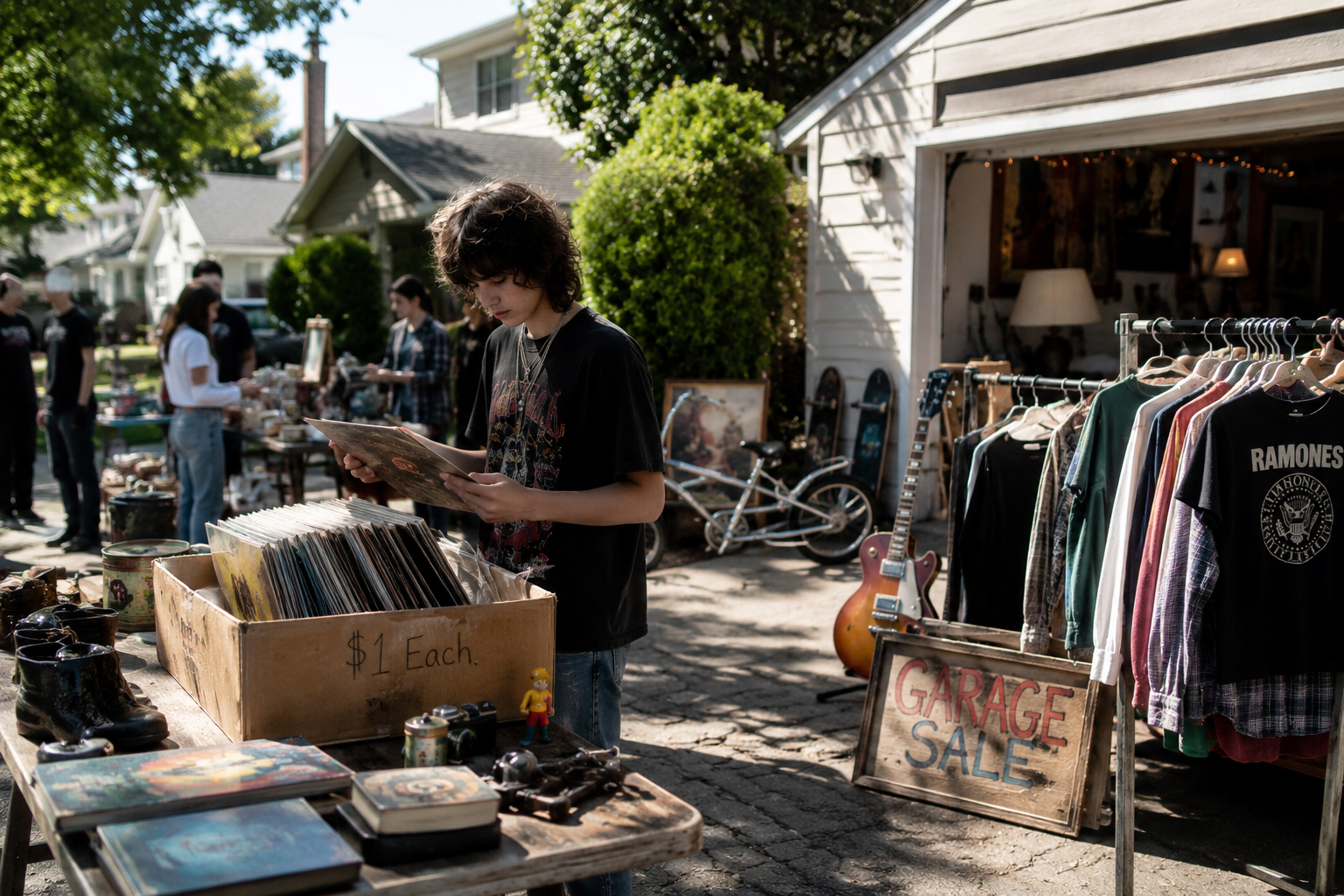
The garage sale was where subcultures passed their artifacts forward — a dollar for a vinyl, a story thrown in for free. Then eBay turned every find into a searchable auction with a price history. Anthony DeCurtis, Rachel Botsman, and Dr. Michael McGarry debate whether the internet killed the discovery or just moved it somewhere new.
In an age where every corner of the Internet can be scoured for treasures, has the thrill of discovering a hidden gem at a garage sale vanished? As subcultures relied on these informal markets to share their artifacts, the transition to online marketplaces prompts a critical question: Did the digital era dilute the pure joy of discovery?
Context
Garage sales and flea markets have been critical venues for subcultures — music enthusiasts trading vinyl records, skateboarders swapping boards, collectors passing on iconic memorabilia. The tactile experience of sifting through a box of vinyls, haggling over prices, and storytelling with sellers is now competing with the instantaneous gratification of online auctions. This debate signals a shift in cultural practices, connection, and the authenticity of discovery.
Perspective: Support for Online Marketplaces
Anthony DeCurtis, Music Historian, posits that the rise of the digital marketplace allows for broader access to unique artifacts. "The Internet democratizes discovery," he argues. Rather than limiting finds to local communities, online platforms facilitate a global exchange of cultural artifacts. For many music aficionados, the chance to score a rare record from a distant location transcends the geographical limitations of previous generations.
Rachel Botsman, Author and Trust Expert, emphasizes the efficiency of online marketplaces. "When someone buys online, they have access to reviews, price histories, and can verify authenticity through seller ratings. This builds trust, which enhances the overall discovery experience," she says. While traditional garage sales fostered a sense of community, she believes online auction sites create a broader and more reliable form of connection among buyers and sellers.
Perspective: Nostalgia for the Traditional Experience
Conversely, Dr. Michael R. McGarry, Sociologist, holds a more skeptical view of digital marketplaces overshadowing the charm of garage sales. "The act of discovery is fundamentally human — it's about serendipity and the stories behind an item," he argues. McGarry cites that online auctions normalize the artifact into a transactional commodity, stripping away the layers of nostalgia and community. The tangible connection fostered in physical spaces creates stories that cannot be replicated online.
DeCurtis adds to this sentiment, acknowledging that while online platforms can host extensive collections, they often lack the intimate atmosphere of a neighborhood sale. "Going to a garage sale isn't just about the item but the interaction. It's about the stories exchanged that breathe life into these artifacts," he notes.
Editorial Synthesis
Where Experts Agree
Online platforms provide broader access to cultural artifacts. Trust and verification in online shopping enhance the experience for many buyers. Traditional garage sales foster a community experience and emotional connection to artifacts.
Where Experts Disagree
The value of serendipity in discovery is contested — while some argue it is lost, others suggest the thrill remains in new forms. Some experts argue that online marketplaces can create alienation, while others see them as a bridge to new connections. The definition of what constitutes 'discovery' also differs — is it merely finding something, or does it include the accompanying narrative?
Why This Matters
The evolution from garage sales to online auctions represents a pivotal cultural shift in how communities interact with their histories. While the digital realm offers accessibility and trust, it risks overshadowing the personal narratives that make artifacts meaningful.
As younger generations increasingly turn to online marketplaces, the challenge remains to preserve the community-driven spirit of discovery that garage sales embodied. Will future generations appreciate the rich stories of the past, or will they be solely architected by market availability? It's crucial for communities and cultural historians to recognize and adapt to these transformations while retaining the core values that cultivate authentic connection.
Reclaiming Discovery in the Digital Age
As we navigate the rich landscape of online marketplaces, it's crucial to acknowledge that while the thrill of physical treasure hunting may have waned, the essence of discovery can still thrive. The Internet may have transformed how we access and acquire artifacts from subcultures, but it provides new avenues for storytelling and community engagement that are ripe for exploration. Instead of viewing digital platforms as mere auctions, we should embrace them as tools for connection, facilitating conversations around our shared histories. While the tactile experience of garage sales is irreplaceable, the vast possibilities offered by the Internet can enhance, rather than diminish, our cultural interactions. Therefore, we must encourage a hybrid approach, where online and offline discovery coexists, fostering both the nostalgia of rummaging through garage sale treasures and the excitement of finding unexpected gems on a global stage.
Anthony DeCurtis
Music Historian
"The tactile experience of garage sales allowed for the serendipity of discovery, fostering connections with past cultures. While the internet has opened global auction dynamics, it often prioritizes price over personal significance, lessening the joy of the find."
in Anthony DeCurtisRachel Botsman
Author and Trust Expert
"The transition from garage sales to online platforms has democratized access to unique artifacts, allowing more people to participate in cultural exchange. While some argue that this diminishes the thrill of discovery, it fosters a broader appreciation for diverse subcultures across global communities."
in Rachel BotsmanDr. Michael R. McGarry
Sociologist
"While technology has altered the landscape of artifact discovery, it is essential to view this evolution as part of a larger cultural shift. Online platforms have replaced some traditional experiences, but they also present new opportunities for engagement and connection."
How Does This Hit You?



No comments yet. Be the first to weigh in.