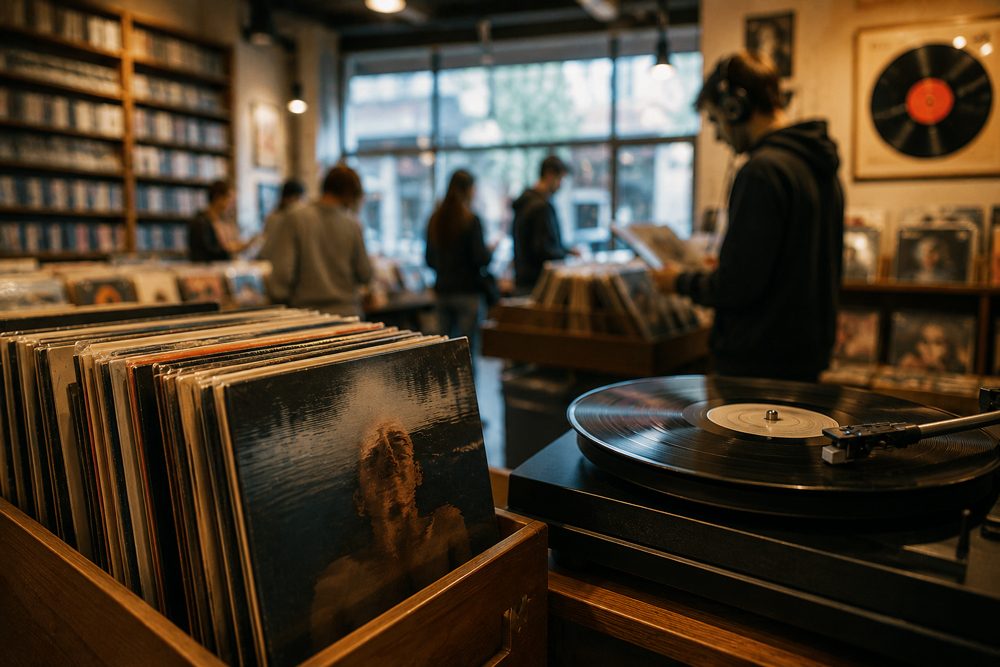
Vinyl is back on top. The shelves are moving, the numbers are real. The only question nobody can quite answer is whether anyone's actually dropping the needle — or just displaying the sleeve.
When it comes to the evolving landscape of music consumption, one question looms large: Who is really buying and listening to vinyl records again, especially now that sales figures show vinyl outselling CDs for the first time in decades? As the digital age settles into a new rhythm, the renewed popularity of vinyl presents a complex, layered phenomenon that begs for insight and analysis.
In 2022, sales of vinyl records surpassed those of CDs for the first time since the late 1980s, reflecting a significant cultural shift. Music lovers are increasingly drawn to the tactile experience that vinyl provides, often citing nostalgia and a desire for authenticity in an age dominated by streaming services. As records fly off the shelves, one can't help but ask: who are these consumers?
Moby sees the resurgence of vinyl as part of a broader cultural critique against the fast-paced digital consumption model. "People want something meaningful, something they can hold in their hands. Vinyl represents an investment in music; it's more than just a collection of songs; it's a tangible artifact of an artist's work."
He believes that the allure of vinyl is partly driven by the human desire for nostalgia — a longing for simpler times. Moby argues that the experience of playing a record — lifting the needle, hearing the crackle — offers a richer, more immersive experience than simply streaming a song on a digital device.
Mark Mulligan presents a more analytical view, framing the vinyl resurgence within the context of consumer behavior and market trends. "Vinyl appeals to both older customers who grew up with it and younger audiences who are enamored with vintage items. This dual demographic creates a unique market dynamic."
Mulligan further elucidates that while vinyl sales are increasing, the overall market size remains modest compared to digital streaming. He asserts that the growth is not just about nostalgia — it ties into a larger trend of valuing experiences over mere consumption. People are willing to pay for records not just to listen, but to curate and showcase their taste.
Jessica Vlach highlights the cultural implications of this vinyl revival, noting that it often intersects with issues of sustainability and local economies. "While vinyl is more sustainable than single-use plastic, it's still not a perfect solution. However, the embrace of local record shops fosters community and supports independent artists."
Vlach points out that many young listeners gravitate towards vinyl not just for sound quality, but for the experience of socializing around music. Visiting a record store, sifting through crates, and engaging in discussions with clerks or fellow shoppers form essential elements of the experience. Music, for these consumers, is as much a social act as an auditory one.
All three experts agree that the resurgence of vinyl is driven by nostalgia and a desire for authenticity, and that vinyl sales appeal to both older generations and younger audiences, creating a market unlike anything the format has seen before. The experience of engaging with vinyl records — the ritual, the community, the physicality — fosters a deeper connection to music that streaming has never managed to replicate.
Where they diverge is in emphasis: Moby focuses on emotional and experiential fulfillment, Mulligan grounds the conversation in market dynamics and consumer behavior, and Vlach raises the sociocultural and sustainability dimensions that the others largely leave unexamined.
The renewed interest in vinyl records encapsulates a broader cultural moment that seeks to push back against the fleeting nature of digital music consumption. For industry stakeholders, this trend calls for an authentic approach to marketing and product distribution. As vinyl records become a staple in contemporary soundscapes, understanding their listeners will not only drive sales but also create opportunities for engaging in more meaningful cultural conversations.
The vinyl revival invites both critical and celebratory reflections on how we consume music today. One fact becomes undeniably clear: vinyl is not merely a format. It represents an evolving relationship between music, culture, and community — and whether you're listening or just displaying, you're part of it either way.
Vinyl's Revival: A Reflection of Cultural Desire
The resurgence of vinyl sales marks more than just a trend; it represents a longing for authenticity and a deeper connection to music. As artists and industry professionals like Moby highlight, the tactile experience of vinyl offers something that streaming cannot—an emotional investment in art. This renaissance, while rooted in nostalgia, reflects a broader cultural shift toward valuing tangible experiences over digital convenience. Mark Mulligan’s insights remind us that consumer behavior is evolving, with many seeking beauty in the physical form of music and the rituals that accompany it. Therefore, while this revival may not rewrite the rules of music consumption, it certainly underscores a collective yearning for meaning in an increasingly ephemeral world.
Moby
Musician & Activist
"Moby argues that the resurgence of vinyl represents a genuine appreciation for music as an art form, encouraging listeners to engage more deeply with their favorite artists and albums. He sees this trend as a way to combat the digital overload that dilutes the listening experience."
in Moby
Mark Mulligan
Music Industry Analyst
"Mulligan recognizes the vinyl comeback but emphasizes the importance of understanding the demographics behind vinyl buyers, which skew younger and more affluent. He suggests that while vinyl sales are rising, they do not represent a full-scale retreat from the digital music era."
in Mark Mulligan
Jessica Vlach
Music Culture Writer
"Vlach argues that the vinyl trend, while interesting, is overstated against the backdrop of a predominantly digital music landscape. She posits that the convenience and accessibility of streaming services continue to dominate listening habits, particularly among younger generations."
𝕏 Jessica VlachHow Does This Hit You?



No comments yet. Be the first to weigh in.