
Wakeboarding borrowed its tricks from skateboarding and its spirit from surfing — and neither community has ever fully accepted it as one of their own. Tony Hawk, Laird Hamilton, and Danny Harf debate whether wakeboarding has carved out a legitimate identity, or whether a sport built on borrowed culture will always be seen as the outsider.
What happens when a sport borrowed its identity from two established cultural phenomena but never really gets their full endorsement? Such is the tale of wakeboarding — a sport born from the waves of surfing and the concrete of skateboarding, yet forever seen as an outsider by its predecessors.
Context: The Clash of Titans
As wakeboarding continues to rise in popularity, its roots in skateboarding and surfing trigger ongoing debates among athletes and enthusiasts. With annual competitions drawing in thousands and sponsorship deals expanding, the sport's growth seems undeniable. Yet, the attitudes of those within the skate and surf communities present a complex narrative about authenticity and belonging.
Perspective: Tony Hawk (Professional Skateboarder)
Tony Hawk, an iconic figure in skateboarding, recognizes the influence of skating in wakeboarding but recalls the skepticism that greeted its emergence. "It's not as constructive to view wakeboarding through a lens of 'who borrowed from whom' as it is to consider the shared ethos that binds us together as action sports athletes," he states.
Hawk acknowledges that while wakeboarding has drawn from skateboarding's tricks and style, it struggles with public perception. "There are purists who feel that something is lost when you distill the essence of skating or surfing into a wakeboard. It's like mixing music genres — sometimes, people just want to keep the integrity of the original sound."
Perspective: Laird Hamilton (Big Wave Surfer)
Laird Hamilton, renowned for redefining big wave surfing, emphasizes the technical aspect of wakeboarding while expressing a more critical view of its relationship to surfing. "Wakeboarding has definitely taken cues from surfing; the tricks, the dynamics — it's all there. But the ocean is a big part of surfing's spirit. Without that connection to nature, it changes the game."
"There's something raw about surfing that can't be replicated on a lake with a boat. It's as if wakeboarding removes the primal connection that surfers treasure. That's where the tension lies." Hamilton cautions aspirants from equating wakeboarding with the authentic surfing experience — insisting they are different landscapes with their own unwritten rules.
Perspective: Danny Harf (Professional Wakeboarder)
Danny Harf counters both perspectives, offering a more nuanced view from within the wakeboarding world. He sees the sport not as an imitation but as an evolution. "When I'm on the water, I don't feel like I'm stealing from skateboarding or surfing — I'm just leveraging those influences for something new."
Harf admits that the perception issue is hard to escape but emphasizes the growing acceptance of wakeboarding in the broader action sports family. "If wakeboarding adopts elements from other sports, that shouldn't invalidate it. It's a different beast, and that's okay." For Harf, the story of wakeboarding is one of adaptation and innovation, not thievery.
Editorial Synthesis
Where Experts Agree
Wakeboarding has borrowed heavily from both skateboarding and surfing. There is an ongoing tension in the sports community regarding authenticity and identity. All three experts acknowledge the technical aspects of wakeboarding and its merit as a sport.
Where Experts Disagree
Hawk believes the debate around authenticity hinders acceptance of wakeboarding. Hamilton feels wakeboarding lacks the primal connection of surfing, while Harf counters that this view may hinder progress. Hawk sees potential for unity, whereas Hamilton emphasizes the fundamental differences among the sports.
Why This Matters
The evolving identity of wakeboarding encapsulates a broader discussion about the nature of action sports: What does it mean to innovate, and how can borrowing influence growth? As wakeboarding carves its place, it challenges the established norms upheld by its progenitors.
Ultimately, wakeboarding stands as a testament to both the challenges and possibilities born from a legacy of borrowing — reminding us that in sports, as in life, innovation must often navigate through tradition, questioning whether reverence or reclamation is the path forward.
Navigating the Waters of Legacy and Identity
Wakeboarding stands at a unique crossroads, borrowing deeply from the foundations of both skateboarding and surfing while simultaneously trying to forge its own identity. As we explore the sentiments expressed by figures like Tony Hawk, it's clear that while the roots of wakeboarding are intertwined with those of its predecessors, the essence of innovation and evolution in action sports cannot be ignored. The tension between respect for tradition and the pursuit of new expressions will continue to fuel debates within the community. Ultimately, wakeboarding's challenge lies not only in gaining recognition from its predecessors but in cultivating a community that celebrates its distinct narratives and innovations. The sport has the potential to embrace its multifaceted legacy while carving a space that honors its influences and nurtures its own culture. The journey of wakeboarding is just beginning, and its evolution merits both exploration and acknowledgment as it seeks to define itself.

Tony Hawk
Professional Skateboarder, Entrepreneur
"While wakeboarding has certainly drawn influences from both skateboarding and surfing, it has forged its own identity. The blending of these sports showcases the evolution of action sports as a whole."
𝕏 Tony Hawk in Tony Hawk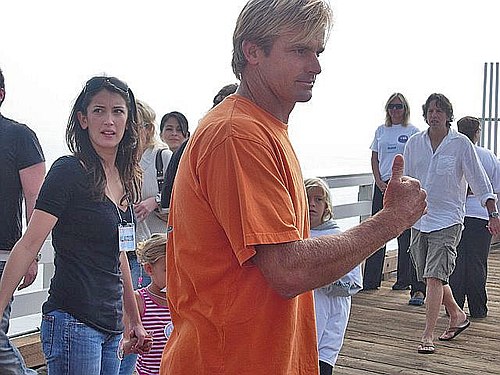
Laird Hamilton
Professional Surfer & Waterman
"Wakeboarding may have borrowed elements from surfing, but it lacks the deep cultural roots and ethos that define surfing. This cultural appropriation waters down the authenticity of the sport."
𝕏 Laird Hamilton in Laird HamiltonDanny Harf
Professional Wakeboarder
"Wakeboarding has taken inspiration from both skateboarding and surfing, but it has pioneered its own techniques and tricks that express a unique style. The sport deserves recognition for its distinct identity."
𝕏 Danny Harf in Danny HarfHow Does This Hit You?


No comments yet. Be the first to weigh in.