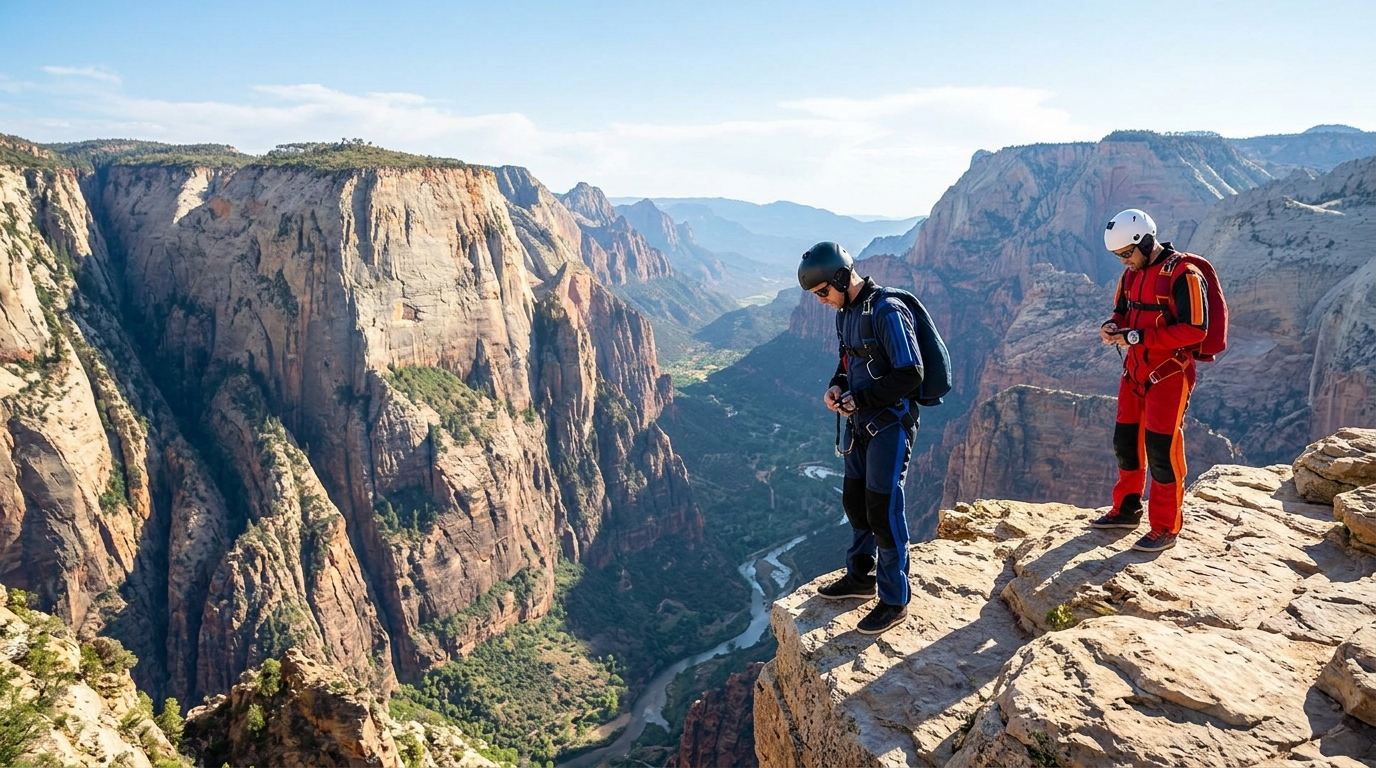
There's no league, no insurance, no governing body for BASE jumping — just experience, trust, and an unwritten code passed between jumpers. Wendy Smith, Tommy Caldwell, and Dr. Sarah O'Leary debate whether that lack of regulation preserves the sport's authenticity or leaves its athletes dangerously exposed.
Does the absence of a governing body, league, or insurance plan for BASE jumping allow the sport to remain authentic, or does it pose unnecessary risks for its athletes?
Context
BASE jumping — an extreme sport involving parachuting from fixed objects — has gained prominence over the years, attracting adrenaline seekers from various backgrounds. Unlike many sports, it operates in a legal gray area without a formal regulatory body. This lack of regulation raises questions about safety, accountability, and the overall trajectory of the sport. As participation increases, especially among younger adventurers, experts are compelled to examine the consequences of this ungoverned landscape.
Perspective: Wendy Smith
Wendy Smith, co-founder of the BASE Jumping Association, believes that the lack of regulation fosters a unique sense of honesty within the sport. "In our community, we rely on experience and skills rather than arbitrary rules set by a governing body," she explains. Smith posits that the organic nature of BASE jumping allows practitioners to prioritize safety protocols based on lived experiences.
However, she acknowledges the potential risks involved. "The absence of formal oversight can mean that some inexperienced jumpers may not fully understand safety measures or the technology they are using. This can lead to dire consequences."
Perspective: Tommy Caldwell
Tommy Caldwell, a renowned professional climber and adventurer, offers a different viewpoint. He argues that while the self-regulated nature of BASE jumping does allow for a form of authenticity, it lacks the robust safety structures that could enhance it. "For me, extreme sports should encourage personal responsibility, but they also benefit from a framework that prioritizes safety. In climbing, we have organizations that enforce standards, and it has made the sport safer and more accessible to newcomers."
According to Caldwell, the freedom of BASE jumping should come with appropriate measures. "Imagine if we had standardized workshops or courses led by experienced jumpers. It could bridge the gap between the thrill of jumping and safety education, perhaps even creating a better-informed community."
Perspective: Dr. Sarah O'Leary
Dr. Sarah O'Leary, a sports psychologist and researcher, interjects with insights on the psychological ramifications of the sport's unregulated environment. "The thrill of BASE jumping is undoubtedly a psychological draw for many. However, the emotional state experienced during jumps can lead to overconfidence, sometimes resulting in dangerous decisions. In a regulated environment, the focus on education could mitigate these risks."
Dr. O'Leary points to a study that reveals how extreme sports participants often underestimate risks due to adrenaline-induced euphoria. "An established governing body could implement psychological assessments, helping athletes understand their limits better. This could save lives while preserving the essence of adventure."
Editorial Synthesis
Where Experts Agree
All experts emphasize the importance of personal responsibility among jumpers — each athlete must be attuned to their own capabilities, even more so in an unregulated environment. The risks inherent in BASE jumping are acknowledged by all. There's also a consensus that the BASE jumping community thrives on shared knowledge and informal mentorship, which can be an asset in the absence of formal regulation.
Where Experts Disagree
Smith supports the current unregulated system as facilitating personal autonomy, while Caldwell and O'Leary advocate for some form of oversight to enhance safety and education. Caldwell and O'Leary argue for structured safety programs, whereas Smith focuses on the organic community dynamics that have historically worked for jumpers.
Why This Matters
The discourse around BASE jumping reflects broader conversations in extreme sports about the balance between freedom and safety. Unregulated environments can foster creativity and authenticity, allowing athletes to carve their own paths. However, as enthusiasm grows among new practitioners, it becomes crucial to address safety and educational frameworks.
Ultimately, the intersection of risk and adventure is intrinsic to BASE jumping, but so is the community's commitment to protecting its own. The future of BASE jumping may well hinge on how the community chooses to navigate this tension between independence and safety.
Navigating the Fine Line Between Freedom and Safety in BASE Jumping
The debate surrounding BASE jumping highlights the delicate balance between authenticity and safety in extreme sports. On one hand, the absence of a governing body fosters a culture of personal accountability, where seasoned jumpers impart their wisdom to newcomers. This organic approach nurtures a community rooted in experience and informed choice. However, as more individuals join the sport without a comprehensive understanding of its complexities, the risks can escalate significantly. While the model of self-regulation can preserve the sport's raw edge, there is a compelling case for integrating some level of oversight to ensure that safety protocols are accessible to all participants. Establishing a minimal framework could help prevent avoidable tragedies while maintaining the essence of what makes BASE jumping alluring. Ultimately, finding this equilibrium will be crucial not just for the sport's survival, but for the well-being of its community.

Wendy Smith
Co-Founder, BASE Jumping Association
"The absence of a governing body in base jumping leads to inconsistencies in safety practices. By implementing a regulatory framework, we can enhance the overall safety of participants without compromising the essence of the sport."
in Wendy SmithTommy Caldwell
Professional Rock Climber
"The lack of regulations and a governing body in base jumping preserves its spirit of independence and personal responsibility. Regulation could stifle the thrill and authenticity that attract jumpers to this extreme sport."
𝕏 Tommy Caldwell in Tommy Caldwell
Dr. Sarah O'Leary
Sports Psychologist and Researcher
"While the absence of a governing body can lead to risky behavior, it also fosters personal accountability. A balanced approach that promotes education and informed decision-making might serve better than strict regulations or complete freedom."
in Dr. Sarah O'LearyHow Does This Hit You?



No comments yet. Be the first to weigh in.