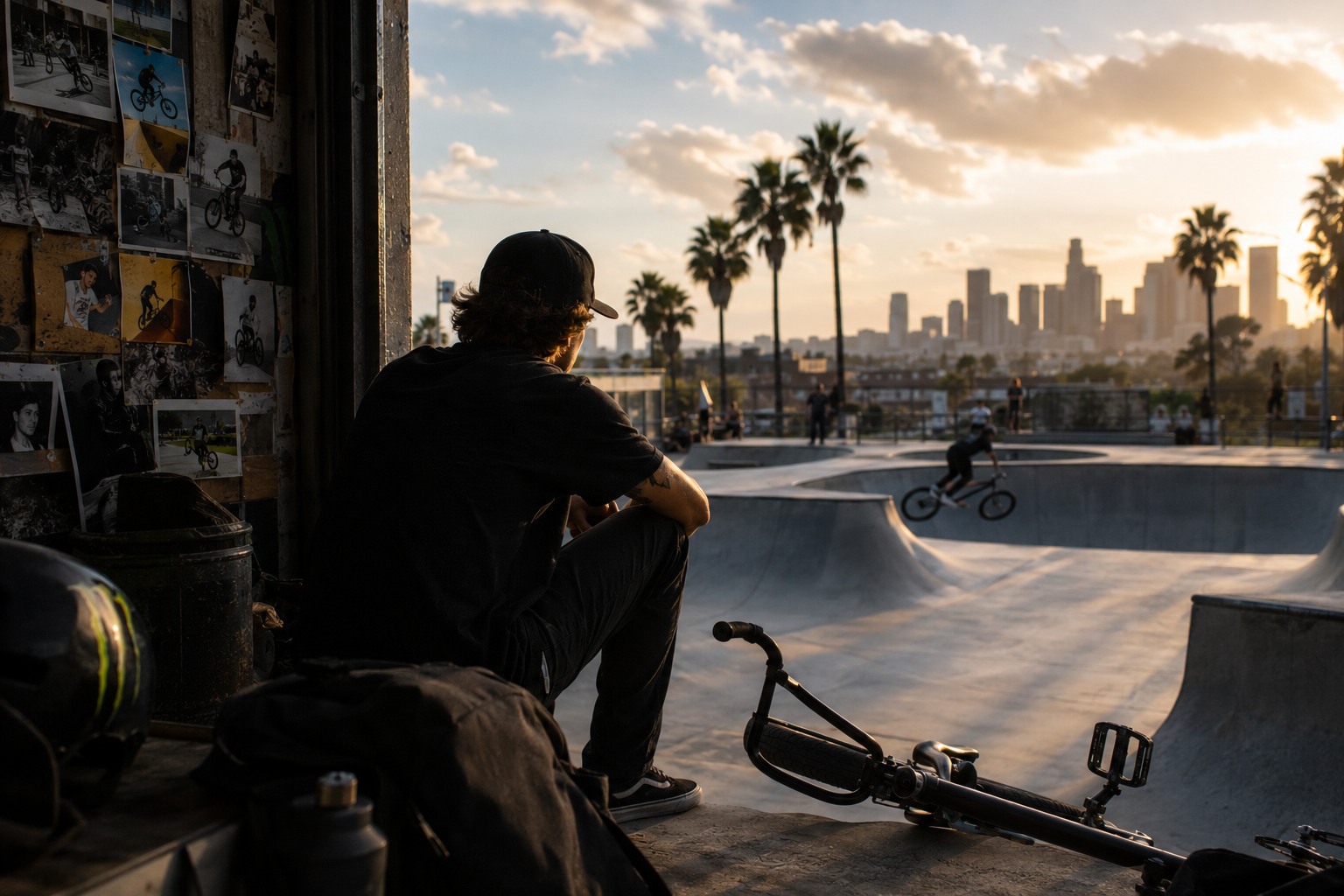
Professional success in BMX has never been measured solely by magazine covers or sponsorship deals. For many riders, years of dedication, travel, and progression unfold almost entirely outside the spotlight. In an era where social media allows athletes to build their own audiences, the absence of traditional recognition raises new questions about visibility, opportunity, and who gets remembered. Experts agree that talent alone is rarely enough; relationships, storytelling, and personal branding increasingly shape careers. Yet the riders whose names never appeared in print often contributed just as much to BMX's culture, innovation, and community as those who became household names.
For many people, becoming a professional athlete means recognition.
Magazine covers.
Sponsor campaigns.
Interviews.
Public acclaim.
But in BMX, that has never been guaranteed.
Some riders spend years travelling, filming video parts, competing, and pushing the sport forward—without ever becoming widely known.
One former professional rider reflected on an eight-year career in which he never once appeared in a BMX magazine.
His experience raises a fundamental question:
If your career goes largely undocumented, does it make your achievements any less meaningful?
Why This Matters Now
The definition of visibility in action sports has changed dramatically.
Where magazines once determined who became recognizable, today's athletes can build audiences through YouTube, Instagram, TikTok, and independent media.
Yet greater access to publishing has not eliminated the challenge of recognition.
Visibility still depends on opportunity, storytelling, relationships, and consistency.
For riders outside major brands or established networks, remarkable careers can still unfold almost unnoticed.
The conversation is no longer simply about media coverage.
It is about who gets remembered—and why.
Expert Perspectives
Terry Adams: Talent Alone Doesn't Guarantee Recognition
Professional BMX rider Terry Adams believes success inside BMX has always depended on more than riding ability.
"The BMX world is like a fraternity. You can be super talented but remain on the periphery if the connections aren't there."
According to Adams, relationships often determine which riders receive invitations, sponsorships, and editorial attention.
Traditional BMX media has historically highlighted athletes who fit particular narratives, personalities, or competitive pathways.
That leaves many gifted riders outside the spotlight despite contributing significantly to the sport.
Skill may open the door, but relationships often determine who walks through it.
Jared Washburn: Stories Give Talent a Legacy
Photographer and multimedia creator Jared Washburn argues that documentation is as important as performance.
"Photographers like me are often looking for stories that resonate."
He believes many exceptional riders remain overlooked not because they lack talent, but because their journeys are never properly documented.
Photography and filmmaking shape how future generations remember BMX.
Without those stories, entire careers risk disappearing from the historical record.
Washburn encourages greater collaboration between riders and creators so that achievements beyond contests receive lasting recognition.
A trick lasts seconds. A story preserves it for decades.
Lisa Lee: Visibility Has Become Part of the Job
Sports marketing consultant Lisa Lee focuses on the realities of the modern sponsorship landscape.
"Companies need recognizable faces to market their products."
She argues that today's athletes can no longer rely solely on traditional media for exposure.
Instead, riders increasingly build their own audiences through digital platforms.
Personal branding, audience engagement, and content creation have become valuable professional skills alongside riding ability.
For many sponsors, visibility influences opportunity as much as competitive results.
Modern athletes are expected to market themselves as well as they perform.
Editorial Synthesis
Where Experts Agree
Despite approaching the issue from different perspectives, the experts share several conclusions:
- Relationships play a major role in career visibility.
- Storytelling is essential to preserving BMX culture.
- Social media has transformed how riders build recognition.
- Many talented athletes remain overlooked despite meaningful contributions.
Where Experts Disagree
Who Is Responsible for Recognition?
Adams emphasizes structural barriers within BMX, arguing that networks and access heavily influence visibility.
Lee believes athletes themselves increasingly bear responsibility for developing their public profiles.
Can Digital Media Solve the Problem?
Washburn sees enormous potential for photographers, filmmakers, and independent creators to showcase overlooked riders.
Lee agrees digital media creates opportunities but notes that building a successful online presence requires time, resources, and skills that not every rider possesses.
Why This Matters
Recognition has always been an imperfect measure of success.
Some of BMX's greatest innovators became famous.
Others quietly influenced local scenes, inspired younger riders, filmed memorable video parts, or helped build communities without ever receiving widespread attention.
Their contributions remain no less significant.
As the sport evolves, there is an opportunity to broaden the definition of success beyond magazine covers, sponsorship contracts, or follower counts.
Independent media, documentaries, podcasts, and social platforms now allow riders to tell stories that traditional gatekeepers might once have overlooked.
The challenge is ensuring those stories are preserved.
Because BMX is built not only by its stars, but also by the countless riders whose names may never become widely known—even though they helped shape the culture every bit as much.
A professional career is not validated solely by how often it appears in print. Sometimes its greatest legacy lives in the riders it inspired, the communities it strengthened, and the moments that existed whether a camera captured them or not.
Redefining Success Beyond the Lens
The journey of the professional BMX rider, as outlined in the article, uncovers a stark truth: visibility does not equate to talent or passion. In a world dominated by curated online personas and traditional media's focus on a select few, countless skilled athletes remain shrouded in obscurity. It’s crucial for the BMX community—and indeed, the broader sports culture—to recognize that success should be measured in dedication, resilience, and the community spirit rather than solely by magazine covers or social media likes. Moving forward, we must champion the often-unheard stories of riders who embody the heart of BMX culture and advocate for a more inclusive narrative. This shift can foster a richer, more diverse representation within extreme sports, encouraging all enthusiasts to celebrate not just the celebrated elite, but every rider who contributes to the vibrant BMX tapestry.
Terry Adams
Professional BMX Freestyler
"The BMX industry has its challenges, particularly in gaining visibility for talented riders who may never get featured in major publications. More needs to be done to spotlight the diverse journeys of these athletes."
𝕏 Terry Adams in Terry Adams
Jared Washburn
BMX Photographer & Multimedia Creator
"While it may seem that many riders go unnoticed, platforms are increasingly emerging to highlight the stories of BMX riders. The focus should shift to expanding representation through diverse channels, not solely traditional magazines."
in Jared Washburn
Lisa Lee
Sports Marketing Consultant
"The BMX community must leverage multiple avenues for exposure, including social media, events, and collaborations. It's essential to find a balance between traditional media and modern platforms to enhance athlete visibility."
in Lisa LeeHow Does This Hit You?

No comments yet. Be the first to weigh in.