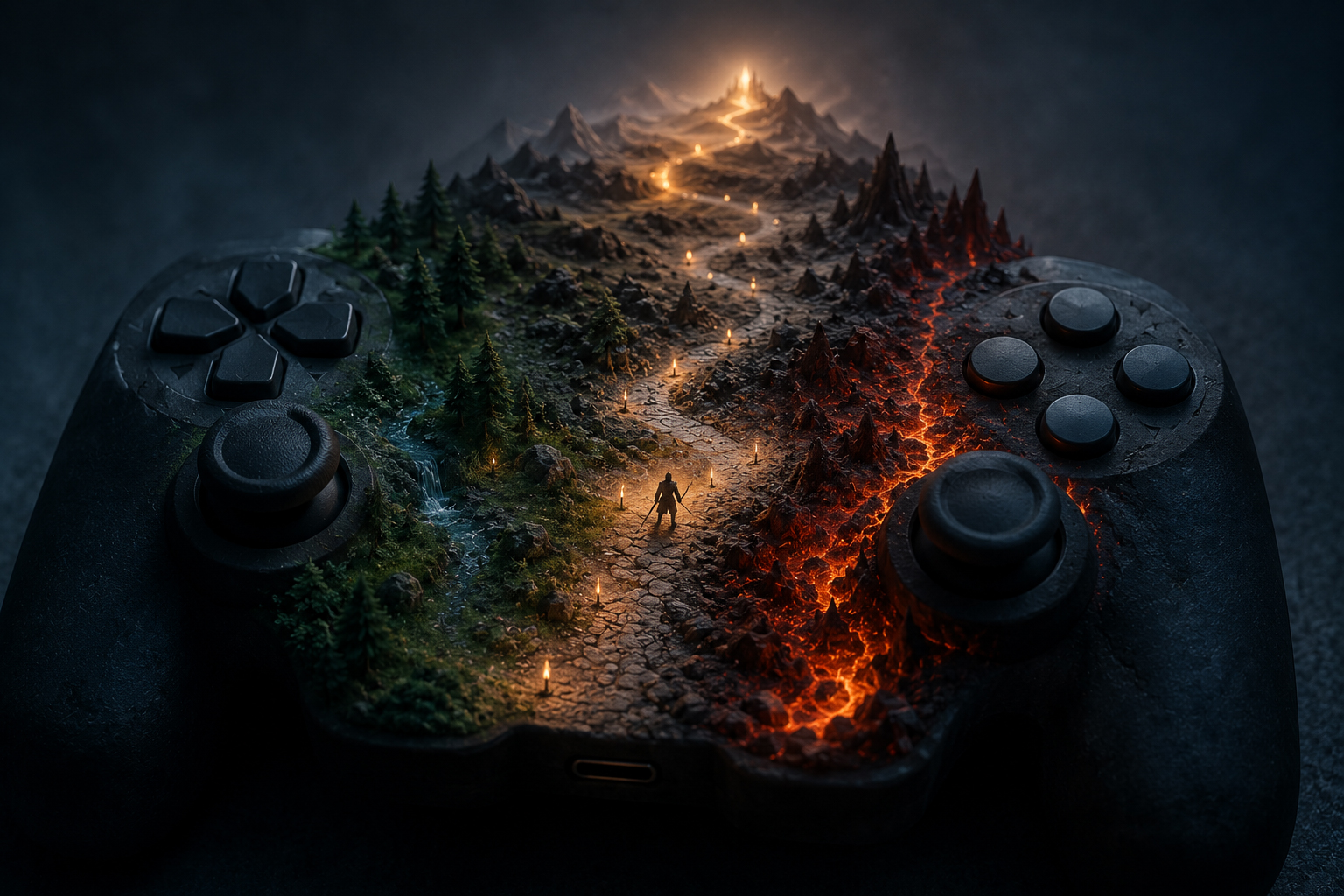
For decades, gamer identity was tied to difficulty — you played on hard, you didn't admit otherwise. Now accessibility modes are standard, and the question is open: who gets to call themselves a gamer? Jason Schreier, Rami Ismail, and Anita Sarkeesian debate whether accessibility features are rewriting that definition or just papering over a culture that hasn't fully changed.
What does it mean to call oneself a gamer? Traditionally, this identity often revolved around a certain skill set — honed through mastery of game mechanics, often layered with a personal code of secrecy regarding difficulty settings. Yet, as accessibility modes have become a staple in modern game design, this once-private aspect of gaming culture is now in the open. The emergent question is clear: Has this shift changed who gets to identify as a gamer?
Context: Why This Matters Now
The last decade has witnessed unprecedented evolution in video game design, with significant strides made toward accessibility. Titles like The Last of Us Part II and Spider-Man: Miles Morales showcased options such as adjustable difficulty settings, assist modes, and customizable controls that cater to diverse audiences. As society increasingly recognizes the importance of inclusivity, acknowledging the broader implications of who deserves the label of 'gamer' is more pressing than ever.
Perspective: Jason Schreier
Jason Schreier, a seasoned video game journalist, emphasizes the role of accessibility in expanding the gaming audience and reshaping gamer identity. "When creators introduce accessibility features, they inherently recognize that the term 'gamer' doesn't have to be tied to difficulty or innate skill. It can be about enjoyment, community, and personal engagement."
For Schreier, the evolution of difficulty settings is a natural progression in an industry that has often favored hardcore players. "It's about inclusivity and finding enjoyment in gaming, regardless of skill level. That is how we diversify our community, and everyone deserves a place to be a gamer."
Perspective: Rami Ismail
Game developer and accessibility advocate Rami Ismail lauds the progression from secretive difficulty settings to a culture that celebrates transparency.
"In earlier gaming communities, many felt that sharing your difficulty level diminished your credibility. Now, the open conversation about difficulty allows for more players to feel welcome, ultimately changing the dialogue around what it means to be a gamer," Ismail explains. He highlights that accessibility isn't merely about easier gameplay — it's about the universal right to participate.
"When a more diverse audience can access games, we begin to redefine gaming culture itself. Instead of worrying about labels, we should focus on creating an environment where everyone's participation is recognized and celebrated."
Perspective: Anita Sarkeesian
Media critic and feminist activist Anita Sarkeesian offers a more cautionary viewpoint, arguing that despite these advancements, underlying biases in gamer culture continue to persist. "While accessibility modes have opened doors, they alone do not eradicate the systemic issues around elitism in gaming. The danger lies in how we can still essentialize the 'gamer' narrative."
Sarkeesian suggests that accessibility modes must be accompanied by a broader cultural shift that dismantles the stigmas that have historically underpinned gamer identity. "It's not just about individual skill — it's about community creation and dismantling the barriers that still keep many from fully participating in the gaming world."
Editorial Synthesis
Where Experts Agree
Accessibility modes have expanded the definition of who can be considered a gamer. The shift from secretive difficulty settings to transparent options is a positive development. Inclusivity in gaming can lead to a richer, more diverse community.
Where Experts Disagree
The extent to which accessibility modes can change longstanding gamer elitism is debated. Experts also differ on whether difficulty levels should remain a source of personal pride or serve as an inclusive gameplay measure. The potential for accessibility modes to be seen as less valid compared to traditional play styles remains contested.
Why This Matters
The voices of Schreier and Ismail highlight the promise of a broader gamer community that welcomes all players regardless of skill level. However, Sarkeesian's more critical take reminds us that these changes must go hand in hand with a shift in the cultural narrative of what it means to be a gamer.
As barriers come down, the essence of belonging within gaming will be defined not by challenge alone, but by access, engagement, and shared experiences — redefining what it means to be part of this vivid and dynamic world.
Redefining the Gamer Identity
The introduction of accessibility modes in gaming represents a significant cultural shift that invites broader participation in the gaming community. Traditionally, the label 'gamer' was reserved for those who could master complex mechanics, often leading to a sense of elitism. However, as games increasingly integrate features that cater to various skill levels and preferences, the identity of what it means to be a gamer is evolving. It's no longer about mere proficiency in defeating challenges; it's about shared experiences, enjoyment, and inclusivity. This transformation encourages new players to embrace their love for gaming without the pressure of conforming to outdated standards of competence. Ultimately, accessibility enhances the richness of the gaming landscape, making it more diverse and welcoming—an evolution that should be celebrated. For many, the joy of gaming is what truly defines them as gamers, and this can now be openly acknowledged and embraced across the community.

Jason Schreier
Video Game Journalist, Bloomberg
"The introduction of accessibility modes has democratized gaming, allowing more people to engage in ways that suit their needs. This shift not only broadens the player base but also enriches the gaming community as a whole."
𝕏 Jason Schreier in Jason SchreierRami Ismail
Game Developer & Consultant
"While accessibility modes challenge traditional notions of who gets to be a gamer, they also highlight the need for flexibility in gaming experiences. The label 'gamer' should encompass everyone regardless of skill level or the settings they utilize."
𝕏 Rami Ismail in Rami Ismail
Anita Sarkeesian
Media Critic and Feminist Gamer
"The visibility of accessibility modes shifts the narrative around what it means to be a gamer, challenging gatekeeping practices that have historically excluded those who do not fit the ‘elite’ player mold. It opens the door for a more inclusive definition of gaming."
in Anita SarkeesianHow Does This Hit You?



No comments yet. Be the first to weigh in.