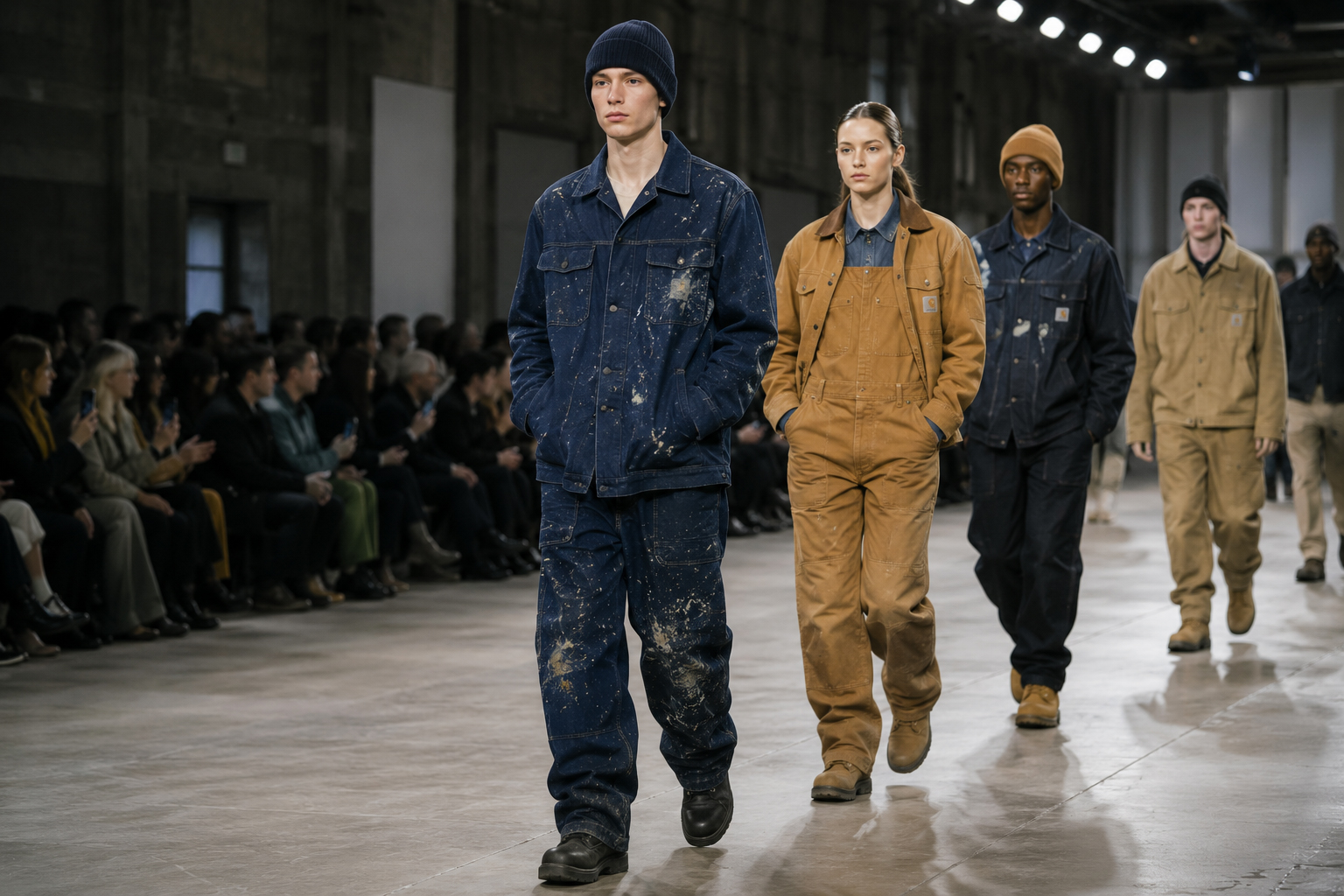
Carpenters and factory workers have worn these silhouettes for decades without anyone calling them avant-garde — then Fashion Week showed up. Giorgio Armani, Aurora James, and Tim Blanks debate whether the runway's embrace of workwear is a genuine celebration of labor and craft, or a stylish form of appropriation.
Is workwear the new avant-garde, or is it merely a celebration of style with roots in practicality? As Fashion Week showcases what's deemed innovative and forward-thinking, the runway has embraced workwear with a vigor that raises eyebrows — especially among those who have donned these styles for years without ever considering themselves trendsetters.
Context
In recent years, the lines between formal wear, casual attire, and workwear have blurred, prompting fashion designers to explore utilitarian aesthetics. As we grapple with remote and hybrid work environments, the question of what constitutes appropriate attire has become increasingly complex.
Perspective: Giorgio Armani
The renowned designer Giorgio Armani argues that workwear has long served as a vital segment of the fashion landscape, straddling the line between necessity and aesthetics. "Workwear is not just about function; it embodies a certain attitude and spirit of resilience. When brands elevate these pieces to avant-garde status, they acknowledge their foundational role in fashion."
Armani emphasizes the importance of craftsmanship in workwear, suggesting that by focusing on the artistry behind these garments, designers can transform them into high fashion — a statement about labor and identity in modern society.
Perspective: Aurora James
Aurora James, founder of Brother Vellies, provides a fresh lens on the subject by highlighting the cultural and ethical implications of workwear. "For many of us, workwear is a reflection of our daily lives and experiences — not just an aesthetic choice. When these styles are showcased as avant-garde, it raises questions about whose narratives are being valued in the fashion world."
James advocates for slow fashion and sustainability, emphasizing how the commercialization of workwear can overlook the very communities that have historically worn these styles. "Are we celebrating innovation, or are we merely appropriating it from the unsung heroes of labor?"
Perspective: Tim Blanks
Fashion journalist Tim Blanks brings a journalistic edge to the conversation, framing the elevation of workwear as a paradox. "Fashion Week's embrace of workwear may appear progressive, but it's essential to scrutinize who benefits from this trend," he claims. Blanks notes that while the mainstream fashion industry takes cues from everyday workers, it often fails to acknowledge the origins and social dimensions of these styles.
"While there's a certain irony to high fashion looking to workwear as an avant-garde element, we have to ask ourselves: are we engaging with this trend critically or passively?"
Editorial Synthesis
Where Experts Agree
Workwear embodies a complex interaction between functionality and fashion. The transformation of workwear can signify broader societal changes in how we approach clothing. Craftsmanship and ethical considerations are vital aspects of workwear in high fashion.
Where Experts Disagree
The degree to which workwear should be elevated to avant-garde status is contested. Perspectives on the ethical implications surrounding appropriation differ — some see it as a form of recognition, others as exploitation. There are also contrasting views on whether the trend represents genuine innovation or superficial appropriation of existing styles.
Why This Matters
The very garments that have long served distinct purposes in labor environments are being celebrated on runways, potentially disconnecting them from their original intent. As the divide between the styles worn by everyday workers and those paraded in fashion capitals narrows, it opens a crucial dialog on authenticity and recognition within the industry.
In a world where fashion is often deemed frivolous, the embrace of workwear — rooted in practicality — forces a necessary conversation about who fashion elevates and what vision of the future we are ultimately creating. Understanding these dynamics is essential for any future-forward dialogue in fashion.
Redefining Workwear: Cultural Acknowledgment or Fashion's Latest Trend?
The embrace of workwear at Fashion Week, while seemingly avant-garde, underscores a deeper conversation about authenticity and representation in fashion. Designers like Giorgio Armani highlight the historical significance of these functional pieces, framing them as symbols of resilience rather than mere trends. Yet, as Aurora James points out, the fashion industry must navigate the cultural narratives attached to workwear, ensuring that it honors the communities that have long relied on these styles for their everyday lives. This dialogue is essential to prevent workwear's elevation to high fashion from overshadowing the voices and experiences of those who truly embody its spirit. Ultimately, while workwear can undoubtedly influence contemporary style, its burgeoning status as avant-garde invites scrutiny into the values and stories that fashion chooses to elevate.

Giorgio Armani
Fashion Designer
"Armani believes that workwear is a foundation of modern fashion, emphasizing practicality while pushing creative boundaries. He argues that incorporating utility into avant-garde design can redefine perceptions of professional attire."
𝕏 Giorgio Armani in Giorgio ArmaniAurora James
Founder, Brother Vellies
"James stresses the importance of recognizing the authentic roots of workwear among the everyday wearers, arguing that labeling it avant-garde is a form of appropriation that overlooks its original context and function."
𝕏 Aurora James in Aurora JamesTim Blanks
Fashion Journalist
"Blanks provides a balanced view, acknowledging that fashion often reinterprets everyday clothing into high art. He posits that while some may consider workwear to be avant-garde, it is essential to reflect on who the true innovators are—the actual wearers who shape its utility."
𝕏 Tim Blanks in Tim BlanksHow Does This Hit You?

No comments yet. Be the first to weigh in.