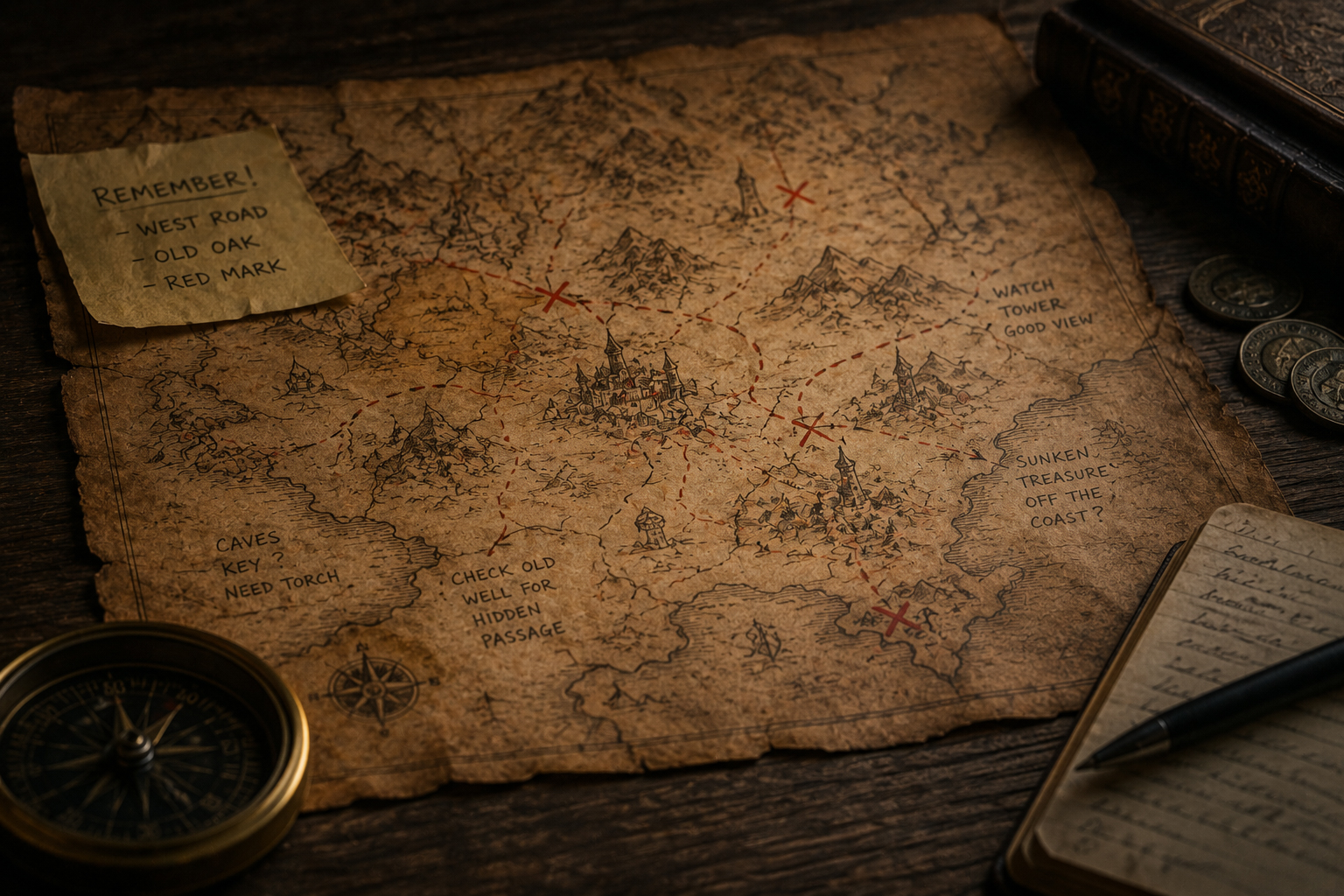
Kids used to draw maps of their neighborhoods on notebook paper — marking shortcuts, secrets, and the houses to avoid — and getting lost was part of growing up. Michael Gorman, Dr. Jane Holloway, and Tommy Ransom debate whether Google Maps gave us something better or quietly took something irreplaceable.
In a world where location and direction are dictated by algorithms, one might wonder: has the advent of Google Maps robbed us of the thrill of unpredictability and self-discovery? Hand-drawn maps on notebook paper served as personalized guides for children to navigate their neighborhoods — a rite of passage in an era of exploration. With smartphones in our pockets, this nostalgic pastime feels increasingly obsolete. But was this transition a gift of convenience, or has something invaluable been lost?
Context
As digital navigation dominates, many lament the disappearance of unmediated human experiences in favor of technologically enhanced efficiency. Experts from various fields weigh in on the implications of relying on digital maps versus the intimate, often whimsical nature of hand-drawn maps.
Perspective: The Gift of Digital Navigation
Michael Gorman, a geographer and author, asserts that while hand-drawn maps fostered creativity, digital navigation simplifies complexities in a fast-paced world. "Google Maps provides instant access to vast amounts of information that hand-drawn maps simply cannot offer. It's about leveraging tools for productivity," he explains.
Gorman highlights the safety aspect — with real-time updates and traffic reports, digital maps help users avoid dangerous situations and navigate urban environments with confidence. He also proposes that this shift enables a broader understanding of geography, with children today having access to historical, topographical, and thematic maps on their devices. "The educational opportunities are vast and potentially more enriching than what we had in our youth," he argues.
Perspective: The Theft of Discovery
Dr. Jane Holloway, a cultural anthropologist, offers a contrasting view. She argues that reliance on digital maps transforms exploration into a mechanized and less intimate experience. "Hand-drawn maps were often personal; they contained the quirks and tales of that child's journey through their world. They were blueprints of adventure," Holloway states.
According to Holloway, these maps were vessels of secrets shared among friends, teaching them about their immediate environment and the social dynamics within it. "Today's GPS-based navigation strips away the mystery and spontaneity of discovery. Kids miss out on those charming moments of getting lost and finding their way back, which are fundamental to personal growth."
Perspective: The Urban Landscape Unchanged
Tommy Ransom, an urban planner and historian, emphasizes that while technology has transformed how we navigate cities, urban landscapes still hold hidden layers waiting to be uncovered.
"Hand-drawn maps allowed kids to claim their neighborhoods, while digital maps are more functional, prioritizing efficiency over exploration," Ransom explains. He points to how digital maps often overlook the nuances of community life. "Getting lost used to generate casual conversations — meeting someone new on the street, discovering a hidden park or cafe. With digital guidance, we often forgo these rich experiences for a straight path to our destination." Ransom advocates for a balanced approach that embraces both the advantages of technology and the heart of traditional exploration.
Editorial Synthesis
Where Experts Agree
Digital maps provide safety, efficiency, and extensive information. The availability of diverse educational materials related to geography is enhanced by digital tools.
Where Experts Disagree
The essence of personal exploration and discovery has diminished with reliance on digital navigation. The social bonds formed from sharing hand-drawn maps are considered invaluable by some experts, who see current digital platforms as lacking in intimacy and connection.
Why This Matters
The discussion surrounding maps bridges generations, illustrating how technology impacts our experiences of space and place. While convenience reigns supreme in the age of smartphones, this transition raises essential questions about what is sacrificed in pursuit of speed and accessibility.
The importance of imaginative exploration should not be overlooked. Finding a balance between using digital tools for immediate navigation and nurturing the art of mapmaking can shape not only how children perceive their neighborhoods, but also how they understand the world around them.
Navigating Nostalgia in a Digital Age
The shift from hand-drawn maps to digital navigation undoubtedly offers greater efficiency and safety, but it stirs a deep sense of nostalgia for the personal, creative explorations of our past. While Google Maps and similar technologies provide invaluable tools for understanding our environments, they also strip away the serendipity and adventure of getting lost. The artistry and individuality of hand-drawn maps fostered connections not only with places but also among peers sharing secrets of their neighborhoods. As technology continues to reshape our interactions with geography, we must find a balance that honors the joy of discovery while leveraging the conveniences of modern navigation. Perhaps we can integrate both worlds, encouraging the creativity of hand-drawn maps alongside the efficiency of digital tools, thus fostering both safety and the spirit of exploration in the next generation.

Michael Gorman
Geographer and Author
"Michael argues that the transition from hand-drawn maps to digital platforms has led to a loss of personal connection and creativity. He believes that sharing secrets through physical maps fosters community and encourages imagination in a way that Google Maps cannot replicate."
𝕏 Michael Gorman in Michael Gorman
Dr. Jane Holloway
Cultural Anthropologist
"Dr. Holloway contends that Google Maps and similar technologies enhance our ability to explore and connect with our environment. While acknowledging the nostalgia for hand-drawn maps, she believes that the convenience and accessibility of digital maps facilitate new forms of discovery and interaction."
𝕏 Dr. Jane Holloway in Dr. Jane Holloway
Tommy Ransom
Urban Planner and Historian
"Tommy offers a balanced view, recognizing both the charm of hand-drawn maps and the efficiency of digitized ones. He argues that both forms can coexist and that embracing both can lead to richer experiences in navigation and exploration."
𝕏 Tommy Ransom in Tommy RansomHow Does This Hit You?

No comments yet. Be the first to weigh in.