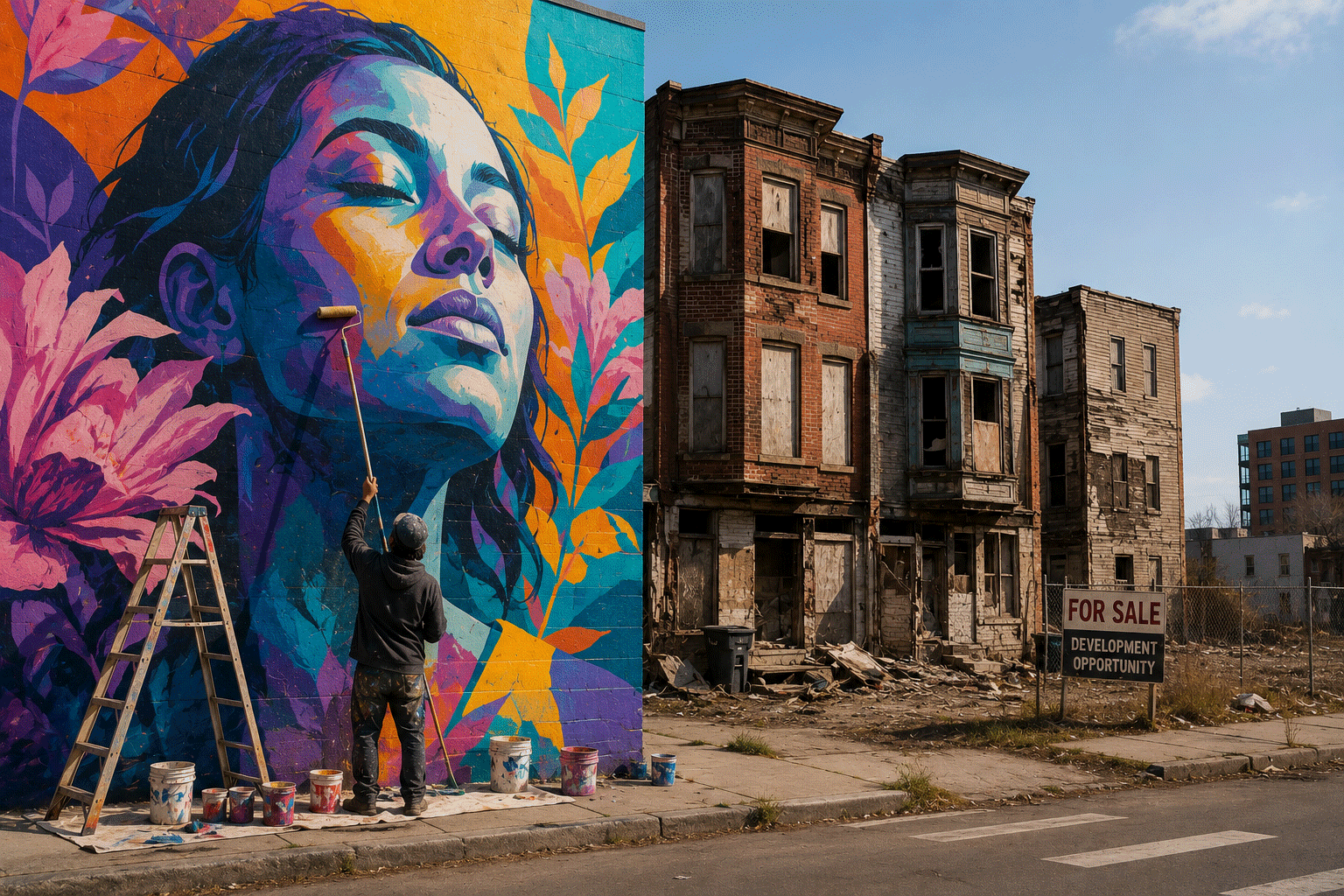
Murals can transform blank walls into symbols of community pride, but can they truly revitalize neighborhoods? As cities grapple with gentrification, housing pressures, and economic inequality, experts debate whether public art drives meaningful change—or merely paints over deeper structural challenges.
Can a mural revitalize a neighborhood?
Across cities worldwide, colorful public art has become a familiar symbol of urban renewal. Murals celebrate local culture, beautify neglected spaces, and often serve as visible signs of community investment.
Yet a growing number of urban planners, sociologists, and community advocates are asking a difficult question:
Do murals genuinely improve neighborhoods, or do they simply create the appearance of progress while deeper problems remain unresolved?
The debate has become increasingly relevant as public art is frequently incorporated into redevelopment strategies, especially in communities facing rapid change and gentrification.
Why This Matters Now
Cities across the country continue to invest heavily in public art initiatives.
Murals are often promoted as tools for:
- Community engagement
- Cultural preservation
- Tourism development
- Neighborhood branding
- Economic revitalization
At the same time, many urban communities face persistent challenges, including:
- Rising housing costs
- Resident displacement
- Economic inequality
- Underinvestment in public services
- Limited affordable housing
As neighborhoods transform, murals increasingly occupy a complicated position: celebrated as symbols of renewal while sometimes coinciding with the very forces reshaping communities.
Understanding their role requires separating symbolic impact from structural change.
Expert Perspectives
Perspective: Visual Aesthetics Matter
Dr. Jane Golden, Executive Director of Mural Arts Philadelphia
For Dr. Jane Golden, murals represent far more than decorative enhancements.
She argues that public art can strengthen community identity, encourage civic participation, and create opportunities for collective expression.
“Murals can influence a neighborhood's identity and create spaces for dialogue.”
According to Golden, murals often act as catalysts for broader community engagement.
Residents who participate in planning, designing, or painting a mural develop stronger connections to the spaces they inhabit.
Building Community Ownership
Golden believes that collaborative art projects help foster a sense of pride and stewardship.
“When people paint their walls, they paint their futures.”
In her view, murals signal that a neighborhood is active, valued, and worthy of attention and investment.
Potential Economic Benefits
Golden also points to increased foot traffic and tourism as possible economic advantages.
Murals can attract visitors, encourage local spending, and help small businesses gain visibility.
Key Takeaway
- Murals strengthen community identity.
- Public art encourages civic engagement.
- Beautification can generate social and economic activity.
Perspective: A Critical Approach
Dr. Susan C. Fainstein, Professor of Urban Planning
Dr. Susan C. Fainstein offers a more skeptical assessment.
While acknowledging the cultural value of murals, she argues that public art is often credited with solving problems it cannot realistically address.
“Murals can easily become a form of aesthetic gentrification.”
According to Fainstein, murals may beautify neighborhoods without improving the material conditions of residents.
The Limits of Beautification
She warns that visual improvements can sometimes distract from more pressing concerns such as:
- Housing affordability
- Economic displacement
- Access to jobs
- Public infrastructure
- Social services
In some cases, beautification can even become part of a broader marketing strategy aimed at attracting new residents and investors rather than serving existing communities.
Key Takeaway
- Murals cannot solve structural inequality.
- Visual change should not be mistaken for systemic progress.
- Urban policy must address deeper socio-economic challenges.
Perspective: The Sociological Lens
Sharon Zukin, Sociologist and Urban Studies Scholar
Sharon Zukin occupies a middle ground between optimism and skepticism.
She recognizes the cultural importance of murals while questioning how they are often deployed within redevelopment efforts.
“Murals do have a place in urban landscapes.”
For Zukin, public art functions as both a cultural expression and a signal about the social and economic dynamics of a neighborhood.
Who Benefits?
One of her central concerns is determining who ultimately gains from public art initiatives.
“If murals are used as marketing tools for an area undergoing gentrification, we must ask ourselves: who truly benefits?”
This question highlights the tension between cultural celebration and economic transformation.
While murals may improve perceptions of a neighborhood, they do not automatically improve outcomes for long-term residents.
Key Takeaway
- Murals hold genuine cultural value.
- Public art can become part of redevelopment branding.
- Community benefits should remain the central measure of success.
Editorial Synthesis
Where Experts Agree
Community Engagement Matters
Both Golden and Zukin emphasize that murals can strengthen local identity and encourage community participation.
Cultural Significance Is Undeniable
All three experts recognize murals as meaningful cultural assets within urban environments.
Art Alone Is Not Enough
Fainstein and Zukin agree that public art should complement—not replace—broader policy solutions aimed at improving residents' quality of life.
Where Experts Disagree
How Much Power Do Murals Really Have?
- Golden views murals as catalysts for meaningful community transformation.
- Fainstein sees their impact as largely symbolic when deeper issues remain unaddressed.
Economic Revitalization
- Golden believes murals can generate economic activity.
- Fainstein and Zukin remain cautious about attributing significant economic gains directly to public art.
Relationship to Gentrification
- Critics worry murals can become tools of neighborhood marketing.
- Supporters argue they can preserve cultural identity amid change.
Why This Matters
The debate over murals reflects a larger conversation about urban development itself.
Cities frequently seek visible signs of progress because they are easier to fund, promote, and celebrate than long-term structural reforms.
A mural can be completed in weeks.
Affordable housing initiatives, educational investment, workforce development, and economic mobility programs often require years or decades.
The danger arises when symbolic improvements become substitutes for substantive action.
At the same time, dismissing murals entirely overlooks their real contributions to community expression, cultural preservation, and civic pride.
The challenge is understanding where art ends and policy begins.
Looking Beyond the Wall
Perhaps the most productive way to view murals is not as solutions, but as complements to broader community investment.
Public art can be most effective when paired with:
- Affordable housing initiatives
- Small business support
- Educational programs
- Public space improvements
- Community-led planning efforts
In this context, murals become part of a larger ecosystem of neighborhood development rather than standalone interventions.
Conclusion
Murals do not save neighborhoods.
They cannot eliminate poverty, prevent displacement, create affordable housing, or resolve economic inequality.
What they can do is create visibility, spark conversation, strengthen identity, and foster community participation.
The mistake is not painting murals.
The mistake is expecting them to accomplish what only sustained investment, thoughtful policy, and community-driven development can achieve.
As cities continue searching for ways to build resilient neighborhoods, murals should be understood for what they are:
Powerful cultural tools—but not substitutes for structural change.
The paint may brighten a wall, but lasting revitalization requires much more than color. It requires commitment, resources, and a vision that extends far beyond the mural itself.
Beyond the Surface: A Call for Holistic Urban Strategies
While murals undoubtedly enliven urban spaces and foster community pride, it is imperative to recognize that they are not panaceas for the deeper social and economic challenges facing neighborhoods. The artistic vibrancy they bring can attract attention, but it must be coupled with genuine investments in housing, education, and economic opportunities to ensure sustainable development. As we advocate for artistic expression, we must also engage in the difficult conversations surrounding gentrification and displacement. The challenge lies in amplifying community voices while addressing systemic issues that murals alone cannot resolve. Only through a comprehensive approach that marries aesthetics with substantive policy changes can we hope to create neighborhoods that thrive in diversity and equity.

Dr. Jane Golden
Executive Director, Mural Arts Philadelphia
"Dr. Golden argues that murals serve as a catalyst for community pride and identity, drawing attention to local issues and stimulating economic development through tourism and engagement."
in Dr. Jane Golden
Dr. Susan C. Fainstein
Professor, Urban Planning at Harvard University
"Dr. Fainstein contends that while murals can enhance neighborhood aesthetics, they alone cannot address fundamental socio-economic issues, and should be part of a broader urban improvement strategy."
in Dr. Susan C. FainsteinSharon Zukin
Sociologist and Author
"Zukin argues that murals often serve as a superficial gloss over deeper economic disparities, providing a false sense of progress while failing to genuinely uplift marginalized communities."
in Sharon ZukinHow Does This Hit You?


No comments yet. Be the first to weigh in.