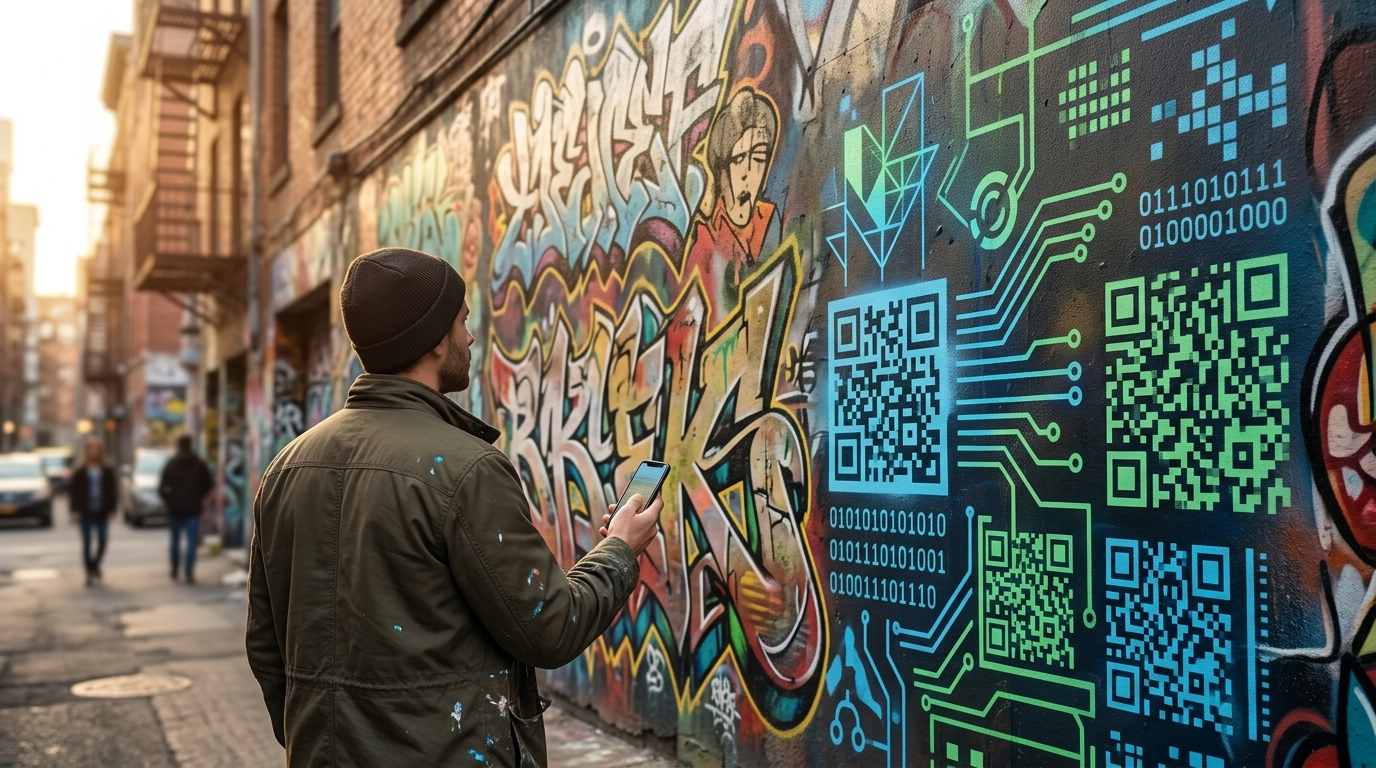
Before hashtags, followers, and viral reels, graffiti operated under an unwritten code built on reputation, risk, and respect. Writers earned recognition not through algorithms but through consistency, style, and credibility within their local scene. Today, Instagram has transformed graffiti into a global gallery where artists can gain instant visibility regardless of geography or experience. Some veterans argue that this shift has weakened the culture's traditional hierarchy and rebellious spirit, while others believe it has opened the movement to more diverse voices and creative experimentation. The debate is no longer simply about graffiti on walls—it is about whether digital visibility has replaced the cultural code that once gave graffiti its identity.
Before every mural became a post...
Before every burner became a reel...
Before likes, followers, and algorithms rewarded visibility...
Graffiti had a code.
It wasn't written down.
It wasn't taught in classrooms.
It was learned through experience, respect, and reputation.
Writers earned their place by putting in work, developing style, taking risks, and contributing to a culture that valued authenticity above recognition.
Today, a single photograph can reach millions before the paint is even dry.
That transformation raises an uncomfortable question:
Did graffiti's cultural code disappear when the culture moved from subway lines and alley walls to smartphone screens—or has it simply evolved into something new?
Why This Matters Now
Graffiti has never been more visible.
Social media platforms have transformed what was once a local, underground culture into a global conversation.
Artists can now build audiences without magazine features, gallery representation, or years spent earning recognition within a city's writing community.
The benefits are undeniable.
More artists receive exposure.
Creative techniques spread instantly.
Communities connect across continents.
Yet increased visibility has also changed how reputation is earned.
For many veterans, credibility once depended on consistency, originality, and respect within the culture itself.
Today, online engagement often measures success differently.
The question is no longer who painted the most—it is who is seen the most.
Expert Perspectives
Cey Adams: Respect Was Earned, Not Measured
Def Jam co-founder and graffiti pioneer Cey Adams believes the unwritten rules of graffiti created accountability as much as artistic excellence.
"In the early days, respect was everything. You needed to prove yourself through quality work and by earning your place in the hierarchy."
Recognition wasn't immediate.
It developed through years of painting, relationships within crews, and consistent commitment to the craft.
Adams argues that Instagram changes those incentives.
"It's like giving everyone a microphone without a stage; the nuances of the art form are lost."
In his view, graffiti was never simply about personal fame.
It was a collective culture built on shared standards.
Without the code, visibility risks replacing credibility.
Stephen Powers: Every Generation Writes Its Own Rules
Artist and writer Stephen Powers sees the digital transformation differently.
Rather than mourning the disappearance of old traditions, he views social media as an expansion of who gets to participate.
"The old-school rules were a double-edged sword."
While hierarchy created standards, it could also exclude talented voices that lacked access to established crews or local scenes.
Platforms like Instagram have lowered those barriers.
Artists now exchange ideas globally instead of remaining confined to individual cities.
Powers believes the culture has not abandoned its code.
It has rewritten it.
New values emphasize:
- Accessibility
- Collaboration
- Diverse perspectives
- Global creative exchange
The code may be different, but culture has always evolved alongside the people creating it.
Dr. Jeffrey Ian Ross: Rebellion Doesn't Look the Same Online
Criminologist Dr. Jeffrey Ian Ross places graffiti's evolution within a broader social context.
Historically, graffiti functioned as an act of resistance.
It challenged authority, claimed public space, and asserted identity.
"Graffiti served as a form of rebellion against mainstream culture and an assertion of identity."
Social media complicates that relationship.
Instant visibility can increase recognition—but it can also commercialize rebellion.
"With social media, this rebellion has become commodified."
Ross also notes that digital exposure changes the risks artists face.
Traditional graffiti demanded physical courage and legal risk.
Today, artists may gain enormous audiences while navigating different forms of scrutiny, including online criticism, surveillance, and rapid public reaction.
The canvas may still be public, but the audience—and the consequences—have fundamentally changed.
Editorial Synthesis
Where Experts Agree
Although they differ on what has been gained or lost, the experts share several important conclusions:
- Graffiti has always been rooted in identity, community, and self-expression.
- Social media has fundamentally changed how graffiti is created, shared, and recognized.
- Visibility now plays a far larger role in an artist's reputation than it once did.
- The culture continues to evolve rather than remain fixed.
Where Experts Disagree
Has the Code Been Lost?
Cey Adams believes many of graffiti's traditional values have weakened in the age of social media.
Stephen Powers argues that every generation develops new cultural norms, making evolution inevitable rather than tragic.
Exposure or Commodification?
Powers sees digital platforms as democratizing access to the culture.
Ross warns that widespread visibility can transform rebellion into content, changing how graffiti is understood and consumed.
What Defines Respect Today?
For earlier generations, respect was earned primarily within local communities through sustained commitment.
Today, artists often build reputations simultaneously through both street credibility and digital audiences, raising new questions about what authenticity means.
Why This Matters
The debate over graffiti's unwritten code reflects a broader tension affecting creative culture everywhere.
When technology changes how art is shared, it inevitably changes how art is valued.
Graffiti was never defined solely by spray paint or subway cars.
It was defined by relationships.
Reputation.
Risk.
And participation in a community with its own traditions.
Social media has not erased those values.
But it has introduced new currencies of recognition—followers, engagement, and global visibility—that sometimes compete with older ideas of credibility.
Whether that represents decline or evolution depends largely on how one defines authenticity.
Perhaps the real challenge is not preserving graffiti exactly as it once existed.
It is ensuring that as the culture grows, it remembers why the code existed in the first place: not to exclude newcomers, but to protect craftsmanship, respect, and a shared sense of belonging.
The cap may no longer be the gatekeeper it once was. But if graffiti is to remain more than content, its future will depend not on algorithms, but on whether artists continue to value the culture behind the paint as much as the image that appears on the screen.
The Duality of Graffiti in the Social Media Age
The debate surrounding the impact of Instagram on graffiti culture reveals a profound tension between tradition and evolution. While Cey Adams rightly highlights the importance of hierarchy and respect that once defined the graffiti community, Stephen Powers challenges us to recognize the potential for greater inclusivity and expression that social media offers. The erosion of unwritten rules does not necessarily spell the death of authenticity; rather, it signifies a transformation in how we perceive artistic merit. The digital canvas may blur boundaries, but it also opens doors for diverse voices that were previously marginalized. Ultimately, the essence of graffiti lies not solely in adherence to tradition, but in the ongoing dialogue it inspires. Graffiti's evolution, influenced by social media, should compel us to rethink what it means to be an artist in a constantly changing landscape.

Cey Adams
Co-founder, Def Jam Recordings
"While social media democratized art, it has diluted the respect and hierarchy traditionally intrinsic to graffiti culture. The established codes of conduct and respect among crews safeguarded the integrity of the art form, a critical element that seems to be fading away with the rise of digital platforms."
in Cey Adams
Stephen Powers
Artist and Writer
"The rise of platforms like Instagram allows artists to bypass traditional gatekeeping, giving more voices the opportunity to be heard. This shift challenges the old hierarchical structures but also enriches the narrative of graffiti as a democratic art form that encourages broad participation."
in Stephen Powers
Dr. Jeffrey Ian Ross
Professor, University of Baltimore
"The evolution of graffiti in the digital age raises important questions about community and identity. While the traditional codes may be eroding, new forms of graffiti are emerging, reflecting broader societal changes and the ways in which we communicate art and identity today."
in Dr. Jeffrey Ian RossHow Does This Hit You?


No comments yet. Be the first to weigh in.