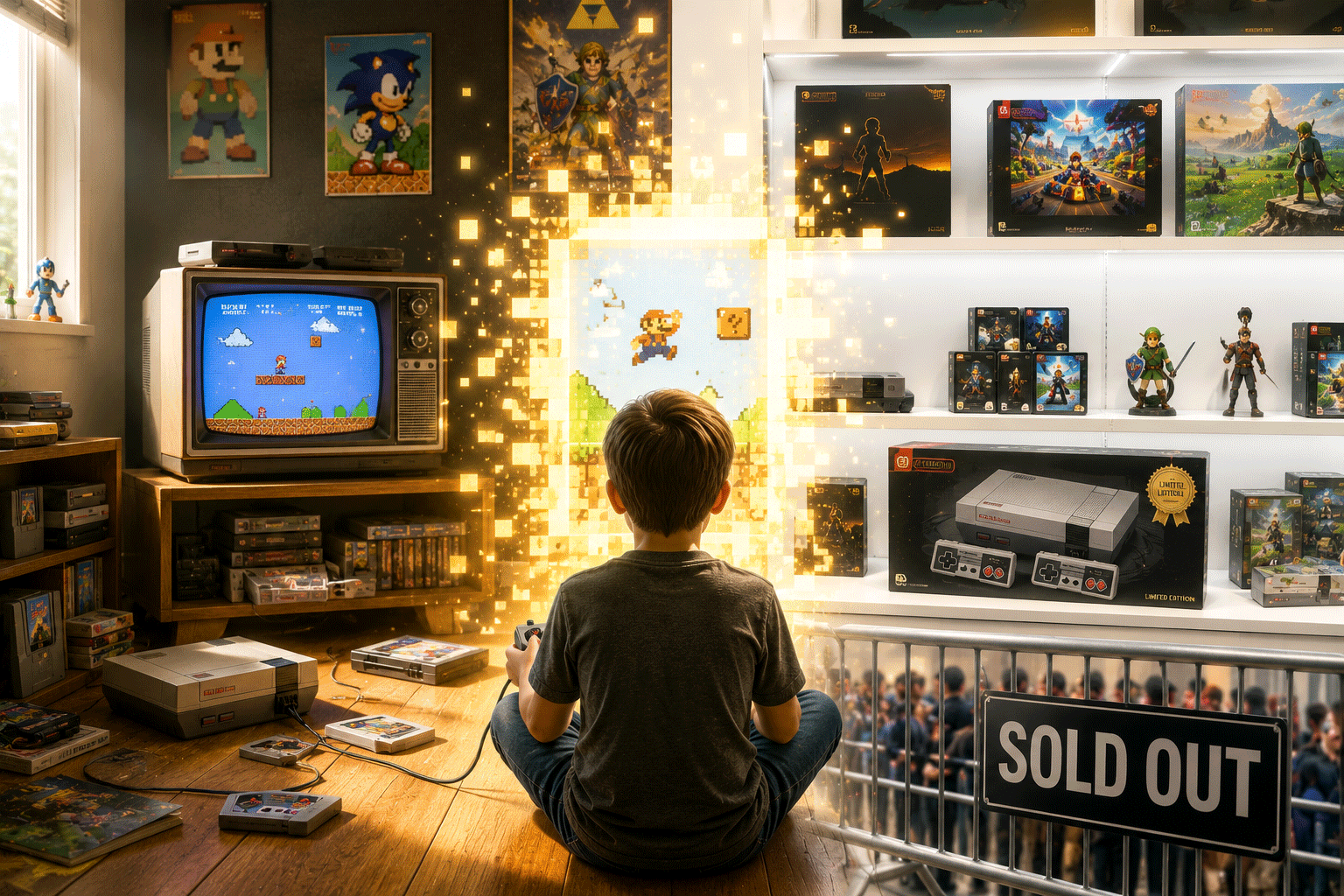
Retro game remakes continue to dominate sales charts, but are they preserving gaming history or simply monetizing nostalgia? Industry experts weigh in on the delicate balance between honoring classic titles and reinventing them for modern audiences.
The resurgence of retro game remakes has become one of the most significant trends in the gaming industry.
Classic titles that once defined the 8-bit and 16-bit eras are returning with modern graphics, updated mechanics, and expanded storytelling. For some players, these remakes represent a celebration of gaming history. For others, they raise an uncomfortable question:
Are developers preserving beloved experiences for a new generation—or simply monetizing nostalgia?
As remakes continue to dominate sales charts and spark passionate debate, the conversation extends beyond gaming itself, touching on issues of creativity, preservation, and commercial incentives.
Why This Matters Now
The gaming industry has entered an era where nostalgia is a powerful business asset.
Major remakes such as:
- Final Fantasy VII Remake
- The Legend of Zelda: Link's Awakening
- Resident Evil 2
have not only attracted longtime fans but, in many cases, surpassed the commercial success of their original releases.
Modern remakes often feature:
- Enhanced graphics
- Voice acting
- Updated controls
- Quality-of-life improvements
- Expanded content
Studios argue these updates allow classic experiences to remain relevant for contemporary audiences. Critics, however, question whether innovation is always the primary objective.
Expert Perspectives
Perspective: Preserving Gaming Heritage
Jeremy Parish, Editor-in-Chief of Retronauts
Jeremy Parish believes remakes can play an important role in preserving gaming history.
According to Parish, remakes help bring influential titles back into public discussion and expose them to audiences who may never have experienced the originals.
“When a game is remade, it often brings an older title back into the cultural conversation.”
Rather than replacing original games, Parish argues that successful remakes can help players understand how game design has evolved over time.
Key Takeaway
- Remakes preserve cultural relevance.
- New generations gain access to classic experiences.
- Gaming history remains part of the modern conversation.
Brett Elston, Gaming Journalist and Consultant
Brett Elston echoes this perspective, emphasizing the educational value of remakes.
He argues that younger players often discover gaming history through modernized versions of classic titles.
These experiences can encourage players to explore the original releases and better understand the evolution of the medium.
“The conversation around these titles can now be intergenerational.”
For Elston, remakes help bridge the gap between longtime fans and newcomers.
Key Takeaway
- Remakes create shared experiences across generations.
- They can increase appreciation for gaming history.
- They expand conversations around design and storytelling.
Kelsey Lewin, Co-Director of Pink Gorilla Games
Kelsey Lewin views thoughtfully developed remakes as opportunities to honor the original creators and their artistic vision.
According to Lewin, successful remakes do more than update visuals—they celebrate the legacy of influential games.
“When done thoughtfully, remakes pay homage to the artistic vision behind a game.”
She believes this process can renew interest in original versions and help preserve important gaming narratives that might otherwise fade from public awareness.
Key Takeaway
- Great remakes honor original creators.
- They can increase interest in gaming preservation.
- Classic stories remain accessible to future audiences.
Perspective: Monetizing Nostalgia
The Risk of Becoming a Cash Grab
Even supporters of remakes acknowledge the risks associated with the trend.
Parish notes that while remakes can provide educational and cultural value, some projects seem designed primarily to capitalize on nostalgia.
“There is also a strong risk of simply recreating a product to fleece hard-earned money from players who are driven by nostalgia.”
The challenge lies in distinguishing meaningful reinterpretations from commercially motivated reproductions.
Key Concern
- Nostalgia can become a marketing tool rather than a creative foundation.
- Some remakes rely heavily on brand recognition.
When Innovation Falls Short
Elston argues that remakes must preserve the essence of what made the original special.
A visually impressive remake may still fail if it loses the atmosphere, gameplay identity, or emotional impact that defined the original experience.
“If a remake doesn’t share the distinctive feel or core gameplay attributes of the original, it risks alienating the very audience it aims to attract.”
For many fans, authenticity matters as much as modernization.
Key Concern
- Visual upgrades alone are not enough.
- Core gameplay and emotional resonance must remain intact.
Style Over Substance
Lewin highlights another common criticism:
Many remakes prioritize technical improvements while neglecting the deeper qualities that made the original memorable.
“Too often, studios opt for flashy graphics and modern updates while neglecting narrative complexity, character depth, or gameplay mechanics that made the originals special.”
In these cases, nostalgia becomes the primary selling point rather than meaningful innovation.
Key Concern
- Graphics can overshadow storytelling and design.
- Brand familiarity sometimes replaces creative ambition.
Editorial Synthesis
Where Experts Agree
Remakes Can Preserve Gaming History
All experts acknowledge that remakes have the potential to introduce classic games to younger audiences and keep important titles culturally relevant.
Respect for Source Material Is Essential
Successful remakes honor the spirit, mechanics, and storytelling that made the originals beloved.
Remakes Encourage Meaningful Conversations
They provide opportunities to discuss:
- Game design evolution
- Narrative development
- Technological progress
- Cultural impact
Where Experts Disagree
Can Remakes Recreate the Original Emotional Impact?
Some experts believe modern technology can enhance classic experiences.
Others argue that certain aspects of the original experience can never be fully replicated.
What Is the Primary Motivation?
A central disagreement revolves around intent:
- Preservation and accessibility
- Commercial profitability and nostalgia marketing
Are Remakes Better Than the Originals?
While some players embrace updated experiences, others maintain that original releases remain unmatched.
Why This Matters
The debate surrounding retro game remakes reflects larger cultural questions.
It forces us to consider:
- How should creative works be preserved?
- When does homage become exploitation?
- Can innovation coexist with nostalgia?
- What responsibilities do creators have to their source material?
As entertainment industries increasingly revisit familiar intellectual property, these questions extend beyond gaming into film, television, music, and publishing.
The answer matters because nostalgia is becoming one of the most powerful forces shaping modern media.
Key Stats
Player Sentiment
- 73% of gamers report playing remakes primarily for nostalgia.
- 58% believe remakes often lack sufficient innovation compared to original titles.
Commercial Performance
- 42% of remakes have outperformed their original releases in sales.
Industry Impact
- Remakes continue to represent one of the fastest-growing segments of premium game releases.
Conclusion
Retro game remakes exist at the intersection of preservation and profit.
At their best, they introduce timeless experiences to new audiences, celebrate gaming history, and demonstrate how classic ideas can evolve with modern technology.
At their worst, they become exercises in brand exploitation, relying on nostalgia while offering little meaningful innovation.
The reality is that remakes are neither inherently artistic nor inherently commercial.
Their value depends on execution.
The most successful remakes do more than recreate familiar experiences—they deepen them, expand them, and help players understand why they mattered in the first place.
As studios continue revisiting beloved classics, every remake becomes a test:
Can it honor the past while creating something worthy of the future?
Vote
👍 Yes — “Craft the Future”
Retro remakes preserve gaming history while introducing classic experiences to new generations through meaningful innovation.
👎 No — “Hold Your Horses”
Most remakes rely too heavily on nostalgia and brand recognition, prioritizing profits over creativity and originality.
Nostalgia Meets Innovation: A Double-Edged Sword
As the wave of retro game remakes continues to swell, the line between preserving gaming heritage and capitalizing on nostalgia becomes increasingly blurred. While many remakes, like *Final Fantasy VII* and *Resident Evil 2*, bring back cherished experiences with modern enhancements, they often raise questions about authenticity and artistic integrity. It is crucial for consumers to remain discerning; the nostalgia we hold dear shouldn’t become a mere marketing tool. That said, when these remakes are done thoughtfully, they can indeed honor the spirit of the originals while inviting a new generation to engage with gaming history. Ultimately, the success of these remakes hinges on balancing the nostalgia factor with genuine innovation—embracing the past while crafting futures worth experiencing. Both fans and developers have a stake in ensuring that these remakes are more than just cash grabs, but rather, empowering bridges between generations of gamers.
Jeremy Parish
Editor-in-Chief, Retronauts
"Jeremy argues that retro game remakes serve as vital tools for preserving gaming history, allowing new generations to experience classic games with modern sensibilities and accessibility. He emphasizes that these remakes can deepen appreciation for the original works rather than purely serving as capitalistic ventures."
𝕏 Jeremy ParishBrett Elston
Gaming Journalist and Consultant
"Brett believes that while some remakes can provide nostalgic value, many of them are primarily aimed at monetizing childhood memories without truly respecting the source material. He warns that this trend can lead to a superficial understanding of classic games, overshadowed by profit motives."
𝕏 Brett ElstonKelsey Lewin
Co-Director, Pink Gorilla Games
"Kelsey takes a balanced view, recognizing that while remakes can serve to preserve games and introduce them to new audiences, they often spark important discussions about how to honor the original while ensuring longevity and accessibility. She advocates for a thoughtful approach to remakes that honors the past while embracing the future."
𝕏 Kelsey LewinHow Does This Hit You?



No comments yet. Be the first to weigh in.