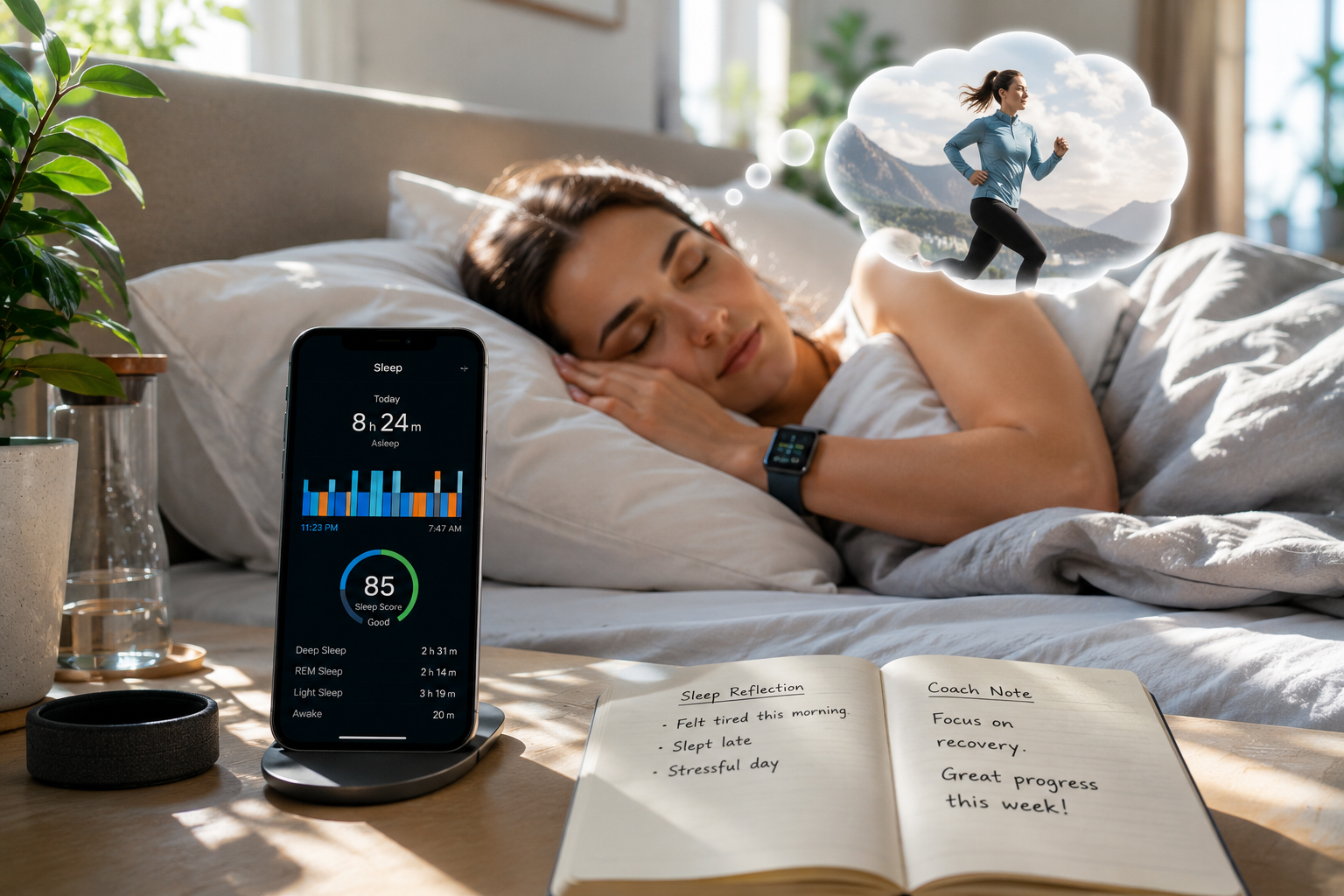
Sleep tracking apps can now detect your REM cycles and dream states in real time — but should that data be in your coach's hands too? Matthew Walker, Sara Mednick, and Reid Wilson debate whether bringing sleep analytics into coaching is a performance breakthrough or a fast track to anxiety and over-dependence on tech.
Is the future of sleep improvement in the hands of algorithms, or does the human touch still reign supreme? As sleep tracking apps gain prominence, they offer insights into our dreams and sleep cycles that were previously unimaginable. But while they monitor our nocturnal activities, should our coaches also tune in to our dreaming states? This question beckons a deeper exploration of the role technology plays in well-being and performance.
The Context of Sleep Tracking
In recent years, sleep tracking technology has made significant leaps forward. With advances in machine learning and wearable technology, apps can now offer detailed analyses of sleep patterns, including REM cycles and even dream states. As sleep becomes increasingly recognized as a crucial pillar of health and performance — particularly in sports and mental wellness — pressing questions arise: How reliable are these app-generated insights? And should they play a role in coaching?
Perspective: The Technological Front
Matthew Walker, CEO of The Sleep Diplomat and an expert in sleep science, believes that the intersection between technology and sleep offers unprecedented opportunities. Walker argues that sleep tracking apps provide vital data:
"These apps allow us to consider both the quantity and quality of sleep. They illuminate states we enter during the night, including dreaming, which has benefits for creativity and emotional processing."
Enhanced awareness of sleep quality can guide more personalized coaching techniques. If an athlete knows they are in deep REM sleep when their coach suggests a high-intensity training session, adjustments can be made accordingly. Coaches could refine their approach, honing in on when to push and when to ease off.
Perspective: The Psychological Aspect
Conversely, Sara Mednick, a professor at the University of California, Riverside, urges caution when relying on these technologies. Mednick explores the psychological implications of over-relying on data:
"Sleep tracking can create anxiety rather than alleviate it. If athletes become fixated on their app's recommendations, it may undermine their natural sleep patterns."
Mednick emphasizes that a coach's role is not merely to analyze data but to foster a holistic understanding of an athlete's mental and emotional wellness. Coaching should emphasize self-awareness, intuition, and biological rhythms rather than just quantitative metrics. The emotional responses to coaching interventions could also be profoundly affected by confidence in sleep quality.
Perspective: The Coaching Dilemma
Reid Wilson, founder of Anxietyboss.com, addresses another layer to this debate. He cautions against the risks of integrating app-generated insights directly into coaching:
"While technology can provide a helpful framework, it's essential to remember that not every coach possesses the expertise to interpret this data properly. Misinterpretations could exacerbate anxiety for the athlete."
Wilson advocates for a thoughtful synthesis of technology with traditional coaching methods. He believes that while data can inform decisions, they should complement, not replace, the art of coaching. He reminds us that the emotional health of athletes needs to be prioritized, and there's a risk that reliance on apps could lead athletes to become overly dependent on technology for validation.
Editorial Synthesis
Where Experts Agree
Sleep quality significantly influences athletic performance and mental well-being. Data generated by sleep tracking apps can provide valuable insights. There is a risk of anxiety when individuals overly fixate on technology for guidance.
Where Experts Disagree
The integration of app data in coaching can either enhance or complicate an athlete's sleep management strategy. The level of expertise required to interpret sleep data effectively varies among coaches. The emphasis on technology may overshadow the importance of innate biological rhythms.
Why This Matters
If done thoughtfully, incorporating data from tracking apps can enhance an athlete's understanding of their sleep and recovery needs, leading to improved physical and mental performance. However, a purely data-driven approach can also cultivate a reliance on technology that might obscure critical human factors — including stress, anxiety, and emotional well-being.
This goes beyond athletics; it resonates with anyone striving for improved wellness in our increasingly fast-paced world. As we continue to navigate the benefits and drawbacks of technological innovations, the call for an integrated approach remains essential — one that embraces data while honoring the complexities of human experience.
Balancing Technology and Human Insight in Sleep Coaching
The rise of sleep tracking apps offers new avenues for understanding our sleep and dreams, with clear benefits for athletes and coaches. However, while data-driven insights can lead to more personalized coaching, it is crucial that these technologies complement rather than replace the human touch. Coaches bring emotional intelligence, empathy, and context to performance improvement, attributes that algorithms cannot replicate. As we navigate this intersection of technology and human interaction, the best outcomes will likely arise from a hybrid approach that leverages both data insights and personal connections. Ultimately, the future of sleep coaching will depend on maintaining this balance — harnessing technological advancements while valuing the irreplaceable qualities of human engagement.
Matthew Walker
CEO, The Sleep Diplomat
"Tracking sleep patterns, including dreams, can offer valuable insights for coaches to better support their clients' mental health and performance. Understanding sleep at a granular level allows for personalized coaching strategies."
𝕏 Matthew Walker in Matthew WalkerSara Mednick
Professor, University of California, Riverside
"While understanding dreams can enrich personal awareness, it's crucial for coaches to avoid overstepping boundaries into mental health territory. Misinterpreting dream data can lead to misguided coaching strategies."
𝕏 Sara Mednick in Sara Mednick
Reid Wilson
Founder, Anxietyboss.com
"Dream data can provide useful context for coaches, but should be viewed as part of a larger picture of mental and emotional health. Coaches need a solid foundation in mental health principles to avoid misinterpreting sleep data."
𝕏 Reid Wilson in Reid WilsonHow Does This Hit You?



No comments yet. Be the first to weigh in.