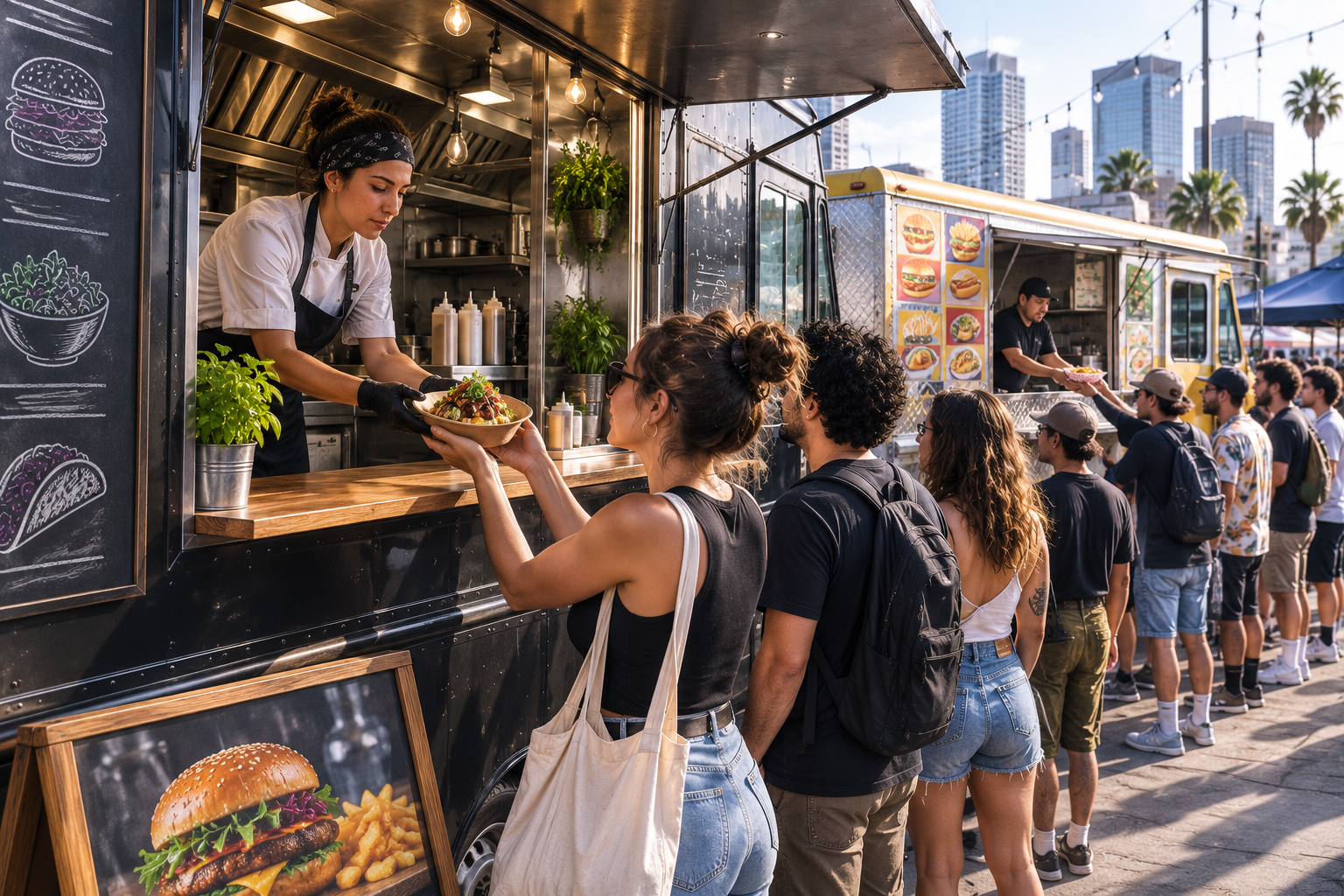
Food trucks were once celebrated as a low-cost gateway for aspiring chefs, offering the freedom to test bold culinary ideas without the financial burden of opening a traditional restaurant. Today, however, that entrepreneurial advantage is increasingly under pressure. Rising permit fees, licensing requirements, insurance costs, and regulatory compliance have transformed what was once an accessible business model into a far more expensive undertaking. Industry voices agree that food trucks continue to enrich local economies and diversify urban dining, but they question whether escalating costs are limiting innovation and excluding new entrants. The debate is no longer about whether food trucks belong in modern cities—it is about whether current regulations still allow them to thrive as engines of creativity and opportunity.
Food trucks were supposed to change the restaurant business.
Lower overhead.
Greater flexibility.
More creativity.
A chance for talented chefs to build a following without committing to expensive leases and permanent premises.
For years, they did exactly that.
Cities embraced mobile kitchens.
Customers queued for everything from gourmet burgers to artisan tacos and fusion street food.
Entrepreneurs discovered they could turn ambitious ideas into viable businesses with relatively modest investment.
But the economics have changed.
Permits have become more expensive.
Licensing requirements have expanded.
Insurance premiums continue to rise.
In some cities, regulatory costs rival—or even exceed—the cost of fitting out the kitchen itself.
That raises an important question:
Are food trucks still the affordable launchpad they were once meant to be, or has regulation quietly shifted the advantage back towards traditional restaurants?
Why This Matters Now
Food trucks have become an established part of urban life.
They create jobs.
Support local suppliers.
Revitalise public spaces.
Offer affordable dining.
And often introduce culinary concepts that later become successful restaurants.
For many aspiring chefs, mobile kitchens remain one of the few accessible routes into the hospitality industry.
Yet operating costs continue to climb.
Today's food truck owners must often budget for:
- Business licences and operating permits.
- Health inspections and compliance costs.
- Commercial vehicle insurance.
- Equipment maintenance.
- Parking and location fees.
- Fuel and operating expenses.
As these costs increase, the financial advantage that once distinguished food trucks begins to narrow.
The debate is no longer about food quality—it is about whether entrepreneurship itself is becoming too expensive to remain mobile.
Expert Perspectives
Cathy Chaplin: Food Trucks Are Incubators for Culinary Innovation
Food writer and editor Cathy Chaplin believes food trucks remain one of the hospitality industry's most important engines of creativity.
"Food trucks provide a unique platform for culinary experimentation."
Without the financial commitment of a permanent restaurant, chefs can test menus, build loyal customers, and refine their concepts before making larger investments.
However, Chaplin argues that increasing regulatory costs threaten that opportunity.
When permits and compliance become prohibitively expensive, fewer entrepreneurs can afford to enter the market.
She believes policymakers should modernise regulations to support, rather than discourage, mobile businesses.
Innovation flourishes when the barriers to entry remain achievable.
Michael Gonsalves: The Numbers Are Becoming Harder to Ignore
Chef and food truck owner Michael Gonsalves offers the perspective of someone navigating these challenges every day.
"When I started, the boom felt like a golden opportunity; now, it's overwhelming."
Annual permit fees, inspections, insurance, and operating expenses have significantly altered the economics of the industry.
What once appeared to be a lower-cost alternative increasingly resembles many of the financial pressures faced by traditional restaurants.
Gonsalves worries that rising costs discourage talented chefs before they ever open their first service window.
Entrepreneurial passion can only overcome financial barriers for so long before the numbers stop working.
Sam Lee: Regulation Shapes More Than Business
Urban development policy expert Sam Lee views food trucks as more than individual businesses.
They are part of a city's broader economic and cultural ecosystem.
"Food trucks are an integral aspect of urban culture."
They contribute to vibrant public spaces, expand dining options, and create opportunities for entrepreneurs from diverse backgrounds.
Lee argues that escalating permit costs disproportionately affect smaller operators and first-time business owners with limited capital.
Rather than restricting growth, he believes city regulations should encourage healthy competition while maintaining appropriate public health and safety standards.
The way cities regulate food trucks ultimately influences who gets the opportunity to participate in local economies.
Editorial Synthesis
Where Experts Agree
Although they approach the issue from different perspectives, the experts share several important conclusions:
- Food trucks remain valuable platforms for culinary innovation.
- Regulatory costs have increased significantly in many cities.
- Mobile food businesses contribute meaningfully to local economies and communities.
- Current regulatory frameworks deserve careful review as the industry evolves.
Where Experts Disagree
Can Food Trucks Remain Financially Sustainable?
Michael Gonsalves questions whether rising operating costs are making the business model increasingly difficult to sustain.
Cathy Chaplin believes policy reform can restore much of the opportunity that originally defined the sector.
How Should Governments Respond?
Chaplin advocates for practical reforms that reduce unnecessary regulatory burdens.
Sam Lee calls for a broader reassessment of how cities balance public oversight with economic accessibility and entrepreneurial diversity.
Is Regulation Protecting the Public or Restricting Innovation?
All three experts acknowledge the importance of health and safety standards.
The debate centres on whether current licensing systems have expanded beyond essential oversight into barriers that discourage innovation and competition.
Why This Matters
Food trucks have always represented more than convenient places to eat.
They embody one of the most accessible forms of small-business entrepreneurship.
Many successful restaurant brands began as modest mobile kitchens.
Many aspiring chefs built reputations by serving neighbourhoods that traditional restaurants overlooked.
If regulatory costs continue to rise faster than business opportunities, that pathway risks becoming increasingly inaccessible.
Consumers may notice fewer independent operators.
Cities could lose culinary diversity.
Entrepreneurs with limited financial resources may decide never to enter the industry at all.
Reasonable regulation remains essential.
Food safety, public health, and consumer confidence depend upon it.
But regulation should also recognise the realities of running a small mobile business.
The strongest food truck ecosystems are often those that protect public standards while still allowing new businesses to emerge and compete.
The future of food trucks will not be determined by customer demand alone. It will depend on whether cities can strike the right balance between safeguarding the public and preserving one of the hospitality industry's most important engines of innovation, opportunity, and local flavour.
Navigating Culinary Dreams on Wheels
The food truck phenomenon represents a thrilling, albeit precarious, chapter in urban dining. These mobile kitchens have democratized gourmet food, allowing chefs to showcase creativity without the high stakes of a permanent location. However, as increasingly burdensome permitting costs threaten this dynamic, we must question the long-term viability of food trucks. While they continue to inject vibrancy into city streets and introduce exciting flavors, the current regulatory environment may stifle the very innovation they aim to promote. The balance between culinary ambition and economic reality needs reassessment to ensure that food trucks remain a vital part of our gastronomic landscape, fostering creativity rather than becoming obsolete under bureaucratic weight.
Cathy Chaplin
Food Writer and Editor
"Food trucks provide innovative dining experiences that democratize high-quality food. They have the potential to thrive despite high permit costs by fostering unique culinary creativity."
in Cathy ChaplinMichael Gonsalves
Chef and Food Truck Owner
"The exorbitant cost of permits is stifling for small food truck owners, limiting their ability to compete with traditional restaurants and ultimately driving quality down in the street food scene."
in Michael Gonsalves
Sam Lee
Urban Development Policy Expert
"While permits are essential for ensuring food safety and urban planning, their costs must be manageable for food trucks to flourish economically. A balanced approach can benefit both sides."
in Sam LeeHow Does This Hit You?
No comments yet. Be the first to weigh in.