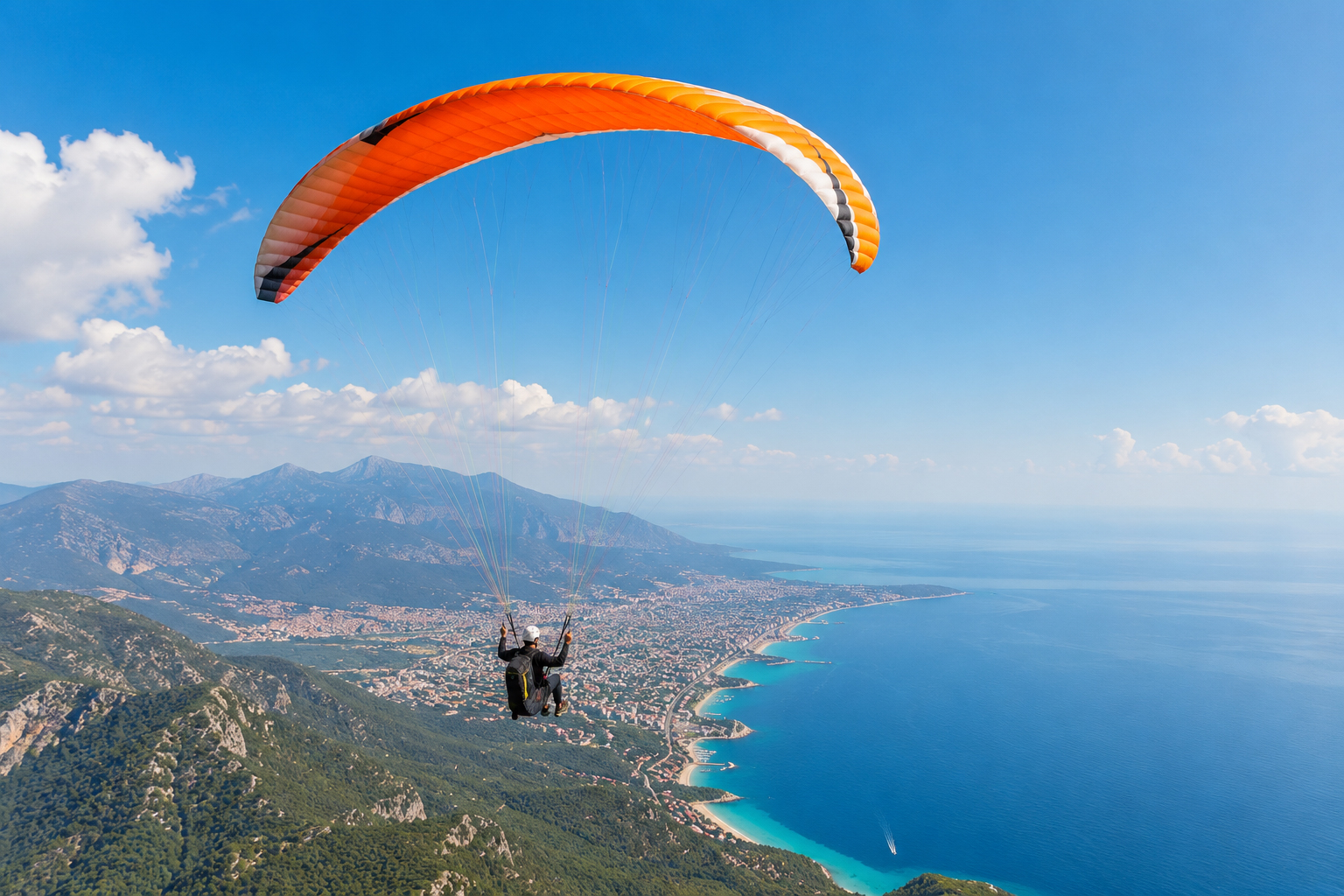
PAGE EXCERPT Paragliding used to be a community of passionate explorers who found each other in the mountains — then commercial tourism arrived and thousands of first-timers started paying for tandem rides. Alan Carr, Maya Johnson, and Tomás Rodriguez debate whether that transformation elevated the sport or quietly hollowed it out.
Paragliding has soared into new heights, literally and figuratively. As commercial tourism expanded over the past decade, a debate has taken root among the sport's pioneers and the newcomers seeking thrills in the skies: How has commercialization impacted the culture and community that originally defined paragliding?
Context
The paragliding industry crossed into commercial territory about ten years ago, transitioning from a niche adventure sport pursued by passionate enthusiasts to a burgeoning tourism sector. With this shift came an influx of pilots, increased demographic diversity, and the establishment of commercial outlets. Yet for many of the early pilots, this transformation raises questions of integrity and authenticity.
Perspective: Commercialization as Progress
Alan Carr, the CEO of Sky Adventures, offers a perspective that favors the commercialization of paragliding, believing that it has opened doors for accessibility and increased safety.
"Commercializing paragliding has made it more inclusive. In the past, you had to know someone to even get started. Now, there are schools and instructors dedicated to teaching newcomers. The growth has resulted in improved safety protocols and better equipment. This progress cannot be overlooked."
Carr emphasizes that commercial enterprises have spurred technological advancements, making the sport more reliable for both novice and seasoned pilots, while increased visibility has brought more funding for safety innovations.
Perspective: The Dance with Degradation
Maya Johnson, a paragliding activist and experienced pilot, offers a contrasting perspective, arguing that the commercial boom compromises the essence of what paragliding was intended to be.
"There's a fundamental difference between flying for the sake of flying and flying for profit. The commercialization has diluted the unique experiences that bonded early pilots. We were explorers at heart, not customers. The industry needs a cultural reset."
Johnson expresses concerns over the commodification of paragliding experiences, noting that many commercial operators prioritize profits over the nuances of the sport. She believes commercialization risks overshadowing safety measures with profit motives, leading to a potential decline in standards as organizations chase the next thrill-seeker.
Perspective: Cultural Analysis
Tomás Rodriguez, a researcher on adventure sports culture, emphasizes the nuanced relationships between commercialism, culture, and participation.
"Paragliding is now caught in a larger conversation about adventure sports culture. While commercialization brings economic opportunities, it often challenges the foundations of subcultures," he explains.
Rodriguez discusses how paragliding reflects the dichotomy within adventure sports — balancing between thrill-seeking and community-building. He suggests that while commercialization can bring in necessary resources, it can also lead to a dilution of local practices, affecting the communal bond originally established among early pilots.
Editorial Synthesis
Where Experts Agree
There is consensus that commercialization has made paragliding more accessible to individuals unfamiliar with the sport. Many agree that commercial interest has prompted advances in safety equipment and protocols. All experts acknowledge a cultural tension between traditionalists and newcomers, stemming from differing motivations for participation.
Where Experts Disagree
While Carr sees commercialization as a beneficial growth measure, Johnson argues that it detracts from the sport's original spirit. Rodriguez argues the sport's evolution reflects larger trends in adventure tourism, while Johnson views it as a concerning degradation of culture. Carr emphasizes the benefits of a profit-driven model, whereas Johnson fears it leads to compromised core values.
Why This Matters
Growth — in both popularity and economics — does not come without its costs. As commercial entities continue to dominate, a critical examination of the values underpinning paragliding culture becomes paramount.
For the sport to thrive sustainably, it will require a collective effort from both commercial operators and dedicated enthusiasts to redefine what paragliding means in our increasingly commercial world. There's room in the sky for both progress and preservation — but only through open dialogue about the future of the sport.
Navigating the Heights: A Paragliding Dilemma
The commercialization of paragliding presents a complex paradox. While increased accessibility and improved safety measures championed by figures like Alan Carr illustrate progress, the concerns raised by veterans like Maya Johnson are equally valid. The soul of paragliding—rooted in a spirit of adventure and camaraderie—risks being overshadowed by profit motives and commodification. As the sport evolves, it is crucial for the community to strike a balance between embracing new participants and preserving the integrity of its culture. Thus, fostering an inclusive environment while respecting the roots of paragliding may be the key to navigating this new frontier. The journey ahead must honor the past while welcoming the future, ensuring that both veterans and newcomers can coexist in the skies responsibly and joyfully.

Alan Carr
CEO, Sky Adventures
"Alan believes that commercial tourism has elevated the visibility and accessibility of paragliding, allowing more people to experience the thrill while ensuring safety through professional training."
𝕏 Alan Carr in Alan Carr
Tomás Rodriguez
Researcher, Adventure Sports Culture
"Tomás emphasizes the complexities of commercialization, acknowledging both the growth it brings to the sport and the potential loss of community and tradition, urging a balanced approach to preservation while embracing change."
𝕏 Tomás Rodriguez in Tomás RodriguezHow Does This Hit You?


No comments yet. Be the first to weigh in.