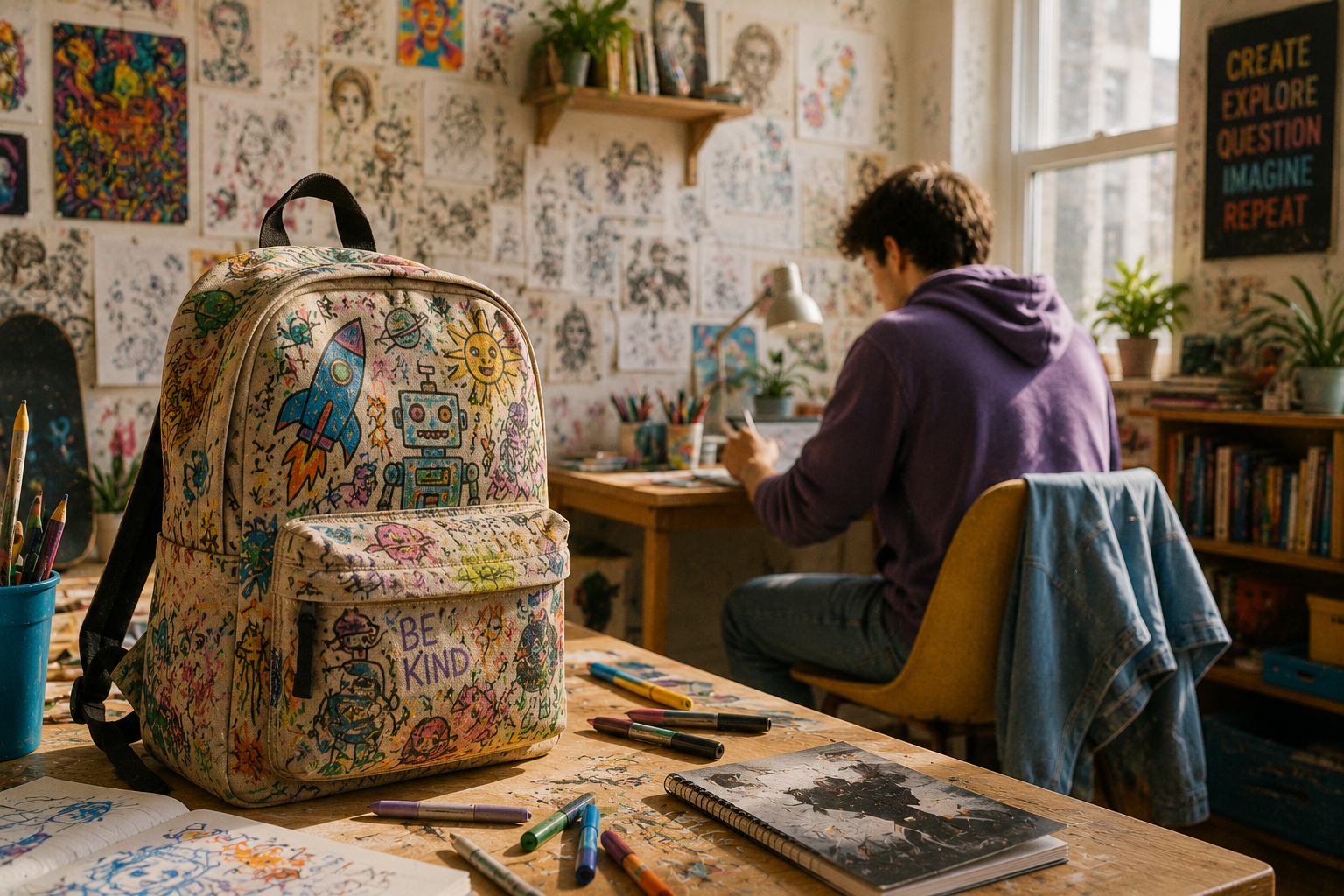
As children, many found their first canvases not in the art room but tucked away in their backpacks. Pens, markers, and pencils transformed plain fabric into vibrant tapestries of imagination. But what becomes of those children who express themselves in unconventional ways? Do they maintain that creativity into adulthood, or does societal structure suppress it?
Why This Matters Now
In an age where creativity is continually lauded yet often relegated to the sidelines of formal education, the narrative of the 'artistic child' is more relevant than ever. With increasing emphasis on standardized testing and quantitative evaluations, the fate of those who colored outside the lines poses a critical question for educators, parents, and policymakers: How do we nurture that innate creativity without stifling it under the weight of conventional expectations?
Perspective: Keri Smith
Keri Smith, the author and artist behind the influential Wreck This Journal, argues for the necessity of embracing creative chaos. "The impulse to draw on everything is rooted in a fundamental desire to engage with the world. Children use drawing as a means of exploration; it's how they process their environments," she asserts. Smith emphasizes that allowing kids this freedom is key to fostering lifelong creativity. "When we tell children to stop doodling or coloring outside the lines, we inadvertently send the message that their creativity is unwelcome."
Furthermore, Smith highlights that the tactile experience of creating is crucial. "The texture of the backpack, the feeling of a crayon against that fabric — these sensory experiences are often as important as the visual outcomes. To create is to exist fully in one's body and environment."
Perspective: David Perkins
Conversely, David Perkins, a professor of education at Harvard University, emphasizes the necessity of balance between creativity and structure in learning environments. "While creativity is undeniably important, it must coexist with discipline and respect for communal spaces. Kids need to understand that their personal expression can sometimes impact the collective environment," he states.
Perkins suggests that while artistic expression should be encouraged, it should be framed within the concept of contextual creativity. "Creativity must not only thrive in isolation; it should also adapt to societal norms and expectations. This could mean guiding children to find appropriate mediums for their expression, such as designated sketchbooks instead of school supplies."
Perspective: Lisa Congdon
Artist and author Lisa Congdon takes a middle ground. She believes that the willingness to create is a vital life skill, yet it shouldn't come at the expense of responsibility. Congdon states, "I've seen firsthand how meaningful art can be for young people, but it's also important for children to learn the social aspects of their actions. They should know when it's appropriate to create and when it's not."
Congdon posits that artistic expressions need platforms. "Rather than squashing creativity, we should be directing it toward more constructive outlets. Teaching children about different contexts can enrich their experiences immensely."
Editorial Synthesis
Where Experts Agree
Creativity is essential for children's development and should be encouraged. There is a need for balance between individual expression and societal norms. Teaching children the importance of context can enrich their creative experiences.
Where Experts Disagree
Smith believes that unrestricted creativity is vital, whereas Perkins advocates for structure as a guiding force. Congdon offers a nuanced approach, suggesting tailored platforms for creativity, while Smith fears this may dampen the fervor of expression.
Why This Matters
The dialogue surrounding the fate of the 'kid who drew on everything' is emblematic of a larger conversation about creativity's role in education and society. As we strive to cultivate innovative minds capable of critical thinking and problem-solving, the journey begins in childhood. The potential for lifelong creativity is vast, but it requires an environment that fosters exploration alongside respect for communal spaces.
Understanding the nuances of how to nurture creativity without limiting expression is paramount. Parents, educators, and the community must unite in creating spaces — both literal and metaphorical — where children can flourish as creative thinkers without losing sight of their role in the collective. The future of creativity in education rests on this delicate balance — inspiring the next generation of innovators who dare to blur the lines of conventionality.
Embracing Creative Expression in Education
In exploring the duality of creativity and structure, we find ourselves at a pivotal moment in education. Keri Smith's call for embracing the creative chaos of childhood is not just a plea for artistic freedom; it's a recognition of the innate human desire to engage with the world through exploration and play. David Perkins reminds us of the importance of structure, yet we must be cautious that this structure does not suffocate the very creativity we seek to cultivate. As educators and policymakers, we bear the responsibility to create environments that nurture creative instincts while still providing a framework for growth. By promoting an educational approach that values both spontaneity and discipline, we empower the next generation to express themselves fully—beyond the borders of their backpacks—and ultimately, to thrive.
Keri Smith
Author and Artist
"Keri advocates for allowing children to express themselves creatively through their surroundings, including their backpacks. She argues that these acts can foster individuality and artistic growth."
in Keri Smith
David Perkins
Professor of Education, Harvard University
"David emphasizes the importance of balancing creative expression with respect for personal property. He believes that while creativity should be encouraged, it must also be coupled with a sense of responsibility."
in David Perkins
Lisa Congdon
Artist and Author
"Lisa argues for setting boundaries around creative expression, suggesting that while it's vital for children to explore, they should also learn the value of respecting shared spaces and community property."
Profile Lisa CongdonHow Does This Hit You?


No comments yet. Be the first to weigh in.