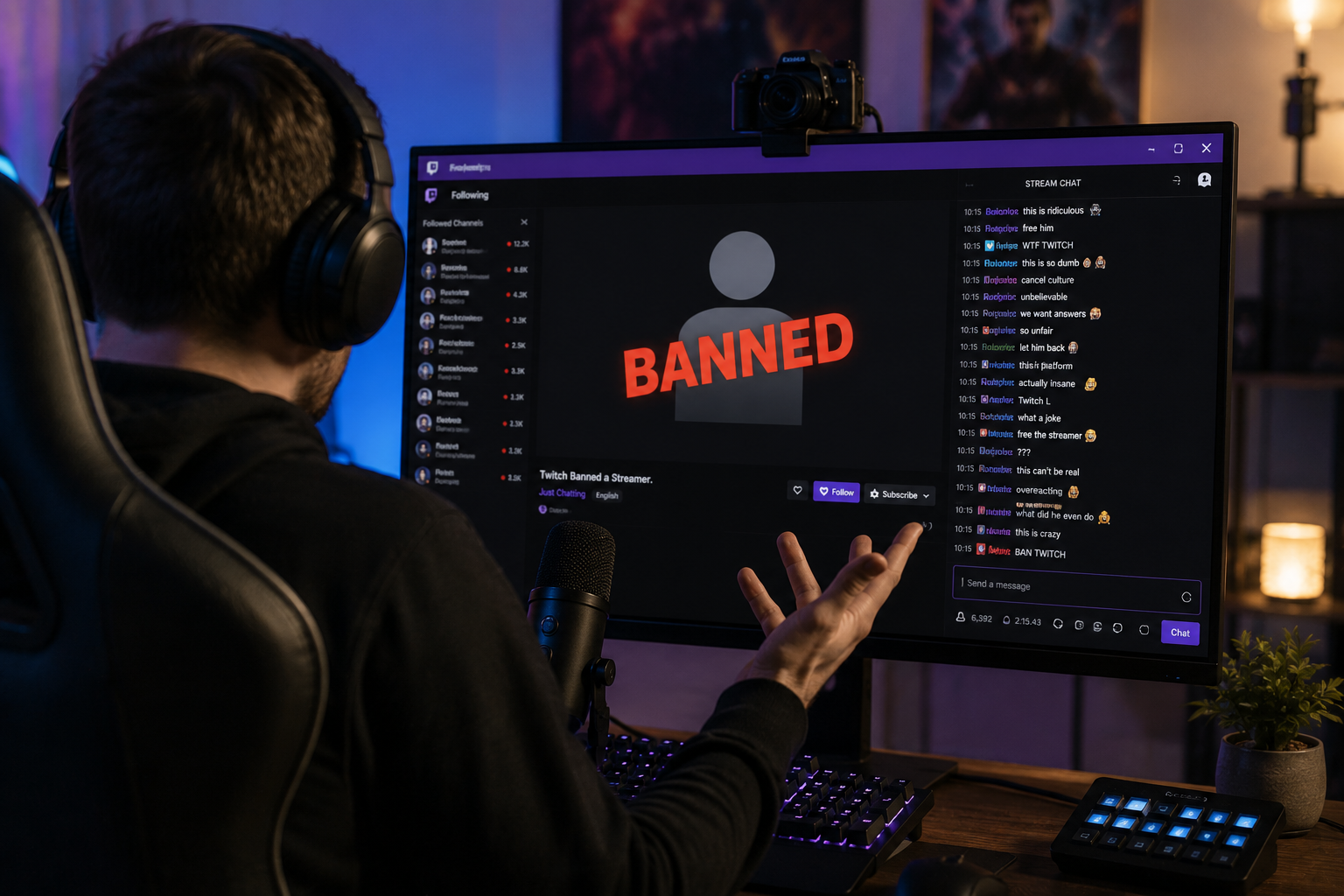
When Twitch banned a popular streamer, millions of users had opinions — and the debate that followed went far beyond one account. Dr. Jillian York, Dr. Ethan Zuckerman, and Rebecca Lewis examine whether digital platforms have the right to define their own culture, and what happens when enforcement feels more like power than policy.
Just a few weeks ago, a prominent Twitch streamer was banned, igniting a firestorm of debate within the platform's community and beyond. The immediate questions that arose were not only about the streamer's actions but also about the boundaries of community standards and platform governance. Does a digital platform like Twitch possess the authority to dictate its community's values, or must it take into account the broader social implications of its actions?
Context: Why This Matters Now
The landscape of digital platforms has been increasingly scrutinized, with numerous high-profile incidents surrounding censorship, community management, and user behavior. Platforms like Twitch, which hosts millions of streamers and viewers, become microcosms of larger societal debates surrounding free expression. As Twitch navigates the complexities of monetization, user engagement, and brand partnerships, the question of who gets to decide cultural norms within these spaces becomes particularly pertinent.
Following the ban, many within the Twitch community argued that the decision was arbitrary and disproportionately punitive. Conversely, advocates for strict community guidelines asserted that platforms must have the authority to protect their environments from hate speech, harassment, or any behavior that contradicts their established values.
Perspective: Academic Analysis of Platform Governance
Dr. Jillian C. York, a leading voice at the Electronic Frontier Foundation, argues that while platforms do hold the right to establish community guidelines, the enforcement of such policies must be transparent and fair. "Platforms like Twitch have to set rules that reflect the ethos of their communities, but when enforcement seems arbitrary or disproportionately punitive, it raises flags about who is actually being protected," she states. York emphasizes that sweeping bans can alienate user bases and incite a backlash that undercuts community equity.
Dr. Ethan Zuckerman from the MIT Center for Civic Media emphasizes the need for platforms to maintain a cultural narrative. "Every platform implicitly shapes its culture through the rules it sets — Twitch is no exception. However, the challenge lies in balancing enforcement with a commitment to free expression," he points out. Zuckerman advocates for a system where users have input into community standards, thereby fostering a more collaborative culture within these digital spaces.
Rebecca Lewis from Data & Society echoes both experts but brings a sociological lens to the dialogue. "Censorship and moderation are not just technical decisions; they are deeply cultural ones. What does it mean for a platform to ban a popular figure? It signifies a cultural stance which can resonate far beyond the app itself." Lewis stresses the need to involve a diverse range of voices in conversations about moderation policies, as cultural implications can be widespread, affecting community relationships and user retention.
Editorial Synthesis
Where Experts Agree
Platforms such as Twitch have the right to define their community standards based on their values and user experiences. The enforcement of rules must be transparent and consistent to maintain user trust. Censorship and moderation are deeply cultural issues that transcend mere technical policy.
Where Experts Disagree
The extent to which platforms should adapt to fast-evolving community sentiments is debated, with differing views on whether user feedback should impact moderation policies. The balance between community protection and free expression can be subjective, leading to disagreements on how strict or lenient policies should be.
Why This Matters
The banning of the streamer is more than just a localized incident; it is a reflection of the broader dynamics of power, culture, and communication within digital platforms. With millions of users engaging on platforms like Twitch, each decision can set precedents that influence the overall culture of the internet.
As communities come together to express their grievances, it becomes increasingly vital for platforms to engage transparently with users, incorporating feedback and fostering a culture of collaboration. The incident demonstrates the fragility of online spaces, where the values of moderation can shift dramatically based on community sentiment.
Ultimately, a platform's right to define its culture must be balanced with the responsibility to listen to user feedback and evolving societal standards. The Twitch incident serves as a critical case study in digital governance — showcasing the intricate web of relationships between participants, platforms, and the values they each represent.
Key Statistics
73% of Twitch users express belief in fair moderation practices. 65% of streamers support user-inclusive policy-making. And 50% feel that censorship diminishes community engagement.
Navigating the Fine Line of Cultural Authority
As digital platforms like Twitch grapple with defining their community standards, it’s clear that accountability and transparency must be at the forefront of their governance. While it is within Twitch's rights to enforce guidelines, the reactions to the recent ban illustrate a deep-seated need for a participatory dialogue between the platform and its users. A balance must be struck that respects cultural nuances and the freedom of expression while safeguarding the community against harmful behaviors. Ultimately, a platform's credibility hinges on its ability to foster an inclusive culture where users feel heard and valued, fostering trust in its governing processes.

Dr. Jillian C. York
Director of International Freedom of Expression, Electronic Frontier Foundation
"Platforms like Twitch must maintain control over their community standards to foster safe and positive environments. While freedom of expression is vital, platforms have an obligation to enforce rules that reflect their values and protect users."
𝕏 Dr. Jillian C. York in Dr. Jillian C. York
Dr. Ethan Zuckerman
Director, MIT Center for Civic Media
"While platforms have the right to enforce their rules, it's crucial to consider the implications of banning content and the impact it has on community culture. A balanced approach recognizing both platform rights and user freedoms is essential."
𝕏 Dr. Ethan Zuckerman in Dr. Ethan Zuckerman
Rebecca Lewis
Researcher, Data & Society
"Users should have the right to define their own cultures without excessive interference from platforms. Banning streamers can stifle creativity and community building, emphasizing the need for inclusive policies that empower users."
𝕏 Rebecca Lewis in Rebecca LewisHow Does This Hit You?



No comments yet. Be the first to weigh in.