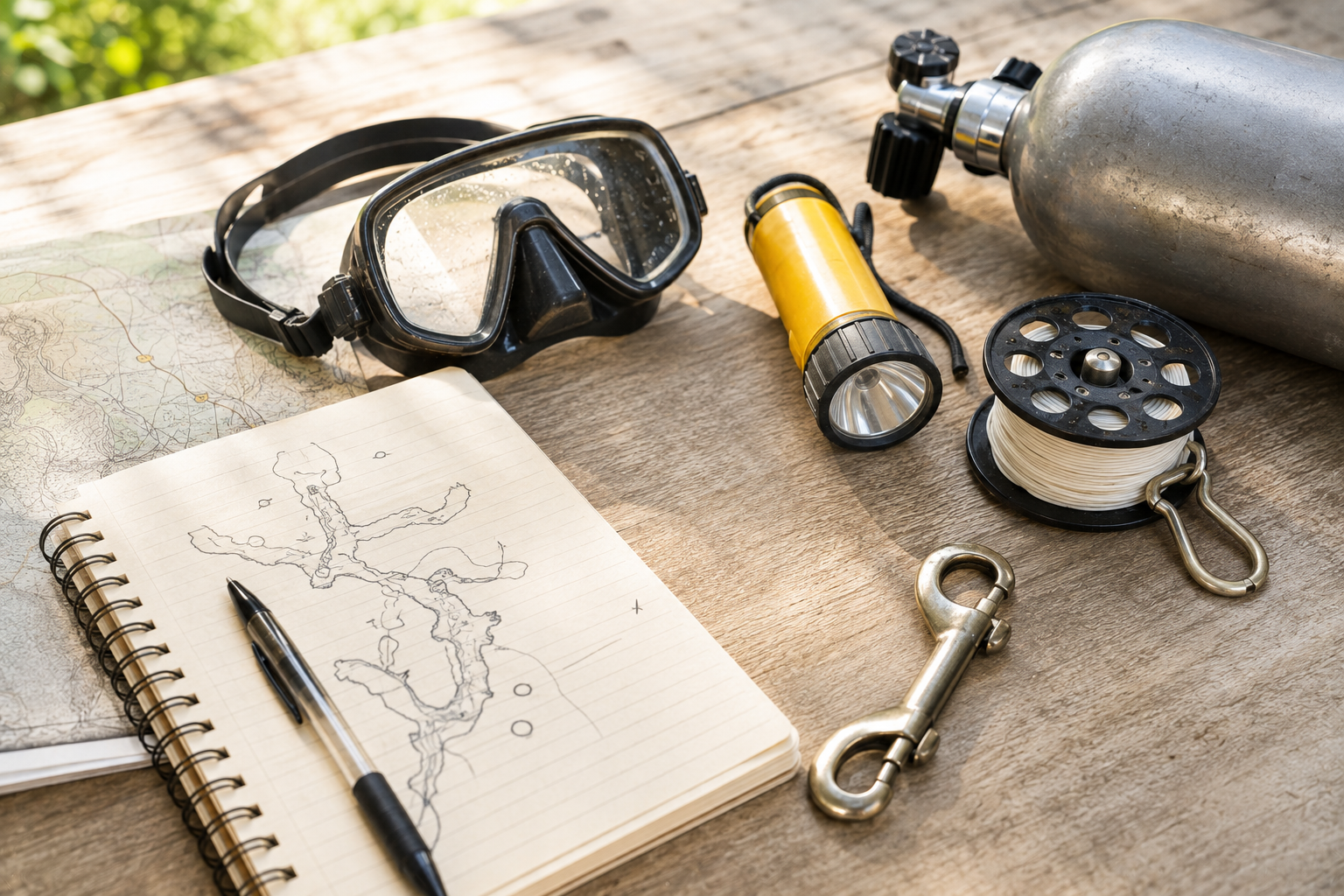
Cave diving is one of the most demanding forms of underwater exploration, combining extreme environmental hazards with little room for error. Its lack of a centralized governing body raises an ongoing debate: should the sport remain largely self-regulated, or would stronger training standards and oversight save lives? Experts broadly agree that preparation, community knowledge, and personal responsibility are essential, but differ on how much formal regulation cave diving actually needs. The challenge is finding a balance between preserving the spirit of exploration and taking the sport's extraordinary risks seriously.
Cave diving, often heralded as the ultimate test of human endurance and skill, has a dark side that raises crucial questions about risk, regulation, and the human spirit. Why does this exhilarating sport, which carries extreme risks, exist in an arena largely devoid of sponsors, medals, or a central governing body? And is that very obscurity what keeps it honest?
Context: A Sport in the Shadows
As the popularity of adventure sports rises, cave diving remains an anomaly—an often-overlooked discipline overshadowed by its more mainstream counterparts. Fatalities in cave diving have prompted ongoing conversations about safety protocols, training, and risk management. As more adventurers venture into underwater caves, the need to consider whether additional regulation could protect lives without undermining the unique spirit of exploration becomes increasingly important.
The Risks and Rewards
Dr. Richard Harris, a cave diving expert and anaesthetist, emphasizes the inherent dangers associated with diving in overhead environments. Cave diving combines multiple risks—depth, darkness, limited visibility, and restricted air supply—with very little room for error. Human error, inadequate preparation, and panic can turn an already difficult environment into a life-threatening situation.
While Harris believes in the community's capacity for self-regulation, he advocates for rigorous training frameworks to mitigate risk.
Cave diving requires a deep commitment to safety protocols. However, the sport also thrives on the challenge that danger presents. Additional regulations could potentially create a false sense of security if they encourage divers to underestimate the environment rather than develop the skills required to survive it.
Alex Brylski, an outdoor adventure guide, recognizes that the cave-diving community often operates independently. Without a single governing body, training practices and standards can vary between organizations and individuals.
This independence can foster a strong sense of community, but it can also create dangerous inconsistencies when divers overestimate their abilities or venture beyond their training.
At the same time, that very uncertainty is part of the attraction. The adrenaline, isolation, and feeling of exploring an unknown environment continue to draw people toward the sport.
The Scientific Lens
Dr. Maria Terzi, a marine biologist and underwater researcher, offers another perspective.
Cave diving isn't simply about recreation; it can also contribute to scientific discovery. Submerged cave systems can contain valuable ecological, geological, and archaeological information that would otherwise remain inaccessible.
Yet scientific exploration does not eliminate the risks.
The unpredictable nature of underwater caves makes disciplined preparation particularly important. Researchers have an obligation to prioritize safe methods when conducting expeditions, even when the goal is discovery.
A more organized structure could potentially improve safety while facilitating scientific exploration. At the same time, excessive regulation could discourage independent divers who are motivated by exploration rather than institutional objectives.
Editorial Synthesis
Where Experts Agree
The experts broadly agree on several points:
- Cave diving involves significant risks, particularly when training and preparation are inadequate.
- Community knowledge and personal responsibility play an important role in keeping divers safe.
- Better training and safety standards could reduce preventable accidents.
- Greater regulation could improve safety, but it could also change the culture that makes cave diving distinctive.
Where Experts Disagree
The disagreement centers primarily on how much structure the sport actually needs.
Harris and Brylski emphasize better training and stronger community-led safety practices, while Terzi sees additional value in organized exploration, particularly for scientific research.
There is also a philosophical difference.
Should cave diving remain a largely self-regulated pursuit where experienced participants assume responsibility for their own risk?
Or should the increasing popularity of the sport lead to more formal standards and oversight?
Why This Matters
Cave diving occupies a precarious space between adventure and survival.
Its limited formal regulation can be viewed as both a strength and a weakness. The absence of a centralized authority preserves the independence and exploratory character of the activity, but it can also leave room for inconsistent training and dangerous decisions.
As new participants become interested in the sport, the balance between risk and responsibility becomes increasingly important.
Despite its dangers, cave diving offers extraordinary opportunities for exploration, scientific discovery, and encounters with environments that few people will ever see. The attraction of the unknown is powerful—but so are the consequences of underestimating it.
The future of cave diving may therefore depend less on choosing between complete freedom and strict regulation and more on finding a middle ground: preserving the spirit of exploration while making rigorous training, preparation, and risk awareness impossible to ignore.
The challenge is not to eliminate the danger that defines cave diving. It is to ensure that participants understand that danger well enough to respect it.
Navigating the Shadows: The Dilemma of Cave Diving
Cave diving embodies a unique paradox: a sport that thrives in obscurity, yet teeters on the edge of mortality. While the absence of a governing body may indeed foster an environment of authenticity and raw exploration, it also raises significant concerns about safety and accountability. As interest grows in this perilous endeavor, the community must grapple with the prospect of implementing training standards without stifling its adventurous spirit. Striking a balance between rigorous safety measures and the inherent thrill of risk is critical. Embracing a more structured training framework could preserve the sanctity of cave diving while also safeguarding the lives of those drawn to its depths. Ultimately, the vitality of this sport may depend on its ability to adapt without compromising its core values, ensuring that the promise of discovery does not come at the cost of individual lives.

Dr. Richard Harris
Cave Diving Expert, Anaesthetist
"Dr. Harris emphasizes that while cave diving is an incredibly risky sport, the lack of formal oversight is a double-edged sword. It fosters a dedicated community, but also leaves participants vulnerable without established safety protocols."
𝕏 Dr. Richard Harris in Dr. Richard Harris
Alex Brylski
Outdoor Adventure Guide
"Brylski argues for greater regulation in cave diving, stating that increased oversight would help reduce fatalities by enforcing safety standards and improving training for newcomers in the sport."
𝕏 Alex Brylski in Alex Brylski
Dr. Maria Terzi
Marine Biologist, Underwater Researcher
"Dr. Terzi believes that the absence of a governing body allows divers to pursue their passion without constraint, which is essential in maintaining the spirit of adventure that makes cave diving unique—all while encouraging personal responsibility and informed decision-making."
𝕏 Dr. Maria Terzi in Dr. Maria TerziHow Does This Hit You?



No comments yet. Be the first to weigh in.