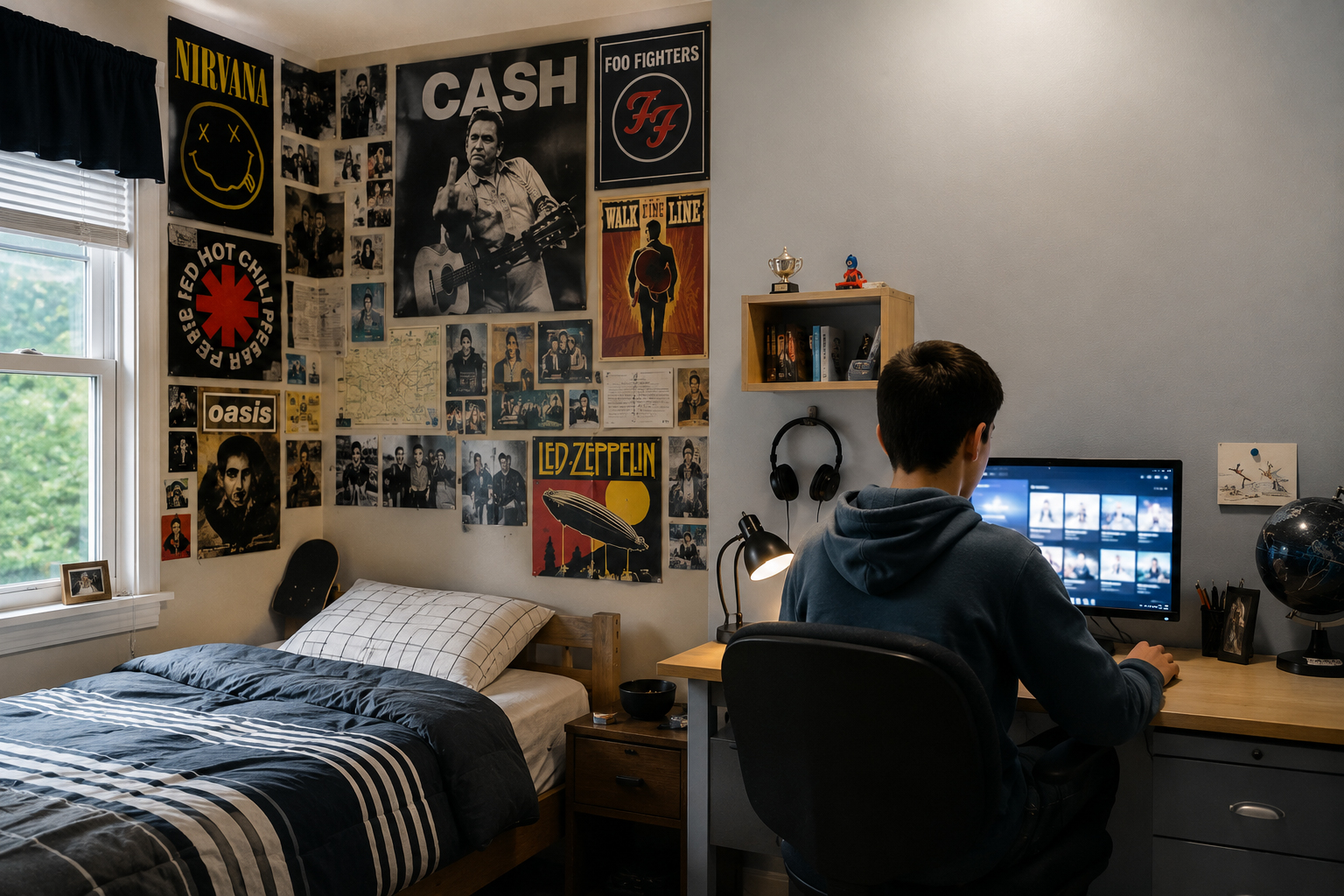
The bedroom wall used to tell you everything about a kid — band posters, sports heroes, magazine cutouts. Now there's just a glowing screen. Sherry Turkle, David Smith, and Lenore Skenazy explore what children lose when personal space stops being personal, and whether the digital bedroom can ever replace what hung on the wall.
What do childhood bedrooms symbolize in a rapidly digitizing world? Once a sanctuary adorned with posters and cherished artifacts, a child's private space is now increasingly dominated by screens. As the tactile, immediate experience of personal expression wanes, experts explore what has been lost in this transition: the essence of creativity, connection, and self-identity.
Context
In a landscape where children grow up with unprecedented access to technology, understanding the implications of this shift from tangible to digital has never been more vital. The transition from posters of pop icons and personal memorabilia to digital screens reflects broader societal changes in childhood experience, identity formation, and social interaction. Increased screen time, often linked to various health and cognitive concerns, calls for a critical examination of what children are losing in their bedroom spaces — and, by extension, in their developmental journeys.
Perspective: The Loss of Tangible Expression
Sherry Turkle, an MIT professor renowned for her work on technology and personal relationships, underscores the importance of physical spaces in shaping identity. In her view, the lack of posters represents a diminished opportunity for children to curate their environments. "Posters allow for a kind of conversation with oneself — that visual cue that reflects dreams, aspirations, and influences. Without that, kids lose a way of processing who they are," Turkle argues.
Turkle emphasizes that digital screens, while providing a flood of information and connectivity, lack the personal touch that posters once represented. The immediacy of social media and curated feeds replaces deeper introspection and self-expression, potentially robbing children of a vital experiential layer of growth.
Perspective: Navigating New Technologies
From the insights of David D. Smith, CEO of Kids Tech, the narrative shifts towards a more adaptive understanding of technology's role in childhood. Smith believes that, rather than framing this transition solely as a loss, it offers a new platform for engagement. "Screens can encourage creativity too. Kids today are not just passive consumers; they are creators in their own right through videos, podcasts, and digital art," he states.
However, Smith acknowledges that the challenge lies in moderation and ensuring that screens become tools rather than replacements for basic, hands-on experiences. He stresses the importance of finding balance between digital and physical engagement.
Perspective: Safety and Freedom
Lenore Skenazy, founder of Let Grow, advocates for a more nuanced conversation regarding childhood independence and safety in the digital age. Although she acknowledges a palpable loss as children engage less with the off-screen world, she suggests it might also represent a shift in parenting and social expectations. "Parents are more concerned about safety than ever, leading to overly cautious behavior that discourages kids from exploring their environment — leaving less room for them to express themselves in the way they did with posters," Skenazy explains.
Skenazy's argument presents an intriguing dichotomy: while children may have more creative tools at their disposal digitally, they are also facing greater restrictions from caregivers wary of the outside world. Thus, the screens in a child's room can serve as both a window to creativity and a barrier to personal exploration.
Editorial Synthesis
Where Experts Agree
All experts recognize a fundamental shift in how children curate their personal spaces. Each acknowledges that screens can offer new forms of creativity but emphasize different drawbacks related to this shift. The combination of parental control and safety concerns heavily affects children's freedom of exploration, reducing engagement with the physical world.
Where Experts Disagree
Turkle views the digital transition primarily as a loss of personal touch and introspection, while Smith offers a more optimistic adaptation perspective. Skenazy focuses on the implications of safety concerns from parenting trends affecting creative expression, diverging from the narrative of technological impact alone.
Why This Matters
The evolution from posters on bedroom walls to screens illuminates crucial conversations about childhood development and identity formation. As children navigate a digitally dominated landscape, the challenge lies in striking a balance that fosters creativity while nurturing a sense of self that is often mirrored in the personal spaces they occupy.
While the absence of physical posters may reflect a loss, it also opens the door for discussion on how to shape digital experiences that reflect and celebrate individuality. The key question remains: how can we ensure that our children are not just consumers of content but active creators of their own narrative?
Reclaiming the Heart of Childhood Spaces
As we navigate a digitized world, it's essential to recognize what has been lost in the shift from posters to screens. Childhood bedrooms—once vibrant reflections of identity and aspiration—have become dominated by the sterile glow of electronics. This transition signifies more than just a change in decor; it represents a deeper loss of opportunity for personal reflection and creativity. Experts like Sherry Turkle remind us that tactile expressions not only foster individuality but also nurture emotional growth and self-awareness. While screens offer undeniable connectivity, they can hinder the intimate conversations children once had with their walls. Moving forward, it's vital to encourage a rebalancing of these spaces, integrating both digital and tangible elements that allow for personal expression and introspection. By reclaiming the essence of our childhood sanctuaries, we can help nurture well-rounded, emotionally healthy individuals in an increasingly virtual world.
Sherry Turkle
Professor of Social Studies of Science and Technology, MIT
"Turkle believes that while screens offer convenience, they detract from meaningful personal connections and the creative expression that posters once facilitated in childhood bedrooms."
𝕏 Sherry Turkle in Sherry TurkleDavid D. Smith
CEO, Kids Tech
"Smith argues that screens offer children new avenues for engagement, creativity, and expression, allowing them to connect and share in ways that traditional posters could not."
𝕏 David D. Smith in David D. SmithLenore Skenazy
Author and Founder, Let Grow
"Skenazy advocates for a balanced approach, emphasizing the need for both digital engagement and traditional forms of expression like posters, to foster a well-rounded childhood experience."
𝕏 Lenore Skenazy in Lenore SkenazyHow Does This Hit You?



No comments yet. Be the first to weigh in.