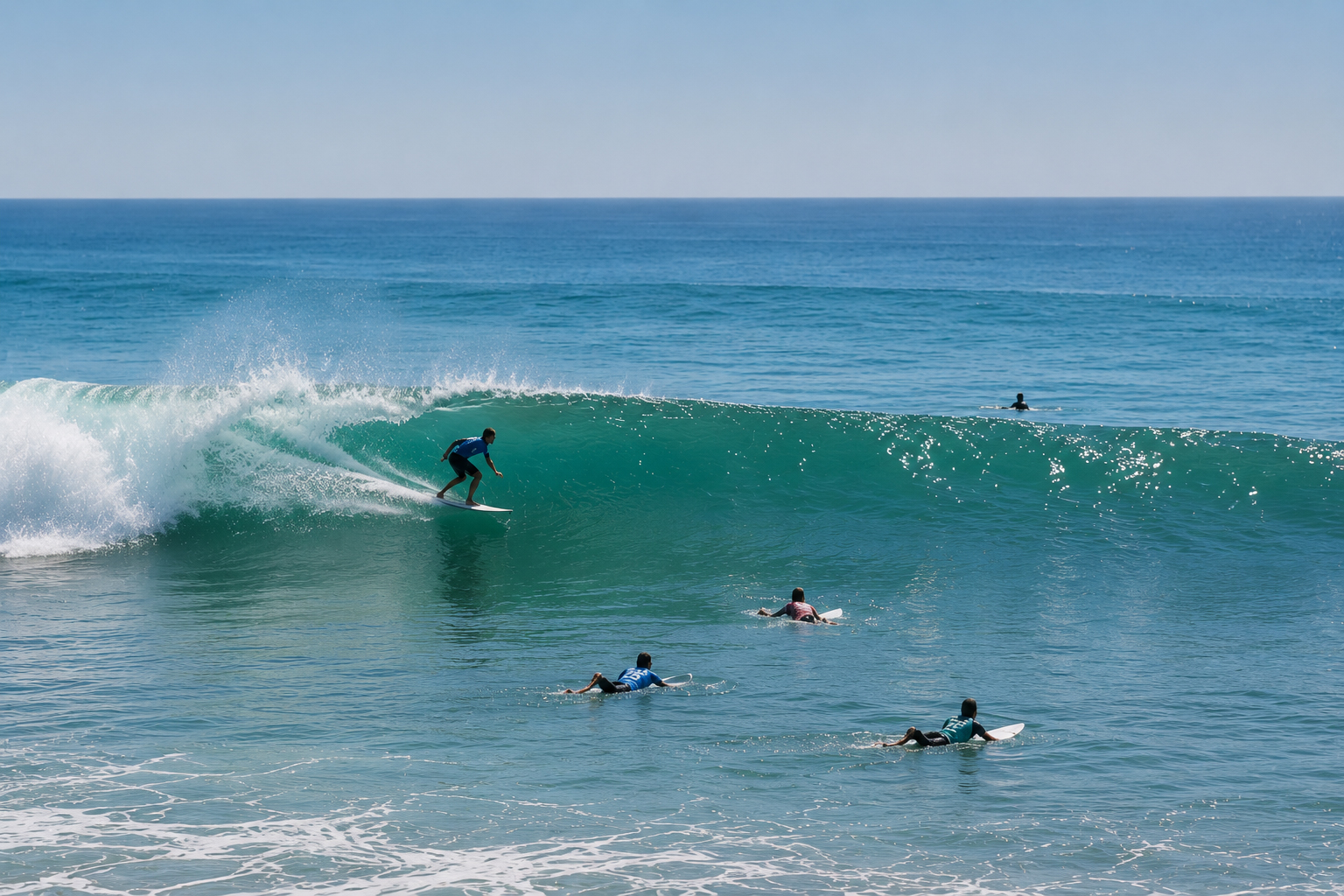
The ocean doesn't run on a twenty-minute clock — but competitive surfing heats do. Kelly Slater, Tom Carroll, and Dr. Jason Schubert debate whether the current heat format genuinely captures the best surfing, or whether a rigid time limit is quietly working against the unpredictable nature of the sport itself.
Competitive surfing heats typically last twenty minutes, but as the ocean ebbs and flows outside of designated timeframes, one wonders: is the current format hampering the potential for fair competition? The ocean is a dynamic environment where conditions can change rapidly and unpredictably.
Context: Why This Matters Now
With the re-emergence of surfing in the Olympic Games and increased global attention on competitive surfing, there is renewed focus on how the sport is structured. Top competitors frequently express frustration about the format, questioning whether the twenty-minute heat effectively captures their skill level or the conditions available.
Perspective: Kelly Slater
Kelly Slater, the revered professional surfer and multiple-time world champion, believes that the heat format requires reevaluation. "Surfing is inherently unpredictable, even more so than any other sport. Relying on a strict twenty-minute limit doesn't always showcase the best surfers or the best performances. Some days, the ocean's conditions are perfect, while other days, they are simply chaotic."
Slater advocates for a more fluid approach, suggesting that heats should be extended based on conditions and the surfers' performance throughout the day — creating a format that adapts to nature and reflects surf culture more authentically.
Perspective: Tom Carroll
Former world champion Tom Carroll supports Slater's view but adds a nuanced perspective regarding the mental aspects of surfing under strict formats. "Competing in a timed heat can induce unnecessary pressure, forcing surfers to prioritize quantity over quality. We need to create an environment where surfers can express their potential without the burden of time constraints."
Carroll advocates for experimental formats that allow surfers more freedom to choose when to ride and how long to surf within flexible parameters — bringing out the best in competitors rather than the fastest decisions.
Perspective: Dr. Jason Schubert
On the academic side, sport science researcher Dr. Jason Schubert brings forward data and empirical evidence. "The twenty-minute format could compromise surfers' performance and lead to fatigue, especially in bigger swells or more challenging conditions. Studies show that athletes perform optimally within certain time frames." When conditions warrant longer heats, allowing surfers to utilize their physical and cognitive skills effectively could yield better results.
Dr. Schubert emphasizes a more scientific approach toward structuring heats that aligns with real-world conditions, prioritizing both physical performance and strategy.
Editorial Synthesis
Where Experts Agree
The current twenty-minute heat format does not always reflect the unpredictability of the ocean. Allowing for adjustments in heat length could elevate the quality of performances. The mental pressure of timed heats can limit a surfer's ability to showcase their talent effectively.
Where Experts Disagree
Slater advocates for a completely fluid format, while Carroll suggests tentative experimentation with a range of formats. Dr. Schubert focuses on empirical evidence, emphasizing that longer heats could lead to fatigue — while others argue for overall flexibility over strict adherence to time.
Why This Matters
The discussion around the competitive surfing heat format is pivotal for the future of the sport. It calls into question not only how surfers are evaluated but also how the essence of surfing is captured in competition settings. The ocean does not adhere to schedules — and perhaps it's high time for the sport to acknowledge that reality in its competitive formats.
As the dialogue continues, stakeholders must weigh the advantages of tradition against the call for innovative progress, ensuring that competitive surfing remains both true to its roots and fitting for its future.
Rethinking the Heat Format: A Call for Adaptability
As competitive surfing finds its place on a global stage, the current twenty-minute heat format merits a serious reevaluation. The ocean, unpredictable by nature, often disregards arbitrary timeframes, creating imbalances in showcasing a surfer's true potential. Icons like Kelly Slater and Tom Carroll highlight the need for an adaptable format that prioritizes quality over quantity, allowing surfers to express their skills fully while remaining attuned to environmental conditions. A shift towards a more dynamic structure—where heats adjust based on wave quality and surfer performance—could redefine the competition, making it not just fairer, but a more authentic representation of surf culture. A change is necessary for surfing to evolve in tandem with its growing audience and status as an Olympic sport.

Kelly Slater
Professional Surfer & 11-Time World Champion
"The current heat format encourages quick decision-making and strategic surfing, which reflects the dynamic nature of the sport. It allows surfers to showcase their skills in a controlled environment while still maintaining the excitement of the ocean."
𝕏 Kelly Slater in Kelly Slater
Tom Carroll
Former World Champion Surfer
"The twenty-minute heat format restricts surfers by creating unnatural limits that don’t reflect the ocean’s unpredictability. This structure often leads to missed opportunities for showcasing true talent and creativity."
in Tom CarrollHow Does This Hit You?



No comments yet. Be the first to weigh in.