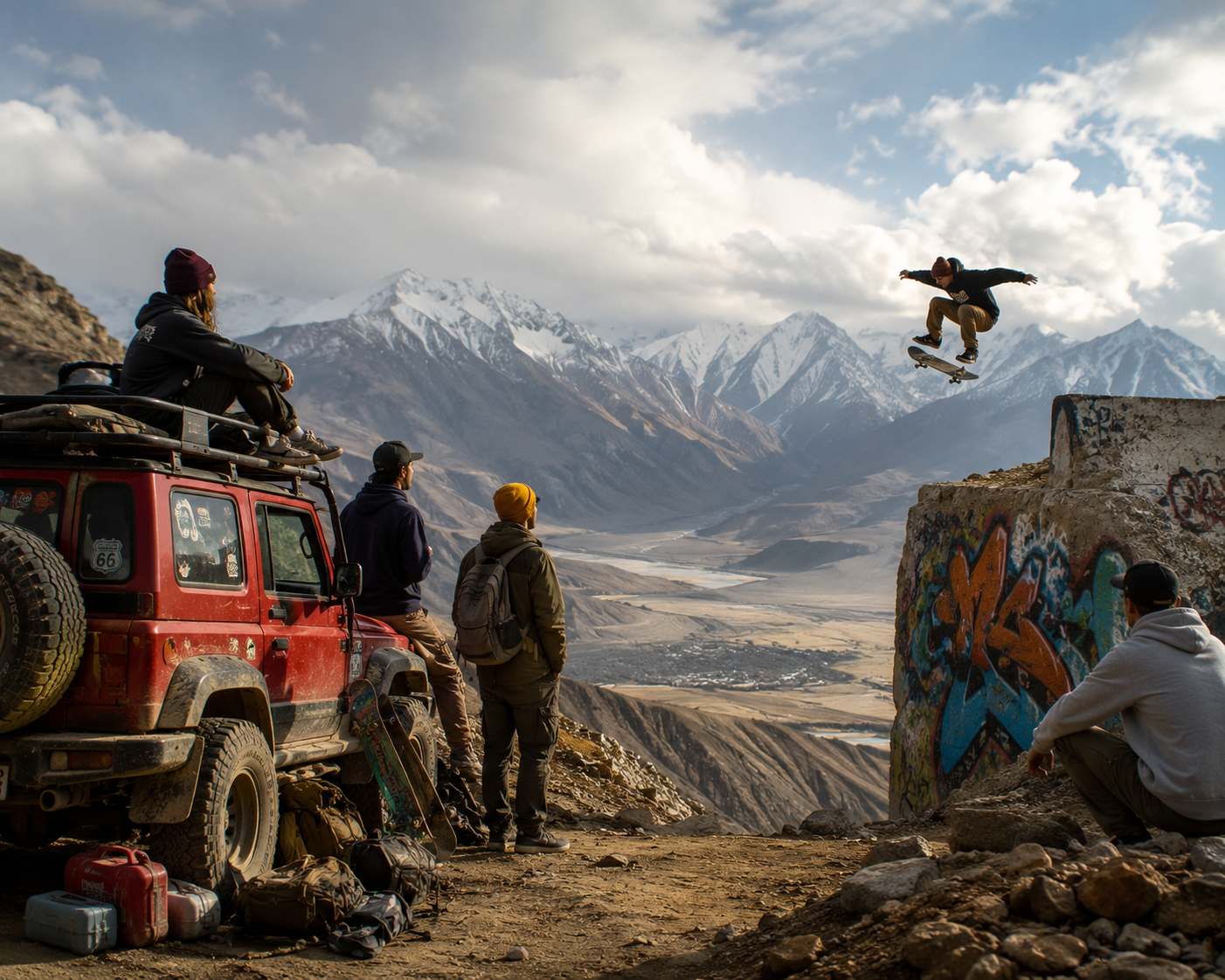
For many extreme sports athletes, the greatest challenge is not mastering a difficult trick or surviving a demanding environment—it is finding a community that understands why they pursue these activities in the first place. In countries where adventure sports remain niche or culturally misunderstood, enthusiasts often travel abroad in search of mentorship, infrastructure, and belonging. Yet returning home can be unexpectedly difficult, as new perspectives collide with longstanding social expectations. Experts agree that extreme sports possess the power to transform individuals and communities alike, but they differ on whether those changes are readily embraced. The journey ultimately becomes about more than sport; it is a story of identity, cultural adaptation, and the enduring human search for acceptance.
For many athletes, progress comes from training harder.
For others, it requires moving somewhere entirely different.
When local communities lack skateparks, climbing gyms, whitewater rivers, mountain trails, or experienced mentors, passionate athletes often face a difficult decision.
Stay and pursue their sport alone.
Or leave in search of a place where their passion is understood.
Across the world, countless participants in skateboarding, climbing, surfing, mountain biking, and other adventure sports have followed that path.
They return with sharper skills.
Broader perspectives.
Lifelong friendships.
Yet many also discover that coming home is more complicated than leaving.
Finding an extreme sports community is often easier than finding a place where that community fits comfortably within local culture.
Why This Matters Now
Extreme sports are becoming increasingly global.
International competitions.
Social media.
Affordable travel.
Online coaching.
These developments have made it easier than ever to discover communities beyond national borders.
At the same time, acceptance varies dramatically from one society to another.
In many places, adventure sports remain associated with:
- Unnecessary risk.
- Financial irresponsibility.
- Youthful rebellion.
- Lifestyle rather than legitimate athletic pursuit.
Where infrastructure is limited and cultural support is scarce, athletes frequently look overseas for opportunities to develop both their abilities and their sense of belonging.
The search for better training often becomes a search for identity and community.
Expert Perspectives
Dr. Lisa T. Ritchie: Cultural Acceptance Shapes Participation
Sport sociologist Dr. Lisa T. Ritchie argues that participation in extreme sports is influenced as much by culture as by athletic ability.
"In many cultures, extreme sports are often viewed through a lens of skepticism."
Family expectations, social norms, and concerns about safety can discourage participation long before practical barriers arise.
According to Ritchie, communities gradually evolve as more people engage with these sports.
Over time, activities once viewed as unconventional can become recognised parts of local identity.
"As communities begin to embrace extreme sports, the very fabric of local identities changes."
For many athletes, the desire to belong becomes a powerful motivation to seek environments where their passion is understood.
Acceptance often develops slowly, but cultural attitudes can change through sustained participation and visibility.
Mark Jenkins: Adventure Stories Inspire Cultural Change
Adventure sports journalist Mark Jenkins focuses on the power of personal experience.
"Extreme sports can be a double-edged sword."
While some communities perceive adventure sports as reckless, others see them as expressions of creativity, resilience, and freedom.
Jenkins believes athletes who travel abroad frequently return with more than technical skills.
They bring confidence.
New perspectives.
Different coaching methods.
Perhaps most importantly, they bring stories that encourage others to imagine new possibilities.
"They often bring back new techniques or styles, but what's more valuable is the sense of hope."
For Jenkins, individual experiences can become catalysts for wider cultural acceptance.
Stories often change perceptions long before institutions do.
Emily R. Cheng: Returning Home Can Create New Challenges
Cultural anthropologist Emily R. Cheng offers a more cautious perspective.
"When individuals return from pursuit of extreme sports, there can be a disconnect between their experiences and those of their communities."
Returning athletes sometimes discover that the people around them cannot fully relate to what they experienced abroad.
Skills acquired elsewhere may be admired.
The lifestyle itself may not be.
Cheng notes that reintegration can involve unexpected feelings of isolation, particularly when communities continue viewing extreme sports as unusual or unnecessary.
Experiences celebrated internationally may remain difficult to understand locally.
Belonging requires more than shared geography—it requires shared cultural understanding.
Editorial Synthesis
Where Experts Agree
Although they approach the subject differently, the experts identify several common themes:
- Cultural attitudes strongly influence participation in extreme sports.
- Many athletes leave home in search of supportive communities and better opportunities.
- Extreme sports have the potential to reshape local perceptions over time.
- Community plays a central role in sustaining long-term participation.
Where Experts Disagree
What Happens After Athletes Return?
Dr. Ritchie and Mark Jenkins emphasise the positive influence returning athletes can have on their communities.
Emily R. Cheng argues that reintegration is often more complicated, with cultural misunderstandings and feelings of isolation remaining significant obstacles.
How Are Extreme Sports Primarily Viewed?
Jenkins highlights adventure sports as vehicles for freedom, creativity, and personal expression.
Ritchie focuses on the reality that many societies continue to frame these activities primarily through concerns about safety and risk.
Why This Matters
Extreme sports are about far more than physical performance.
They create friendships.
Communities.
Shared identities.
A sense of purpose that often extends well beyond competition.
For athletes living in places where these sports remain uncommon, the search for community can require leaving familiar surroundings in pursuit of acceptance elsewhere.
That journey frequently transforms not only technical ability but also personal identity.
Returning home, however, introduces a different challenge.
Athletes must reconcile two worlds—the community that shaped them and the one they hope to strengthen.
Sometimes they become pioneers who inspire new participants.
Sometimes they remain caught between cultures that understand different parts of who they have become.
Both experiences are part of the same story.
The greatest legacy of extreme sports may not be found in records, medals, or remarkable feats of courage. It may be found in the communities they create—communities that remind people they are not alone in pursuing passions that once seemed impossible, and that every emerging scene begins with someone willing to return home and build what they once had to leave to find.
Bridging Cultures Through Adventure
The journey of those returning from extreme sports abroad highlights the necessity for cultural evolution in how we perceive risk and adventure. As globalization introduces these thrilling activities to regions where they were once considered taboo, we see the formation of new communities that blend traditional values with modern pursuits. It is crucial to foster environments where such passions are not only accepted but celebrated. While some aspects of our identities and traditions may feel lost in this transition, the opportunity for growth and connection through extreme sports can reinvigorate local cultures. By embracing these changes, societies can develop a more nuanced understanding of adventure, allowing for greater personal expression and community bonding. The journey might be fraught with challenges, but the adventurers' tales serve as a guiding light, illuminating paths that may one day reshape our collective identity.
Dr. Lisa T. Ritchie
Sport Sociologist
"Dr. Ritchie argues that the globalization of extreme sports has fostered community and belonging, particularly for youth seeking identity in shared passions. She believes that bringing back this culture can positively influence those who miss out on these experiences domestically."
in Dr. Lisa T. Ritchie
Mark Jenkins
Adventure Sports Journalist
"Mark Jenkins emphasizes the importance of cultural sensitivity when integrating extreme sports into previously untouched communities. He advocates for careful consideration of local traditions while introducing new activities to ensure they enhance rather than disrupt existing social structures."
in Mark Jenkins
Emily R. Cheng
Cultural Anthropologist
"Emily Cheng cautions against viewing extreme sports as universally beneficial. She argues that while they can foster community, they also risk alienating those not involved in the activities, highlighting the need for inclusive practices in their promotion."
in Emily R. ChengHow Does This Hit You?

No comments yet. Be the first to weigh in.