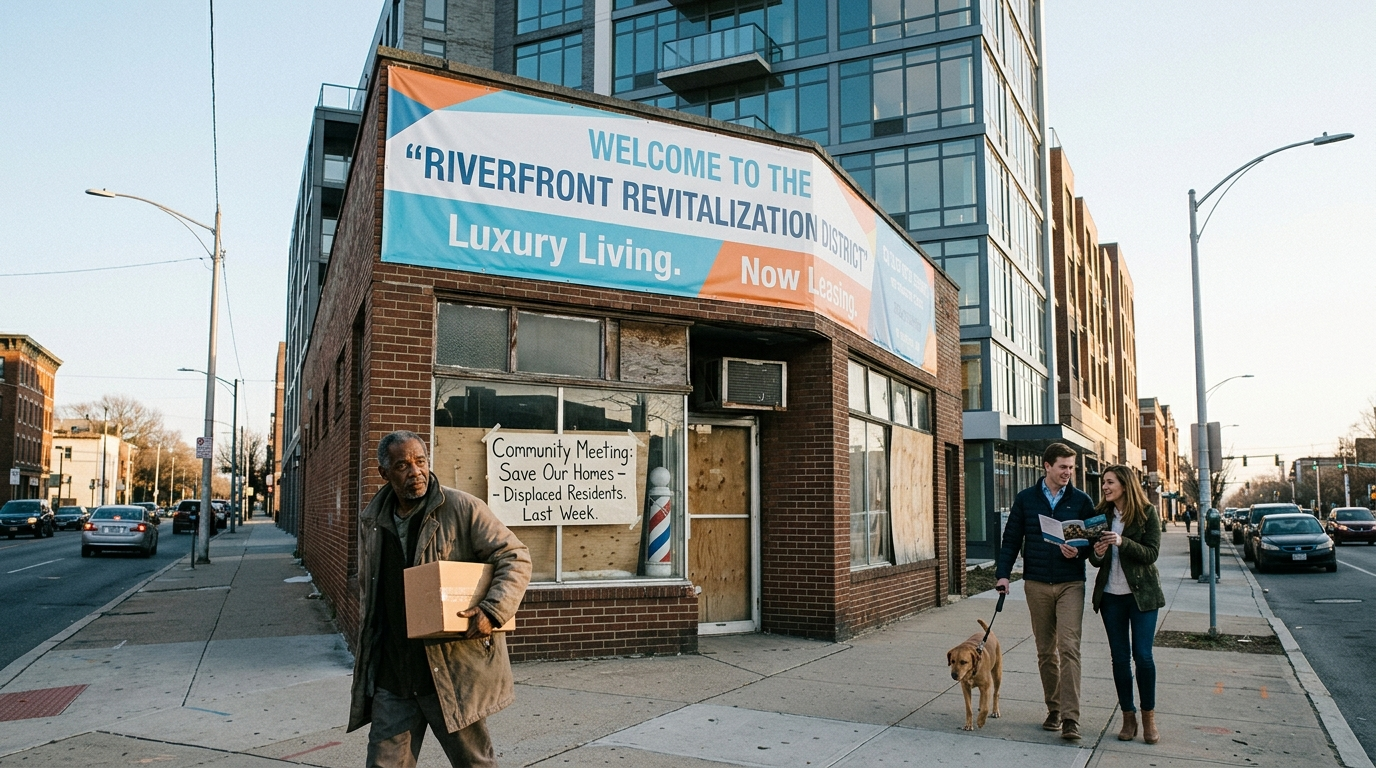
Cities stopped calling it gentrification and started calling it revitalization — but the displacement didn't stop, just the language describing it. Richard Florida, Megan McCracken, and Sharon Zukin debate whether that rebranding reflects a genuine shift in approach or just makes it easier to erase communities without saying so out loud.
How do communities evolve while maintaining their identity? In urban settings across the United States, the phenomenon formerly known as gentrification has undergone a linguistic and conceptual rebranding into what many now call revitalization. But this shift raises crucial questions: Who benefits from this rebranding? And who gets left behind in the rhetoric of development?
Context
This discussion is particularly urgent as cities grapple with housing shortages, economic inequalities, and cultural preservation. The term revitalization promises economic growth and community improvement, yet it often conceals the social repercussions of displacement and cultural erasure — complicating the dialogue surrounding urban development.
Perspective: Richard Florida
Richard Florida, an influential urban studies theorist, argues that revitalization is essential for the sustainability of urban communities. "Cities need to attract a diverse range of people and industries to thrive," he asserts, seeing revitalization as an opportunity to inject life into stagnant urban areas and stimulate local economies.
However, Florida acknowledges that this process can lead to harmful outcomes if not managed properly. "We must balance growth with accessibility; otherwise, we risk creating enclaves that cater only to the affluent." He supports policies that foster inclusive growth, promoting mixed-income housing and community land trusts as potential solutions.
Perspective: Megan McCracken
In stark contrast, community advocate Megan McCracken articulates the darker implications of revitalization. "When urban planners use the term revitalization, it often equates to erasing existing communities — especially those that are low-income or communities of color," she argues.
McCracken emphasizes that revitalization often prioritizes aesthetics over the lived realities of existing residents. "Many residents are not consulted during planning processes, which leads to decisions that do not reflect their needs or desires." She challenges Florida's view, suggesting that revitalization is more about the interests of real estate developers than the needs of local communities — calling instead for policies that genuinely engage residents.
Perspective: Sharon Zukin
Sociologist Sharon Zukin provides a historical lens through which to understand today's revitalization efforts. "The narrative of revitalization has been recycled over the decades, but the underlying implications often remain unchanged — the displacement and disenfranchisement of existing residents," she explains.
Zukin highlights that the language of revitalization serves as a facade for deeper systemic issues in urban planning. "What we often see is a cultural commodification that elevates attractions like coffee shops and art galleries while ignoring the displacement of families who have lived there for generations." She argues for policies that acknowledge and repair the harms caused by gentrification.
Editorial Synthesis
Where Experts Agree
Economic growth can be beneficial for urban communities if managed correctly. Revitalization poses a risk of displacement for low-income and marginalized populations. Community engagement is critical for ensuring that development reflects the needs and desires of residents.
Where Experts Disagree
Florida sees revitalization as necessary for sustainability, while McCracken views it as often detrimental for existing communities. Zukin suggests that the process must be critically examined, emphasizing the cultural implications often overlooked by developers and urban planners.
Why This Matters
The debate surrounding revitalization versus gentrification is more than semantic — it fundamentally represents differing ideologies on urban development and community welfare. The rebranding of gentrification to revitalization may silence the voices of those most affected by these changes.
It is crucial for policymakers, urban planners, and community advocates to engage in meaningful dialogue that prioritizes inclusivity and acknowledges the existing cultural fabric of neighborhoods — ensuring that all residents have a genuine stake in the future of where they live.
Revitalization or Displacement? A Call for True Community Inclusivity
The rebranding of gentrification to revitalization raises significant ethical dilemmas that cannot be ignored. While Richard Florida highlights the economic benefits, his vision often overlooks the lived experiences of those displaced in the name of development. As Megan McCracken rightly points out, the promise of revitalization frequently masks systemic inequalities, leaving vulnerable populations in the lurch. For urban growth to be genuinely beneficial, it must prioritize the voices and needs of long-standing residents. This calls for a comprehensive approach that balances economic development with preservation of community identity and accessibility. Policies such as mixed-income housing and community land trusts should not merely be box-checking exercises but foundational elements of urban planning that address the root causes of displacement and foster inclusivity. Only by challenging the narrative around revitalization can we strive for urban spaces that uplift all inhabitants, not just the privileged few.

Richard Florida
Urban Studies Theorist
"Florida argues that revitalization can lead to economic growth and improved living conditions if done inclusively, allowing neighborhoods to thrive without displacing long-time residents."
𝕏 Richard Florida in Richard Florida
Megan McCracken
Community Advocate
"McCracken contends that the term 'revitalization' often glosses over the detrimental effects of gentrification, emphasizing the need for genuine community involvement in urban development decisions."
𝕏 Megan McCracken in Megan McCrackenSharon Zukin
Sociologist and Author
"Zukin believes in the importance of understanding both the opportunities and challenges gentrification presents, advocating for a nuanced approach that considers all community voices."
in Sharon ZukinHow Does This Hit You?


No comments yet. Be the first to weigh in.