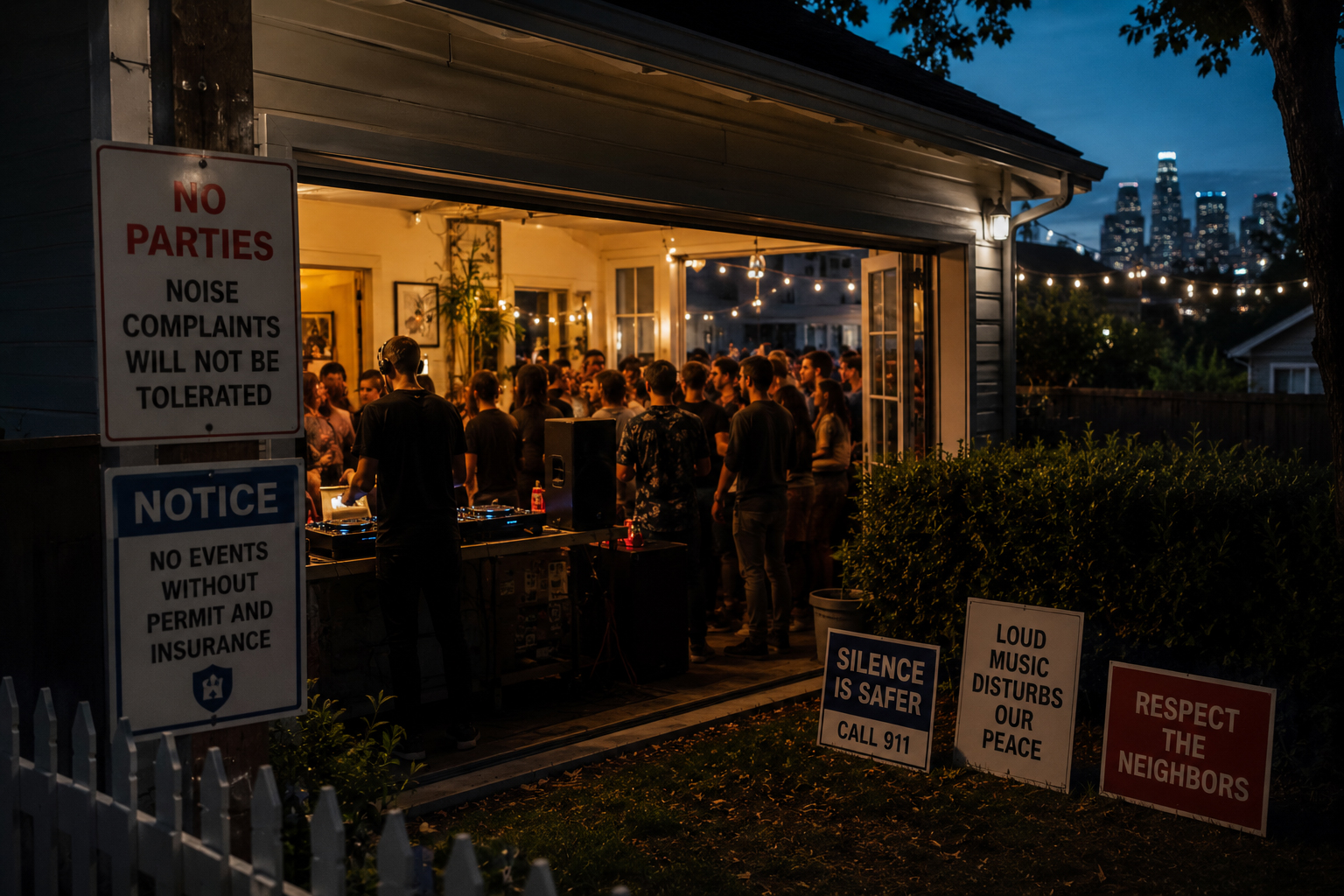
House parties used to be where DJs cut their teeth — testing sounds, reading crowds, building a following before they ever stepped foot in a real venue. Now noise complaints and liability rules are shutting that scene down. Kaskade, Anna Lunoe, and Mark Knight debate where new talent goes to grow if that crucible disappears.
In an era when music festivals reign supreme and clubs boast advanced sound systems designed for the masses, it raises an important question: Where do new DJs find their footing in an increasingly regulated and commercialized scene? House parties were once the crucible where many DJs honed their craft and connected with audiences. Yet, tightening regulations surrounding noise complaints and insurance liabilities are creating barriers that threaten this essential pathway.
Context: The Changing DJ Landscape
As music consumption shifts toward streaming platforms, many live music experiences have struggled to adapt. Venues face escalating costs and red tape, while the underground party culture, which thrived on spontaneity and community, is increasingly seen as problematic.
Perspective: Kaskade
Kaskade, a stalwart in the electronic music community, emphasizes the importance of informal spaces in an artist's journey. "House parties provided a unique platform where DJs could experiment with their sound, receive immediate feedback, and build a local fanbase before stepping into larger venues," he notes. He argues that these settings are irreplaceable learning grounds that encourage a sense of community. The disappearance of these spaces could lead to a homogenization of sound, as aspiring DJs may only work in more formal environments where risk-taking isn't as encouraged.
Perspective: Anna Lunoe
Australian DJ and producer Anna Lunoe focuses on the emotional aspect. She remembers her early days, saying, "House parties were like a rite of passage for many artists. They were intimate and electric, full of anticipation and spontaneity." According to Lunoe, these settings not only foster creativity but also allow artists to connect deeply with their audience. "The loss of such venues means that the personal journey of building a following through trial and error is at stake," she contends.
Perspective: Mark Knight
In contrast, Mark Knight, founder of Toolroom Records, acknowledges the necessity of regulations but calls for a balanced approach. "Yes, there are issues with noise complaints and liability, yet it doesn't mean house parties should completely disappear," he states. Knight advocates for a middle ground — where local governments can create frameworks that support grassroots events without compromising community standards.
Editorial Synthesis
Where Experts Agree
House parties are essential for new artists to build skills and a local following. The informal setting of house parties fosters creativity and experimentation. There is a need for a nuanced approach to regulations to protect local communities while supporting budding artists.
Where Experts Disagree
Kaskade and Lunoe argue that losing house parties diminishes the cultural fabric of the DJ community, while Knight believes adaptation is key. The degree of flexibility in regulations is also contested — Knight suggests accommodating approaches, while Kaskade and Lunoe prioritize entirely unencumbered spaces for creativity.
Why This Matters
As DJs become increasingly reliant on digital platforms for exposure, the importance of live, grassroots events becomes more pronounced. Without house parties, new artists lose the avenue for genuine connection and development that has historically been pivotal in shaping the electronic music landscape.
The story unfolds around the intersection of creativity, community, and regulation, raising questions about how the industry can adapt without losing touch with its heart. Navigating this changing landscape requires dialogue, innovation, and a commitment to preserving the essence of what made electronic music vibrant and community-driven.
The Decline of House Parties: A Heartbeat Missing from Dance Music's Evolution
As we navigate a music landscape dominated by commercial venues and large festivals, the elimination of house parties not only stifles the growth of local talent but also risks flattening the diverse sonic palette that defines electronic music. The sentiments expressed by Kaskade and Lunoe resonate deeply with the core of our community; these informal gatherings were crucibles of creativity and connection where aspiring DJs honed their craft. The regulatory pressures facing house parties underscore a profound shift that threatens grassroots culture, limiting opportunities for experimentation and the organic development of new artists. It is in these intimate settings that the next wave of electronic music innovators can flourish, and without them, we might find ourselves yearning for the raw, authentic experiences that once characterized the dance music scene. Preserving these spaces should be a collective priority, ensuring that the heartbeat of our community remains vibrant and alive.
Kaskade
DJ/Producer
"Kaskade advocates for the return of local venues as a breeding ground for new talent, emphasizing that intimate house parties have historically allowed DJs to connect directly with crowds. He argues that limiting these venues undermines the grassroots nature of music culture and stifles emerging artists."
𝕏 Kaskade in KaskadeAnna Lunoe
DJ/Producer
"Anna Lunoe acknowledges the challenges posed by insurance and noise complaints, but believes artists can adapt by utilizing new technologies and platforms. She emphasizes the need for innovative solutions that can both preserve local music culture while addressing legal and urban concerns."
𝕏 Anna Lunoe in Anna LunoeMark Knight
DJ/Producer, Toolroom Records Founder
"Mark Knight emphasizes the need for regulations and structures that can help new artists thrive legally. He believes that while house parties provided an avenue for exposure, legal frameworks should evolve to create safer environments for artists to showcase their talents."
𝕏 Mark Knight in Mark KnightHow Does This Hit You?


No comments yet. Be the first to weigh in.