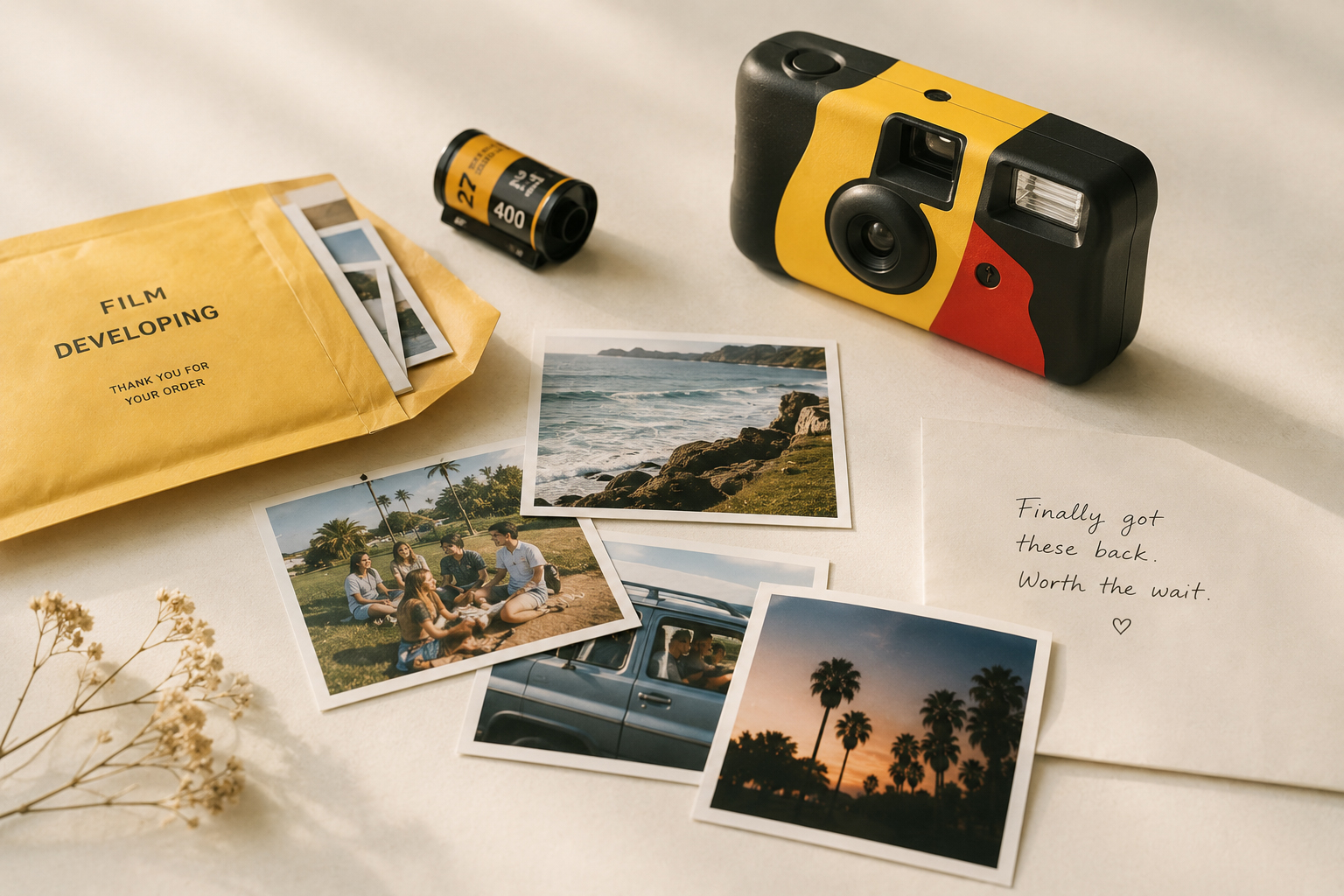
You used to drop off a disposable camera and wait a week to find out if the photo was even any good. Now you see it the instant you press the button. Annie Leibovitz, Peter Koutek, and Jeff Bridges debate whether that waiting period was part of the magic of photography, or just a limitation we're better off without.
Did the instant gratification of digital photography diminish the anticipation and magic that once defined the photographic experience? Disposable cameras, with their inherent delay, transformed photography into a meditative practice, forcing users to wait a week to see if their captured moments were worthwhile.
Context
With the proliferation of smartphones equipped with high-quality cameras, the way we capture and share images has undergone a seismic shift. Social media platforms encourage immediate uploads, changing our relationship with photography from one of anticipation to one of instant gratification. But as we snap away without second thought, the question arises: have we lost something magical along the way?
Perspective: Celebrating Anticipation
Annie Leibovitz, the iconic photographer known for her captivating portraits and storytelling, argues that anticipation is a fundamental aspect of photography's emotional weight. "When you take a picture with a disposable camera," she explains, "you become more intentional with each shot. You think about the composition, the moment, and what that photograph will mean — because you know you'll have to wait to see the result."
Leibovitz describes the period of waiting as a time for reflection, allowing photographers to gain a deeper appreciation for their craft. "This delay creates a narrative — what was the mood, the environment? You're not just clicking away; you're engaging with the moment," she notes.
Perspective: The Value of Instant Results
On the other hand, technology journalist Peter M. L. Koutek contends that instant results have democratized photography, making it more accessible to the masses. "With digital cameras and smartphones, anyone can become a photographer," Koutek asserts. "The immediacy allows for experimentation and playful exploration, whereas disposable cameras can feel limiting."
Koutek acknowledges the nostalgia surrounding disposable cameras but posits that the changes in technology reflect an evolution rather than a degradation of the art form. "Forcing people to wait can be beautiful, but it's not the only way to capture the magic of a moment," he argues.
Perspective: The Poetry of Waiting
Filmmaker and photographer Jeff Bridges finds a middle ground in the debate. He reflects on his own experiences with both instant and delayed photography, noting, "There's something poetic about waiting for the moment to unfold. When you take a picture and realize you have to wait a week, it connects you to that moment in a different way."
Bridges appreciates the slow development of an image, suggesting that it offers an opportunity to relive the moment. "The beauty of film photography is in that anticipation," he asserts, pointing to the emotional attachment that the waiting period fosters — giving photography a sentimental value that instantaneous results may lack.
Editorial Synthesis
Where Experts Agree
All three experts recognize the emotional connection photography fosters — whether through waiting or immediate feedback. There's agreement that both disposable and digital photography serve different purposes, with each having its own merits and drawbacks. Photography is an art form that evolves with technology, prompting artists to explore various dimensions of their craft.
Where Experts Disagree
Leibovitz believes that anticipation enriches the emotional depth of photography, while Koutek argues for the advantages of immediacy and accessibility. Koutek views the rapid feedback loop as an opportunity for experimentation, while Bridges appreciates the nostalgia and storytelling aspects associated with waiting.
Why This Matters
The intersection of anticipation and instantaneity in photography reflects broader cultural shifts towards immediacy in the digital age. While instant results may offer a new framework for creativity, the allure of waiting taps into the intrinsic desire for meaning and memory-making, reminding us that sometimes the journey is just as significant as the destination.
By contemplating these perspectives, photographers and enthusiasts alike can navigate their own approaches to creativity — striking a balance that honors both the magic of waiting and the experiences that instant results can deliver.
Rekindling the Anticipation: The Need to Slow Down
The journey of photography has undeniably evolved, but the nostalgia for the magic of anticipation associated with disposable cameras cannot be dismissed. As the fast-paced digital world continues to reshape our photographic experiences, we must remind ourselves of the depth that comes from waiting. Embracing moments of reflection fundamentally enhances our connection to the art of photography, transforming a mere snapshot into a cherished narrative. By acknowledging the value in delays, we can cultivate a more meaningful and intentional approach to capturing memories, allowing us to appreciate not just the final image but the journey to it. This call for mindfulness in our photographic practices fosters an emotional resonance that today’s immediate gratification often overlooks.
Annie Leibovitz
Legendary Photographer
"The anticipation inherent in waiting for film to develop creates a unique emotional connection with the photograph. It transforms each shot into an experience, adding layers of meaning that instant photography cannot replicate."
𝕏 Annie Leibovitz in Annie LeibovitzPeter M. L. Koutek
Technology Journalist
"Instant photography allows for immediate feedback and creativity, enabling photographers to experiment without the constraints of delay. This democratization of photography fosters innovation and accessibility, making the art form more inclusive."
𝕏 Peter M. L. Koutek in Peter M. L. KoutekJeff Bridges
Filmmaker and Photographer
"Both instant gratification and the anticipation of film provide different experiences of photography. While one fosters exploration, the other cultivates a deeper appreciation; a balance of both can enhance the art form."
𝕏 Jeff BridgesHow Does This Hit You?
No comments yet. Be the first to weigh in.