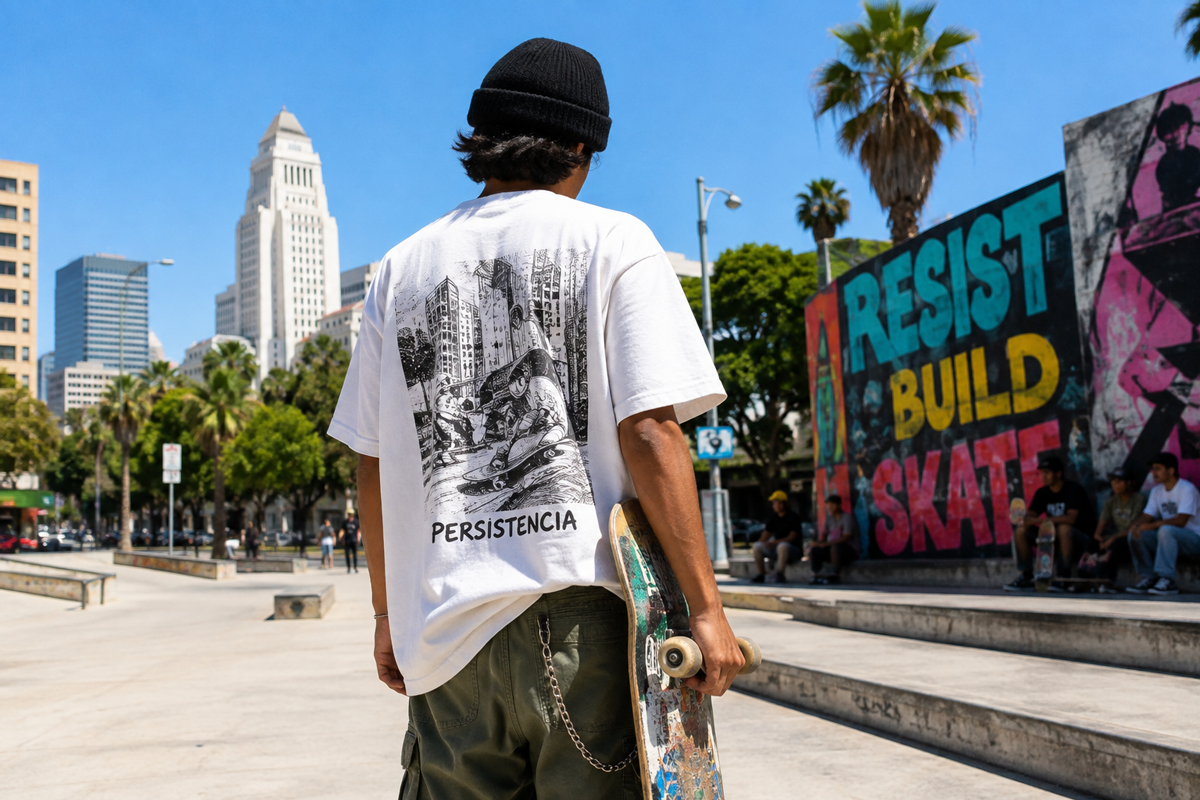
Skateboarding has often been treated as vandalism rather than culture, sport, or community. But in cities where governments have attempted to restrict it, skate communities have challenged that narrative through activism, grassroots organizing, and collaboration with urban planners. Their experience reveals how a marginalized activity can move from the fringes of public life into recognized, legitimate spaces.
How Skate Culture Overcame Government Opposition: A Community's Journey
Skateboarding is often seen as an act of rebellion—a graffitied canvas on concrete landscapes. But what happens when that rebellion is met with governmental disapproval, branding it as vandalism rather than an avenue for expression?
This question encapsulates the struggle faced by skate communities worldwide, particularly in regions where their passion is legally stifled. In the face of restrictive regulations, how did one community turn the tide and legitimize skate culture?
Why This Matters Now
The circumstances surrounding skateboarding are evolving, especially as cities grapple with increasing urbanization and the desire for more lively public spaces.
In many regions, skateparks are now recognized as legitimate recreational areas that contribute to the quality of urban life. Yet there are still places where government opposition and cultural misunderstanding cause skateboarding to be viewed primarily as vandalism or a public nuisance.
That makes the stories of communities that have rewritten this narrative particularly important.
The transformation is not simply about building skateparks. It is about changing who gets to belong in public space.
Tony Hawk: Skateboarding as Community Building
Professional skateboarder Tony Hawk emphasizes the combination of athleticism, creativity, and community that defines skateboarding.
For Hawk, skateboarding is not simply about performing tricks. It is also a means of building community and expressing identity.
His experience suggests that local government policies can either strengthen or dismantle these communities. When cities treat outdoor spaces as legitimate venues for sports and gatherings, the narrative changes.
Skateboarders stop being framed primarily as people damaging public property and begin to be understood as participants in community life.
Hawk therefore emphasizes dialogue with urban planners and local authorities. Creating appropriate spaces does more than accommodate skateboarders—it can reduce conflict by giving communities places where they can practice, gather, and organize legally.
Nora Vasconcellos: Grassroots Activism as a Tool for Change
Professional skateboarder and activist Nora Vasconcellos approaches the issue from a grassroots perspective.
She argues that skateboarding can provide young people with safe spaces for conversation, connection, and self-expression. From this perspective, skate culture is not merely something governments need to regulate; it can also become a partner in addressing community and public-space issues.
Vasconcellos emphasizes the importance of small victories.
A new legal spot.
A community meeting.
A skatepark proposal.
A successful partnership with a local organization.
Each achievement can weaken the stigma surrounding skateboarding and create momentum for the next one.
Her argument is ultimately about cultural legitimacy: communities change perceptions by demonstrating their value rather than simply demanding recognition.
Michael K. McCarthy: Designing Cities for More Than One Kind of User
Urban planner and community development expert Michael K. McCarthy approaches the issue from the perspective of city design.
For McCarthy, the conflict often begins with how public spaces are conceptualized.
Urban environments are not designed for only one type of activity or one type of resident. Parks, plazas, sidewalks, and recreational areas can serve multiple purposes and communities.
From this perspective, incorporating skateparks and skate-friendly spaces into urban planning can reduce friction while making cities more inclusive.
McCarthy emphasizes collaboration between activists, local governments, and urban planners. Rather than treating skateboarders as a problem to be removed, cities can involve them in conversations about how public spaces should function.
Strategic investment, outreach, and thoughtful design can therefore transform conflict into cooperation.
Where the Experts Agree
The three perspectives share several important conclusions.
Skateboarding is more than a physical activity. It can function as a form of self-expression, community building, and cultural identity.
Dialogue matters. Communication between skateboarders, activists, planners, and government officials can help replace assumptions with understanding.
And grassroots action is essential. Cultural legitimacy rarely arrives simply because an authority declares that something is legitimate. It develops through repeated demonstrations of community value, responsibility, and persistence.
Where the Experts Disagree
The main differences concern how cities should respond.
Some approaches favor dedicated skateparks and designated areas, creating spaces specifically designed around the needs of skateboarders.
Others support a more integrated model in which skateboarding becomes part of the broader public-space infrastructure rather than being confined to isolated facilities.
There is also disagreement over the role of regulation.
Some policymakers may prioritize safety and formal oversight, while skate communities may argue that self-regulation and community ownership can be more effective and preserve the culture's independence.
The tension reflects a larger question: should cities accommodate skateboarding by controlling it, or by giving communities enough ownership to help shape the spaces they use?
How the Narrative Changed
The most interesting part of this transformation is that there was rarely a single moment when skateboarding officially "won."
There was no universal announcement declaring that skateboarders had moved from being perceived as vandals to being recognized as legitimate members of the community.
Instead, the change happened gradually.
A skatepark opened. A regulation changed. A community organized. A planner listened. A local government invested.
Over time, these small developments altered the narrative.
The skateboarder who was once seen as someone misusing public space could instead be seen as someone participating in it.
That shift in perception is significant because public spaces are never purely physical. They are also cultural spaces, shaped by assumptions about who belongs, what activities are legitimate, and whose version of urban life deserves accommodation.
Why This Matters
The story of skateboarding's relationship with government reveals something larger about cultural movements.
When a community is marginalized, legitimacy does not necessarily come from waiting for institutions to recognize it. It can emerge through persistence, organization, collaboration, and the gradual rewriting of public perception.
Every legal ramp and every skatepark can therefore represent more than infrastructure.
It can represent a cultural victory.
As skateboarding continues to evolve, it has become more than a sport. It has become part of conversations about urban design, youth culture, public space, creativity, and belonging.
The lesson extends beyond skateboarding.
Cities are constantly negotiating who gets to use public space and how that space should be used. The experience of skate communities demonstrates that those negotiations can change when marginalized groups organize, demonstrate their value, and participate directly in shaping the environments around them.
Skateboarding: From Vandalism to Community Catalyst
The journey of skate culture from being deemed vandalism to emerging as a recognized community asset is a testament to resilience and innovation. This transformation highlights the importance of fostering dialogue between skaters and city planners, advocating for spaces where creativity and athleticism can flourish. Through the dedication of passionate individuals and the gradual shift in societal perceptions, skateboarding has proven that it's more than just a sport; it's a unifying force that brings together diverse populations. In an era where urban spaces frequently clash with the needs of youth culture, this narrative serves as a beacon of hope. The moment we realize skateboarding embodies community and self-expression, we not only validate its significance but also pave the way for a more inclusive urban future.

Tony Hawk
Professional Skateboarder, Entrepreneur
"Tony Hawk advocates for the positive impacts of skateboarding on youth and urban communities. He believes that building a skate community fosters creativity and social connections, challenging the view of skateboarding as mere vandalism."
𝕏 Tony Hawk in Tony HawkNora Vasconcellos
Professional Skateboarder and Activist
"Nora Vasconcellos emphasizes the cultural shift towards skateboarding as an inclusive community. Her activism highlights how skateboarding can empower people and promote diversity, transforming perceptions away from vandalism."
𝕏 Nora Vasconcellos in Nora Vasconcellos
Michael K. McCarthy
Urban Planner and Community Development Expert
"Michael K. McCarthy provides a balanced view on the complexities of incorporating skateboarding into urban environments. While recognizing the value of skate communities, he urges for structured dialogue between skaters and local governments to foster coexistence."
in Michael K. McCarthyHow Does This Hit You?

No comments yet. Be the first to weigh in.